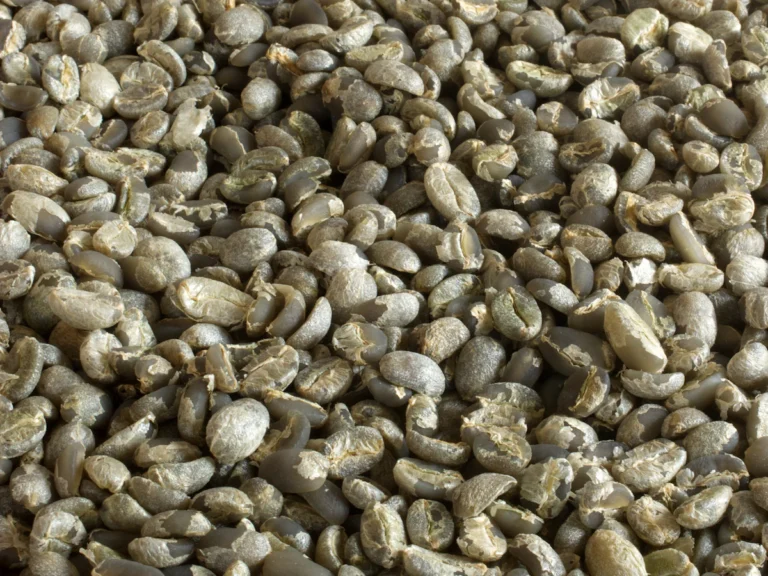
Cameroon green coffee beans Arabica and Robusta
BV Holdings Agro exports Cameroon green coffee beans in two species: washed Arabica from the western highlands and natural Robusta from the lowlands. Each lot is graded, ONCC-controlled and loaded at Douala or Kribi.
Browse Cameroon green coffee beans
Open any product for its typical specification, packing, documents and FAQ.
Green Arabica Coffee
We export Cameroon green Arabica coffee from the West and North-West highlands to roasters and green coffee traders.
View specification0901HS 0901.11Green Robusta Coffee
We export Cameroon green Robusta coffee to roasters, soluble coffee plants and traders.
View specification
BV Holdings Agro exports Cameroon green coffee beans to roasters, importers and coffee trading houses. We offer two species: washed Arabica from the western highlands and natural Robusta from the lowland forest belt. Every lot is graded, tested and loaded at Douala or Kribi on FOB, CFR or CIF terms.
Coffee has been a cash crop in Cameroon for generations. Today, smallholders still grow most of it, often next to food crops and cocoa. We buy Cameroon green coffee beans from producer groups and aggregators in the main coffee zones. Then we dry, sort, grade and bag each lot for export.
This hub gives you the full picture in one place. First, it compares the two species. Then it covers regions, grades, quality checks, packing, documents, pricing and ordering. As a result, you can send a precise inquiry and get a precise offer.
Cameroon green coffee beans: our two lines
We trade unroasted Cameroon green coffee beans only. We do not sell roasted or ground coffee. Each species below has its own product page with a full specification and FAQ.
| Line | Species | Main regions | Process | Harvest |
|---|---|---|---|---|
| Green Arabica Coffee | Coffea arabica | West and North-West highlands | Washed (natural on request) | About Oct–Jan |
| Green Robusta Coffee | Coffea canephora | Littoral (Moungo), South-West, East | Natural (dry processed) | About Nov–Feb |
Both lines share HS code 0901.11, which covers coffee that is neither roasted nor decaffeinated. Both also travel in new 60 kg jute bags. However, their taste, price level and buyers differ a great deal.
Where Cameroon green coffee beans are grown
Cameroon’s geography gives it two very different coffee belts, and both supply Cameroon green coffee beans. Altitude is the main reason. So the highlands suit Arabica, while the hot, humid lowlands suit Robusta.
Arabica: the western highlands
Arabica grows in the West and North-West regions, on volcanic hills and plateaus. Many farms sit well above 1,000 metres. Cool nights slow the ripening of the cherries. As a result, the beans build more sugar and acidity in the cup. Farmers often grow coffee alongside beans, maize and bananas.
Robusta: the lowland forest belt
Robusta grows at lower altitudes in the Littoral, South-West and East regions. The Moungo valley in the Littoral is a long-standing Robusta zone, with rich volcanic soils. Meanwhile, the East region adds large forest-zone volumes. Robusta handles heat and humidity well, and it resists some pests and diseases better than Arabica.
Harvest seasons
Arabica is picked from about October to January. Robusta follows from about November to February. Fresh-crop Cameroon green coffee beans usually reach the ports a few weeks after picking, once drying and hulling are complete. Our Cameroon Harvest Calendar shows how coffee fits with cocoa, spices and grains.

How Cameroon green coffee beans are processed
Coffee cherries must be turned into dry green beans before export. The two species follow different routes in Cameroon. First, most Arabica is washed. Farmers or washing stations pulp the ripe cherries, ferment the beans to loosen the sticky mucilage, then wash and dry them. This gives a parchment coffee that is later hulled into green beans.
Robusta, by contrast, is mostly processed natural. Farmers dry the whole cherries in the sun on mats, tarpaulins or drying floors. Once dry, the husk is removed by hulling machines. Natural processing is simpler and needs less water. However, it calls for careful drying, because wet cherries can ferment or mould.
After hulling, both species are cleaned, sorted by size and checked for defects. Then they rest in covered warehouses until the lot is ready for sampling and export packing.
Arabica vs Robusta: how to choose
Choosing between the two types of Cameroon green coffee beans depends on your blend, your market and your price target. These quick picks help you decide.
- Specialty or premium blends: choose washed Arabica for brighter acidity and a cleaner cup.
- Espresso blends: many roasters add Robusta for body, crema and a stronger kick.
- Instant coffee: soluble plants mostly buy Robusta, because it gives good yield and strength.
- Value retail blends: Robusta often lowers blend cost while keeping a full body.
- Single-origin offers: Arabica from the western highlands gives a clear origin story.
| Feature | Arabica | Robusta |
|---|---|---|
| Altitude | Highlands | Lowlands |
| Caffeine | Lower, about half of Robusta | About 2–2.7% |
| Cup profile | Brighter, more acidity | Fuller body, more bitterness |
| Typical process here | Washed | Natural |
| Typical buyers | Roasters, specialty importers | Blenders, soluble plants |
For a deeper look, read our Arabica vs Robusta guide. It explains taste, chemistry and market structure in plain English.
Typical specification for Cameroon green coffee beans
The summary below shows normal export values for Cameroon green coffee beans of each species. However, grade limits are always set in the contract.
| Parameter | Arabica (typical) | Robusta (typical) |
|---|---|---|
| HS code | 0901.11 | 0901.11 |
| Process | Washed; natural on request | Natural (dry processed) |
| Moisture | 10–12.5% | ≤ 12.5% |
| Screen size | 15+, 16+ or 17+ by grade | 18 (Grade 1), 16 (Grade 2), 14 by contract |
| Defects | Set per grade and contract | Black and broken set per grade, e.g. ≤ 3–5% |
| Foreign matter | ≤ 0.5% | ≤ 0.5% |
| Odour | Clean, free from mould, smoke or ferment | Clean, free from mould, smoke or ferment |
| Packing | New 60 kg jute bags | New 60 kg jute bags |
Final specifications are confirmed in each contract and verified before loading.
Grades of Cameroon green coffee beans explained
Grading Cameroon green coffee beans rests on two main ideas: bean size and defects. First, beans pass over a set of sieves, called screens. A screen 18 bean stays on a sieve with holes of 18/64 of an inch. So a higher number means a larger bean.
Next, a grader counts defects in a sample. Defects include black beans, broken beans, insect damage, sour beans, husks and stones. Fewer defects mean a higher grade. In addition, the cup matters, especially for Arabica. A cupper roasts and tastes a sample to check for clean flavour.
What the grades mean for you
- Robusta Grade 1, screen 18: large, even beans with low defects; often the top grade for blenders.
- Robusta Grade 2, screen 16: medium beans, a common choice for soluble and value blends.
- Robusta screen 14: smaller beans, offered by contract for price-led buyers.
- Arabica 17+ and 16+: larger washed beans for roasters who want an even roast.
- Arabica 15+: a sound washed grade for blends at a lower price point.
Not sure which grade fits? Send us your current spec sheet. We will then match it to Cameroon green coffee beans we can source that season.
Quality control for Cameroon green coffee beans
We follow five checkpoints for every lot of Cameroon green coffee beans, from the buying region to the port. Our quality control page sets out the full method.
- Buy in region: we buy from known producer groups and aggregators.
- Dry and store: coffee rests off the ground in covered warehouses at target moisture.
- Sample and test: we check moisture, screen size and defects against the contract.
- Clean, sort and pack: lots are sorted, then packed in new export-marked jute bags with a lot number.
- Inspect and load: independent inspection where agreed, then loading at Douala or Kribi.
In addition, coffee export lots are subject to quality control by Cameroon’s National Cocoa and Coffee Board (ONCC). You may also nominate an inspection company, such as SGS, Bureau Veritas, Intertek or Cotecna. Therefore, you get an independent check on weight and quality before the ship sails.
Why moisture matters so much
Moisture is the single most important number for green coffee in transit. Beans that are too wet can grow mould and pick up musty notes. Meanwhile, beans that are too dry can lose flavour and turn brittle. For this reason, we keep lots within the agreed range and recheck before loading.
Uses and industries
Cameroon green coffee beans reach several kinds of buyers, from small roasters to global traders. Each one uses the coffee in a different way.
- Roasters: they roast Arabica and Robusta for whole bean, ground and capsule products.
- Soluble coffee plants: they extract Robusta to make instant coffee powder and granules.
- Green coffee importers: they hold stock and resell to smaller roasters in their market.
- Trading houses: they buy origin coffee to blend, hedge and redistribute worldwide.
- Extract makers: they use coffee for flavours, cold brew and ready-to-drink lines.
We sell to businesses only. So we do not offer retail packs or small parcels.
Matching a buyer to a lot
Each buyer type tends to value different things. For example, a roaster cares most about cup quality and bean size. Meanwhile, a soluble plant focuses on yield and consistency across many containers. A trading house, in turn, wants clean documents and reliable shipment windows. So tell us who you sell to and how you use the coffee. We will then point you to the most suitable Cameroon green coffee beans that season.
Packaging, loading and container capacity
We pack Cameroon green coffee beans in new 60 kg jute bags. Hermetic liners are available on request for Arabica, and bulk liners on request for Robusta. Bags are marked with the lot number and export details.
- 20ft container: typically about 320 bags of 60 kg, so roughly 19.2 tonnes.
- 40ft container: more bags, although road and sea weight limits apply.
- Container prep: clean, dry and odour-free, with lining paper or dry bags where needed.
These loads are approximate industry norms. We confirm the exact count for your lot in the offer. We load at Douala or Kribi and quote FOB, CFR or CIF.
Export documents and compliance
Every shipment of Cameroon green coffee beans travels with a full document set. You can see each document explained on our export documents page.
- Commercial invoice and packing list.
- Bill of lading.
- Phytosanitary certificate from MINADER plant protection.
- Certificate of origin.
- Weight and quality certificate from the agreed inspection company.
- ONCC export quality certificate for coffee.
- Lab reports, such as pesticide residues, where agreed.
EU deforestation rules (EUDR)
Coffee is one of the goods covered by the EU Deforestation Regulation. EU importers must show that coffee did not come from land deforested after 31 December 2020. They also need plot geolocation and a due diligence statement. The European Commission EUDR page sets out the current rules and dates. So please raise EUDR needs at inquiry stage, and we will discuss what data a lot can carry.
We do not claim organic, Fairtrade or Rainforest Alliance status. However, company registration and export documents are provided during supplier onboarding on request.
How pricing works for Cameroon green coffee beans
We quote per lot and per date, never from a fixed list. That is because coffee prices move every trading day. Several factors shape each offer.
- Futures market: Robusta usually follows the London market, while Arabica follows New York.
- Differential: each origin and grade trades at a premium or discount to the futures price.
- Grade and screen: larger beans with fewer defects earn a higher differential.
- Crop timing: fresh-crop lots and late-season lots can price differently.
- Incoterm: CFR and CIF add freight and, for CIF, insurance.
Payment terms, such as a letter of credit or documentary collection, are agreed per contract. The International Coffee Organization publishes market reports if you want to follow the trade.
How to order Cameroon green coffee beans
Ordering follows six clear steps. Our export process page explains each one in full.
- 1. Inquiry: you send species, grade, volume, port and Incoterm.
- 2. Offer and sample: we send a written offer and, where possible, a sample for cupping.
- 3. Contract: we both sign the spec, price, Incoterm, payment terms, inspection method and shipment window.
- 4. Payment security: you arrange the agreed instrument.
- 5. Preparation and inspection: we prepare, grade and inspect the lot.
- 6. Shipment and documents: we ship, then release documents per the payment terms.
Orders for Cameroon green coffee beans start from one 20ft container.
Why buy from BV Holdings Agro
- Both species from one Cameroon exporter, in one contract if you wish.
- Lots sourced in the main coffee regions and graded before loading.
- Independent inspection by a company you nominate, on request.
- Two ports, three Incoterms and a full document set.
- Clear written offers and honest answers on availability.
Many buyers of Cameroon green coffee beans also trade cocoa and spices. For example, you can add Cocoa Products or Spices from Cameroon to the same supplier relationship.
FAQ
Which Cameroon green coffee beans do you export?
We export two lines: washed Arabica from the West and North-West highlands, and natural Robusta from the Littoral, South-West and East regions. Both are green and unroasted, under HS code 0901.11. Each line has its own product page with a typical specification. Tell us your blend needs and we will suggest a grade, then send an offer and sample.
Do you sell roasted or ground coffee?
No. We trade green, unroasted coffee only, for roasters, importers and soluble plants. Roasting is best done close to your market, because roasted coffee loses aroma quickly. As a result, green beans give you fresher coffee and full control over roast profile. We also do not offer retail packs or small parcels, since we sell container loads to businesses.
What is the minimum order for Cameroon green coffee beans?
Orders start from one 20ft container. A 20ft usually holds about 320 bags of 60 kg, so roughly 19.2 tonnes. You can also order a 40ft container, within road and sea weight limits. In addition, a single container can sometimes carry two grades by agreement. We confirm the exact bag count for your lot in the written offer.
When is the coffee harvest in Cameroon?
Arabica is picked from about October to January in the western highlands. Robusta follows from about November to February in the lowlands. Fresh-crop lots reach the ports a few weeks after picking, once drying and hulling are finished. So the best time to plan a fresh-crop order is just before harvest, when we can reserve volume.
How do you grade Robusta?
We grade Robusta by screen size and defects. Grade 1 is usually screen 18 with low black and broken beans. Grade 2 is usually screen 16, while screen 14 is offered by contract. We also check moisture, foreign matter and odour. Then the ONCC applies its own quality control, and you may nominate an independent inspector too.
Can I cup a sample before I sign?
Yes. Samples and offers follow an inquiry. Send us the species, grade, volume, destination port and Incoterm. We will reply with a written offer and, where possible, a representative sample. You can then roast and cup it in your own lab. As a result, you know exactly how the coffee tastes before you commit to a contract.
Are your Cameroon green coffee beans certified?
We do not claim organic, Fairtrade or Rainforest Alliance status for our coffee. Instead, we describe quality through a typical specification, ONCC control, test results and independent inspection. If your market needs certified coffee, please tell us early. We will then be honest about what we can document, so you can plan your sourcing without surprises.
Can you help with EUDR for coffee?
Coffee falls under the EU Deforestation Regulation. EU importers need proof of deforestation-free origin, plot geolocation and a due diligence statement. Please raise your EUDR needs at inquiry stage. We will then discuss what traceability data a specific lot can carry before you sign, and we will never claim data we cannot provide.

One arm of BV Holdings PLC
BV Holdings Agro is the agricultural export company of BV Holdings PLC, alongside BV Cocoa Products and BV Metal & Minerals.
Buy green coffee from Cameroon
Send the species, grade, volume and port, and we will reply with an offer and a sample to cup.