Cameroon cashew and kola nuts graded for export
Cameroon cashew and kola nuts in container loads: raw cashew nuts graded by KOR, kola nuts sorted by species and colour, and bitter kola. Every lot is tested and shipped from Douala or Kribi.
Browse Cameroon cashew and kola nuts
Open any product for its typical specification, packing, documents and FAQ.
Raw Cashew Nuts
Cameroon raw cashew nuts, in shell, for cashew processors and RCN traders.
View specification0802HS 0802.70Kola Nuts
Cameroon kola nuts from both Cola nitida and Cola acuminata.
View specificationVariHS VariesBitter Kola
Cameroon bitter kola, the seeds of Garcinia kola, as fresh seeds, dried whole seeds or dried slices.
View specification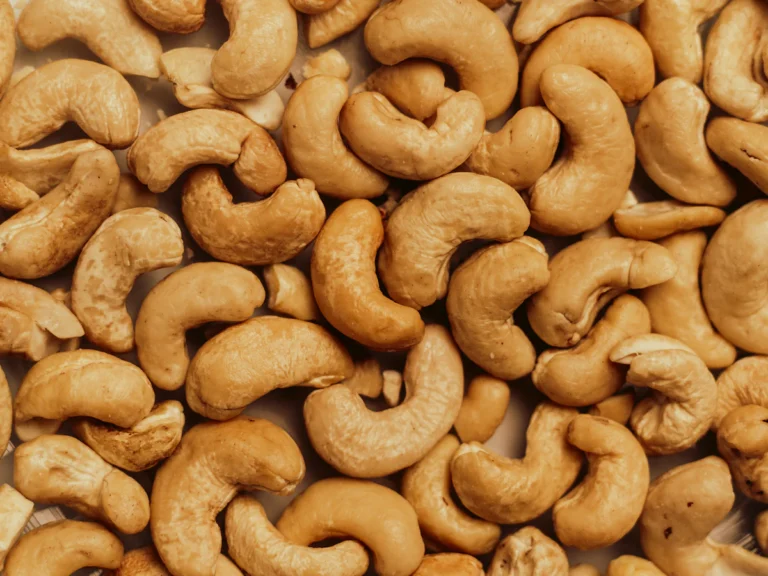
Cameroon cashew and kola nuts cover three export lines from one origin: raw cashew nuts, kola nuts and bitter kola. Cashew comes from the northern savannah, kola from the forest and highlands, and bitter kola from the humid south. BV Holdings Agro buys these nuts in the producing regions, then dries, sorts, tests and packs them for container shipment from Douala or Kribi.
This hub explains what each nut is, where it grows, how buyers judge quality and how an order works. It is written for cashew processors, nut traders, wholesalers and ingredient buyers. We sell in container loads only, from one 20ft container.
Use the table and quick picks to find your line. Then open the product page for the full typical specification, or send one inquiry for several lines together.
Cameroon cashew and kola nuts at a glance
First, here are the three lines side by side. Each name links to the product page with full specs and buyer questions.
| Cameroon cashew and kola nuts | Botanical name | Main forms | Main regions | Main harvest | HS code |
|---|---|---|---|---|---|
| Raw cashew nuts (RCN) | Anacardium occidentale | In shell, sun-dried | North, Adamawa | About Feb to May | 0801.31 |
| Kola nuts | Cola nitida, Cola acuminata | Fresh whole, dried whole, dried chips | West, Centre, South-West, Littoral, East | Varies by species and zone | 0802.70 |
| Bitter kola | Garcinia kola | Fresh seeds, dried whole seeds, dried slices | South-West, Littoral, Centre, South, East | Seasonal, confirmed per inquiry | Commonly 0802.90 or 1211.90 |
Harvest windows are approximate and shift with the rains each year. Our Cameroon harvest calendar shows each window beside other crops. HS codes are a guide, and bitter kola in particular varies by destination. So we confirm the final code on each proforma. The World Customs Organization explains how the HS system works.
Where Cameroon cashew and kola nuts are grown
These three nuts grow in very different parts of the country. That is one reason one supplier can ship Cameroon cashew and kola nuts from a single port.
Cashew in the northern savannah
Cashew trees like heat and a long, clear dry season. So they grow in the North and Adamawa regions, where the dry months are long and sunny. The trees flower in the dry season, and the nuts ripen over several weeks. Harvest then runs from about February to May.
Cameroon is a newer cashew origin than its West African neighbours. As a result, its volumes are smaller, but they arrive in the same season. For processors, that can add a useful second source.
Kola in the forest and highlands
Kola trees grow in the humid forest belt and the western highlands. The West region has a strong kola trade, with busy markets that collect nuts from many villages. The Centre, South-West, Littoral and East also produce kola. Cola acuminata is native to Central Africa, while Cola nitida came from West Africa and is now widely grown here too.
Bitter kola in the humid south
Bitter kola comes from Garcinia kola, a forest tree of the humid south. It grows in the South-West, Littoral, Centre, South and East regions. Most seeds come from trees on farms and in forest areas, collected by local gatherers. Then traders bring them to market towns for sorting.

Raw cashew nuts: KOR, nut count and grades
Cameroon raw cashew nuts are a semi-finished product. They must be steamed or roasted, shelled, peeled and graded before anyone can eat them. So our buyers are processors and the traders who supply them.
RCN trades on a short list of numbers. Here is what each one means in plain English.
- Kernel outturn ratio (KOR): the pounds of kernel in one 80 kg bag. Typical Cameroon lots run about 44 to 48 lbs. A higher KOR means more kernel per tonne, so it is the main price driver.
- Nut count: nuts per kilo, typically 180 to 210. A lower count means bigger nuts and usually larger kernel grades.
- Moisture: 10% max, so the nuts store safely.
- Defective nuts: 10% max, covering spotted, immature and void nuts.
- Float rate: 20% max. Floating nuts in water are often light or empty.
Do not confuse RCN with kernel grades such as W320 or W240. Those describe shelled kernels after processing. For a full walk-through of the cut test, read our raw cashew nut KOR guide.
Kola nuts: species, colours and forms
Cameroon kola nuts serve two very different markets. First, there is the fresh trade, where buyers judge colour, size and freshness by eye. Second, there is the ingredient trade, where buyers want dry, clean nuts with lab data.
Species and colour
We keep Cola nitida and Cola acuminata apart, because markets tend to prefer one or the other. Nuts come in red, pink or white. Some markets prefer red nuts, while others pay more for white. Therefore, we sort by colour and size as agreed in the contract.
Forms
- Fresh whole nuts: for wholesale and market trade in Africa and diaspora markets.
- Dried whole nuts: moisture at 12% max, for longer routes and buyers who hold stock.
- Dried chips: sliced, dried nuts for extract makers, flavour houses and ingredient buyers.
Fresh nuts are living seeds, so they keep breathing after harvest. That makes ventilation and fast transit key. Dried lots, by contrast, keep well and travel further.
Bitter kola: what buyers should know
Cameroon bitter kola is the seed of Garcinia kola. Despite its name, it is not a true kola. It has a bitter, astringent taste, and people in West and Central Africa chew it by tradition. As a result, demand is steady in regional markets and in diaspora communities abroad.
We offer fresh seeds in their brown skin, dried whole seeds and dried slices. Moisture on dried lots is 12% max, with mouldy and damaged seeds at 3% max. Buyers include wholesalers, food importers, African grocery distributors and ingredient traders.
The HS code for bitter kola varies by destination, often 0802.90 or 1211.90. So we confirm it on the proforma. In addition, you as the importer are responsible for how the product is labelled and sold in your market. We make no health claims for it.

Why add Cameroon cashew and kola nuts to your sourcing
For cashew processors, a second origin spreads risk. West African crops can swing with the weather, and a short crop in one country lifts prices for everyone. Cameroon cashew and kola nuts add supply from a separate region, so a buyer is less exposed to one market.
For kola buyers, Cameroon offers both main species in one place. That matters because many markets want one species or one colour only. In addition, we can sort Cameroon cashew and kola nuts by size and colour before loading, rather than leave it to the buyer.
Finally, the ports are close to the main kola zones. Douala and Kribi give regular container links to Europe, Asia, the Middle East and other African ports.
Quick picks: which nut suits your business
Here is a short guide to matching each line of Cameroon cashew and kola nuts to a buyer type.
- Cashew processing plant: raw cashew nuts, chosen by KOR and nut count.
- RCN trader supplying Asian processors: raw cashew nuts in 40ft loads for better freight per tonne.
- Market wholesaler or diaspora distributor: fresh kola nuts or fresh bitter kola, sorted by colour and size.
- Extract maker or flavour house: dried kola chips with lab data.
- Grocery importer testing two lines: a mixed dried load of kola nuts and bitter kola.
If you are unsure, ask for samples of two grades and compare them side by side. That is often the fastest way to choose.
Quality control for Cameroon cashew and kola nuts
Every lot of Cameroon cashew and kola nuts passes the five checkpoints on our quality and sourcing page.
- Buy in the region: we buy from producer groups and aggregators, then keep lots apart by origin.
- Dry and store: nuts reach target moisture and sit off the ground in covered warehouses.
- Sample and test: we test each lot against the contract specification.
- Clean, sort and pack: lots are cleaned, sorted and packed in new export-marked bags with a lot number.
- Inspect and load: independent inspection and fumigation take place where required, then we load at Douala or Kribi.
What we check for each line
Moisture and foreign matter are checked on every lot of Cameroon cashew and kola nuts. For RCN, we also run a cut test for KOR and defects, plus nut count and float rate. For kola and bitter kola, we check mould, insect damage, colour and size bands.
Lab tests for aflatoxin, pesticide residues and microbes can be agreed per contract. Buyers may also nominate an inspection company, such as SGS, Bureau Veritas, Intertek or Cotecna. As a result, you get a neutral view of each lot before the container is sealed.
Packaging, loading and container planning
Packing depends on the nut and its form. Here are the usual options for Cameroon cashew and kola nuts.
- Raw cashew nuts: new 80 kg jute bags. A 20ft container takes about 17 to 18 MT, and a 40ft about 25 to 27 MT, subject to payload and road limits.
- Dried kola and bitter kola: 25–50 kg jute or PP bags. A 20ft container often takes about 15–18 tonnes, depending on form and bag fill.
- Fresh kola and bitter kola: ventilated bags or lined baskets, in a ventilated or temperature-controlled container.
Preventing container sweat
Nuts can sweat in a closed container, because warm days and cool nights cause condensation. So we load only dry nuts, line containers with kraft paper and add desiccants. In addition, we load quickly once the cargo is cleared.
Our minimum order is one 20ft container. Dried kola nuts and bitter kola can share one container, which suits buyers testing both lines. Every bag of Cameroon cashew and kola nuts carries export marks and a lot number.
Export documents for Cameroon cashew and kola nuts
Each shipment travels with a full set of papers. Our export documents page explains each one.
- Commercial invoice and packing list
- Bill of lading
- Phytosanitary certificate from MINADER plant protection
- Certificate of origin
- Weight and quality certificate from the agreed inspection company
- Fumigation certificate, where required
- Lab reports for aflatoxin, residues or microbes, where agreed
Destination rules
Many markets set limits for mycotoxins and pesticide residues in nuts. Some also need import permits or plant health checks on arrival. Therefore, tell us your destination at the inquiry stage. Then we can plan the right tests and papers before your Cameroon cashew and kola nuts are loaded.
We describe these rules to help you plan. However, we do not claim certifications we cannot document. Organic, Fairtrade and Rainforest Alliance are not claimed.
How pricing works for Cameroon cashew and kola nuts
We do not publish fixed prices, because nut markets move with each season. Instead, each offer reflects the market on the day. These are the main drivers for Cameroon cashew and kola nuts.
- World kernel prices: kernel markets set what processors can pay for raw cashew.
- KOR and nut count: a higher KOR can make a lot the better buy, even at a higher price per tonne.
- Season and crop size: kola and bitter kola supply is tight between harvests.
- Species, colour and form: some colours and dried chips earn a premium in certain markets.
- Incoterm and freight: FOB, CFR or CIF, plus container type for fresh goods.
We quote FOB Douala or Kribi, CFR or CIF to your port. The ICC sets out each term in its Incoterms rules. Under FOB you book the sea freight, while under CFR or CIF we arrange it. Payment terms are agreed per contract.
How to order from BV Holdings Agro
Ordering follows our six-step export process. First, you send an inquiry for Cameroon cashew and kola nuts with the line, form, grade, volume, destination and Incoterm. For RCN, add your target KOR and nut count. Then we reply with an offer and arrange a sample.
Next, both sides sign a contract that sets the specification, price, Incoterm, payment terms, inspection method and shipment window. After that, you arrange payment security, such as a letter of credit or documentary collection. Meanwhile, we prepare the lot and run inspection. Finally, we ship and release documents per the payment terms.
Why buy from BV Holdings Agro
- Cameroon cashew and kola nuts from one origin, with one contact for all three lines.
- Cut-test results for every RCN lot, so you see KOR before you buy.
- Kola sorted by species, colour and size to match your market.
- Independent inspection by the company of your choice, on request.
- Full export documents and loading at Douala or Kribi.
- Part of BV Holdings PLC, with group oversight of governance and compliance.
Do you buy other lines from Cameroon? Buyers of Cameroon cashew and kola nuts often add spices, oil seeds such as sesame and groundnuts, or cereals and pulses to the same supply plan.
Cameroon cashew and kola nuts FAQ
Which Cameroon cashew and kola nuts do you export?
We export three lines: raw cashew nuts in shell, kola nuts and bitter kola. Kola nuts come fresh, dried whole or as dried chips. Bitter kola comes as fresh seeds, dried seeds or dried slices. We do not sell shelled cashew kernels. Each product page carries a full typical specification.
When is the cashew season in Cameroon?
The main harvest in the North and Adamawa regions runs from about February to May. The first export lots usually follow a few weeks after the harvest starts, once the nuts are dried and graded. Booking early helps, because the best lots sell first. Our harvest calendar shows the window beside other crops.
What KOR can I expect from Cameroon raw cashew nuts?
Typical lots run about 44 to 48 lbs per 80 kg bag, with a nut count of about 180 to 210 per kilo. However, KOR varies with the season, the area and how well the nuts were dried. So we confirm KOR and nut count with a cut test on each lot before we make a firm offer.
Can I buy fresh kola nuts for export?
Yes. Fresh kola nuts ship in ventilated bags or lined baskets, in a ventilated or temperature-controlled container. Fresh nuts are living seeds, so fast transit matters. For longer routes, dried whole nuts or dried chips are often the safer choice, because they keep well in store.
Is bitter kola the same as kola nut?
No. Kola nuts come from Cola trees, while bitter kola comes from Garcinia kola, a different tree. Bitter kola belongs to the same genus as the mangosteen. Both are chewed by tradition in West and Central Africa. However, they trade as separate products with their own specs and HS codes.
What is the minimum order for Cameroon cashew and kola nuts?
Our minimum order is one 20ft container. Raw cashew nuts often ship in 40ft containers for better freight per tonne. Dried kola nuts and bitter kola can share one container, which helps buyers test both lines. We do not sell retail or small parcel quantities.
Which tests can you arrange before loading?
Moisture and foreign matter are checked on every lot. For RCN, we add a cut test for KOR, defects, nut count and float rate. For kola, we check mould, insect damage and colour. Lab tests for aflatoxin, residues and microbes can be agreed. You may also nominate an inspection company.
Can I combine Cameroon cashew and kola nuts with other products?
Yes. Many buyers add spices, sesame, groundnuts or cereals from the same supplier. Send one inquiry listing each line, its volume and the destination. Then we will build a single offer with a shipment plan for each container. Each product still keeps its own specification and tests.

One arm of BV Holdings PLC
BV Holdings Agro is the agricultural export company of BV Holdings PLC, alongside BV Cocoa Products and BV Metal & Minerals.
Source cashew, kola and bitter kola together
Send the line, form, grade, volume and destination, and we will reply with an offer and sample plan.