Raw cashew nut KOR the cutting test, explained
Raw cashew nut KOR is the number that drives most of the value in a bag of in-shell cashews. See how the cutting test works, how to read nut count, moisture and defects, and what Cameroon lots typically show.
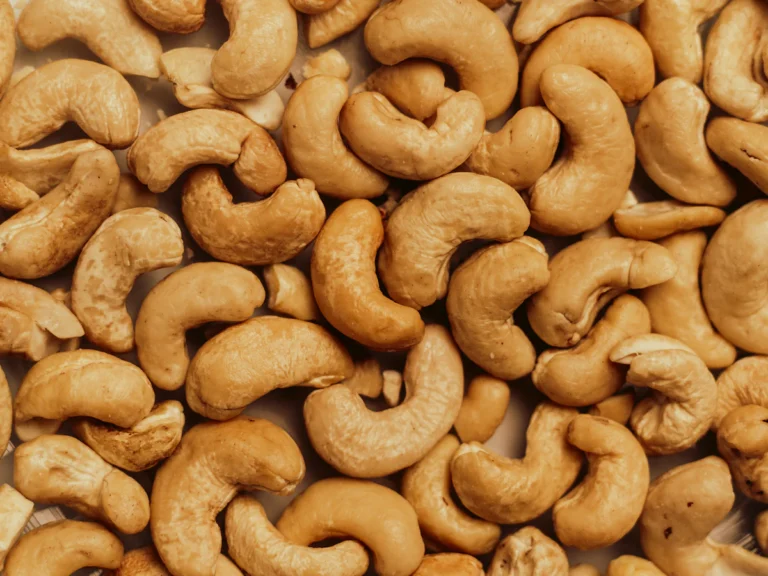
Raw cashew nut KOR is the one number that drives most of the value in a bag of in-shell cashews. It tells a processor how much usable kernel sits inside the shells. Get it right, and both sides know what they are trading. Get it wrong, and a deal can turn sour at the factory gate.
KOR stands for kernel outturn ratio, often shortened to “outturn”. Raw cashew nut KOR comes from a simple hands-on check called the cutting test. Next to KOR, buyers also look at nut count, moisture, defects and the float rate.
This guide explains each of those numbers in plain English. First, we define KOR and show the maths. Then we walk through the cutting test step by step, with a worked example. Finally, we show how raw cashew nut KOR affects value, what to expect from Cameroon, and how to write it into a contract.
What raw cashew nut KOR means
KOR is the weight of good kernel, in pounds, that you would get from one 80 kg bag of raw nuts. So a KOR of 48 means about 48 lbs of usable kernel per 80 kg bag. The mix of pounds and kilos looks odd, yet it is the long-standing trade convention, and nearly every RCN contract uses it.
A higher raw cashew nut KOR means more kernel per tonne of nuts. Because processors sell kernels, not shells, KOR is the main price driver for raw cashew nuts. The table converts common KOR levels into kilos and percentages.
| Raw cashew nut KOR (lbs per 80 kg bag) | Good kernel per bag (approx.) | Kernel share of raw nut weight |
|---|---|---|
| 44 | About 20.0 kg | About 24.9% |
| 46 | About 20.9 kg | About 26.1% |
| 48 | About 21.8 kg | About 27.2% |
| 50 | About 22.7 kg | About 28.3% |
| 52 | About 23.6 kg | About 29.5% |
Note that KOR measures kernel as it comes out of the shell, with its thin skin still on. A factory then peels, grades and packs the kernels, and it loses some weight and some whole kernels on the way. So the final packed yield is lower than the KOR suggests. Still, KOR is the fairest common yardstick before processing starts.
How the cutting test works, step by step
The cutting test is how the trade measures raw cashew nut KOR. It is simple, cheap and quick, which is why it is used at every stage, from village buying points to export ports. Here is how a typical test runs.
1. Draw a fair sample
Samplers take nuts from many bags across the lot, using a probe or by hand. The aim is a sample that reflects the whole lot, not just the top bags. Next, they mix the nuts well and divide them down, often by quartering, until a working sample of about 1 kg remains.
2. Measure moisture
Before cutting, a portion of the sample is tested for moisture, usually with a calibrated meter. Moisture matters because wet nuts weigh more and can also hide mould. We return to this point below.
3. Count the nuts
The tester counts every nut in exactly 1 kg. That gives the nut count, in nuts per kilo. A lower count means bigger nuts.
4. Cut every nut
Using a cashew cutter, the tester cuts each nut in half along its length. Gloves are a must, because the shell holds a caustic liquid. The kernel halves are then lifted out of the shell.
5. Sort the kernels
- Good kernels: sound, well-filled kernels of normal colour.
- Spotted kernels: kernels with small dark spots or light damage that can still be sold as lower grades.
- Rejected kernels: immature, shrivelled, mouldy, rotten, insect-damaged or void (empty) nuts.
6. Weigh and calculate
Each group is weighed in grams. Then the common trade formula gives the raw cashew nut KOR:
KOR (lbs per 80 kg) = (good kernels in g + half of spotted kernels in g) × 80 ÷ 453.6
The factor 80 ÷ 453.6 is about 0.1764. It scales a 1 kg sample up to an 80 kg bag and turns grams into pounds. Spotted kernels count at half weight, because they still sell, but at a lower price. Rejects count for nothing.
A worked example
Say a 1 kg sample gives 255 g of good kernels and 20 g of spotted kernels. Half of 20 g is 10 g, so the total is 265 g. Then 265 × 0.1764 equals about 46.7. So the raw cashew nut KOR for this lot is about 46.7 lbs per 80 kg bag.
Some national standards and contracts weight the categories a little differently. For example, a few give partial credit to more types of damaged kernel. Therefore your contract should name the exact method, so both sides read the result the same way.

Nut count: why size matters
After raw cashew nut KOR, nut count is the second big number on any RCN offer. It tells you how many nuts make up one kilo. Fewer nuts per kilo means larger nuts, which usually give larger kernels.
Larger kernels matter because kernel grades are sold by size. After processing, whole white kernels are graded as W180, W240, W320 or W450. The number is the count of kernels per pound, so W180 is the largest and often the most valuable. A low nut count raises the chance of the bigger, pricier grades.
- Below about 180 nuts per kg: large nuts, a strong selling point.
- About 180 to 210 nuts per kg: a common range for many West and Central African lots.
- Above about 220 nuts per kg: smaller nuts, which often trade at a discount.
Nut count and raw cashew nut KOR often move together, yet not always. A lot can have big nuts with poorly filled kernels, or small nuts that are full and heavy. That is why buyers check both numbers.
Defects, float rate and foreign matter
Besides raw cashew nut KOR, the cutting test also gives the defect rate. This is the share of nuts, by weight, that fall into the spotted and rejected groups. A typical contract limit for defective nuts is about 10%.
The float test
The float test is a quick extra check. A tester puts a counted sample of nuts in water and counts how many float. Floaters are often light, empty or poorly filled. So a high float rate warns of a weak raw cashew nut KOR before any cutting begins. Many specs cap floaters at around 20%, though some buyers set tighter limits.
Foreign matter
Foreign matter covers sand, stones, shell pieces, cashew apple residue and other debris. It adds weight but no value, so contracts often set it at about 1% maximum. Clean drying floors and careful sieving keep it down.
Crop year
New-crop nuts come from the current harvest. Old-crop nuts, by contrast, have spent months in store, and they can lose raw cashew nut KOR and gain defects over time. Therefore most processors ask for new crop and name the crop year in the contract.

How raw cashew nut KOR affects value
For a processor, every pound of KOR is money. One extra pound per 80 kg bag adds about 5.7 kg of kernel per tonne of raw nuts. Across a full container, that adds up fast. It is easy to see why buyers argue over a single point of KOR.
Several features usually shape how KOR enters a deal:
- A base KOR: the offer is built around a stated KOR and nut count.
- Adjustment clauses: some contracts adjust the price up or down per pound above or below the base.
- A rejection floor: many contracts let the buyer refuse nuts below a minimum KOR.
- Agreed test points: the contract names where and when the official cutting test takes place.
- Market and freight: world kernel demand, crop size in other origins and freight rates also move the offer.
We do not publish prices, because they change with the season and the market. Instead, each offer states the raw cashew nut KOR, nut count, moisture, Incoterm and port. Any adjustment terms are agreed per contract.
Cameroon raw cashew nut KOR: what to expect
Cashew trees in Cameroon grow mainly in the savannah of the North region and parts of Adamawa. They need a long, clear dry season while the nuts ripen and fall. Harvest runs from about February to May, as our Cameroon harvest calendar shows.
Cameroon is a smaller cashew origin than West African leaders such as Côte d’Ivoire. However, new orchards are coming into bearing, so export lots are growing. For buyers, a newer origin can add supply in the same season and spread sourcing risk.
| Parameter | Typical value for Cameroon RCN |
|---|---|
| Raw cashew nut KOR | 44 to 48 lbs per 80 kg bag |
| Nut count | 180 to 210 nuts per kg |
| Moisture | 10% max. |
| Defective nuts | 10% max. |
| Float rate | 20% max. |
| Foreign matter | 1% max. |
| HS code | 0801.31 (cashew nuts, in shell) |
| Packing | New 80 kg jute bags |
Final specifications are confirmed in each contract and verified before loading. Each lot differs by area, rain and drying, so every lot is cut-tested and the results are shared before you sign.
Who runs the test, and when
A raw cashew nut KOR result is only as useful as the trust behind it. So most RCN deals plan the testing in advance.
- Pre-shipment test: the seller cuts samples from the lot and shares the results with the offer.
- Independent inspection: the buyer can nominate a company such as SGS, Bureau Veritas, Intertek or Cotecna to sample and test before loading.
- Sealed counter-samples: both sides keep sealed samples in case of a later dispute.
- Arrival test: some buyers also test on arrival, under terms set in the contract.
Our checks follow the steps on our quality and sourcing page. We buy in region, dry and store, sample and test, then clean, sort and pack. Finally, inspection and loading take place at Douala or Kribi. The weight and quality certificate then travels with the other export papers on our documents page.
Quick tips for raw cashew nut KOR buyers
- Set three numbers first: minimum KOR, maximum nut count and maximum moisture.
- Name the formula: state how spotted and other kernels are counted.
- Agree the test point: warehouse, port or arrival, and who samples.
- Ask for new crop: and write the crop year into the contract.
- Check the float rate: it is a fast early warning of empty nuts.
- Plan for container rain: dry nuts, sound bags and clean containers.
- Start small with a new origin: one 20ft container lets you test the lot in your own plant.
Also, compare offers on the same Incoterm. A CIF offer to your port is not the same as FOB Douala, so line up the terms before you compare the KOR. For a wider view of buying from this origin, see our guide to importing from Cameroon. The FAO also publishes useful data on cashew and other crops.
Buying raw cashew nuts from BV Holdings Agro
BV Holdings Agro is a Cameroon export trading house and part of BV Holdings PLC. Our raw cashew nuts come from the North and Adamawa regions. They sit in our nuts and kola range, next to kola nuts and bitter kola.
- Cut-tested lots: raw cashew nut KOR, nut count and moisture shared before you sign.
- Packing: new 80 kg jute bags with lot marks.
- Container loads: about 17 to 18 tonnes per 20ft, and about 25 to 27 tonnes per 40ft, within payload limits.
- Ports and terms: Douala or Kribi, on FOB, CFR or CIF terms.
- Inspection: an independent company of your choice on request.
Our export process runs from inquiry to offer and sample, then contract, payment security, preparation and shipment.
FAQ: raw cashew nut KOR
What does raw cashew nut KOR mean?
KOR stands for kernel outturn ratio. It is the weight of good kernel, in pounds, that one 80 kg bag of raw cashew nuts would yield. For example, a KOR of 48 means about 48 lbs, or roughly 21.8 kg, of usable kernel per bag. A higher KOR means more kernel per tonne, so it is the main price driver.
How is raw cashew nut KOR calculated?
Testers cut every nut in a 1 kg sample and sort the kernels into good, spotted and rejected. Then they weigh each group. The common formula is: good kernels in grams plus half the spotted kernels in grams, multiplied by 80 and divided by 453.6. In other words, multiply that total by about 0.1764.
Why are spotted kernels counted at half weight?
Spotted kernels can still be sold, but only as lower grades at a lower price. So the formula gives them partial credit, while rejected kernels count for nothing. Some standards and contracts weight the categories differently, which is why the contract should state the exact method used for the cutting test.
What is a good nut count for raw cashew nuts?
A lower count means bigger nuts. Many West and Central African lots fall at about 180 to 210 nuts per kg, and counts below about 180 are a strong selling point. Bigger nuts usually give larger kernels, such as W180 and W240, which tend to earn higher prices after processing.
How does moisture affect raw cashew nut KOR?
Wet nuts weigh more, so you pay for water rather than kernel. In addition, damp nuts can grow mould in store or at sea, which turns good kernels into rejects. As a result, KOR can fall between the port and the factory. Most contracts cap moisture at around 10%, with about 8% to 9% seen as ideal.
What is the float test?
A tester drops a counted sample of nuts into water and counts how many float. Floaters are often light, empty or poorly filled. So a high float rate gives an early warning of a weak KOR. Many specs cap floaters at about 20%, while some buyers set tighter limits for their plants.
What KOR can I expect from Cameroon?
Typical Cameroon lots from the North and Adamawa run at about 44 to 48 lbs per 80 kg bag. Nut count is usually about 180 to 210 per kg. Values vary by area, rain and drying. So every lot is cut-tested, and the results are shared with you before you sign.
Can I nominate my own inspection company?
Yes. You can nominate a company such as SGS, Bureau Veritas, Intertek or Cotecna to sample and cut-test the lot before loading. Both sides can also keep sealed counter-samples in case of a dispute. The contract should name the test point, the method and who pays for the inspection.

One arm of BV Holdings PLC
BV Holdings Agro is the agricultural export company of BV Holdings PLC, alongside BV Cocoa Products and BV Metal & Minerals.
Get cut-test results before you buy
Tell us your target KOR, nut count, volume and port, and we will send an offer with samples from Cameroon.