Export documents and compliance every paper explained
Export documents let your cargo leave Cameroon, clear customs at your port and get paid for under the contract. Here is each paper, who issues it and when you need it, plus the main buyer-market rules.
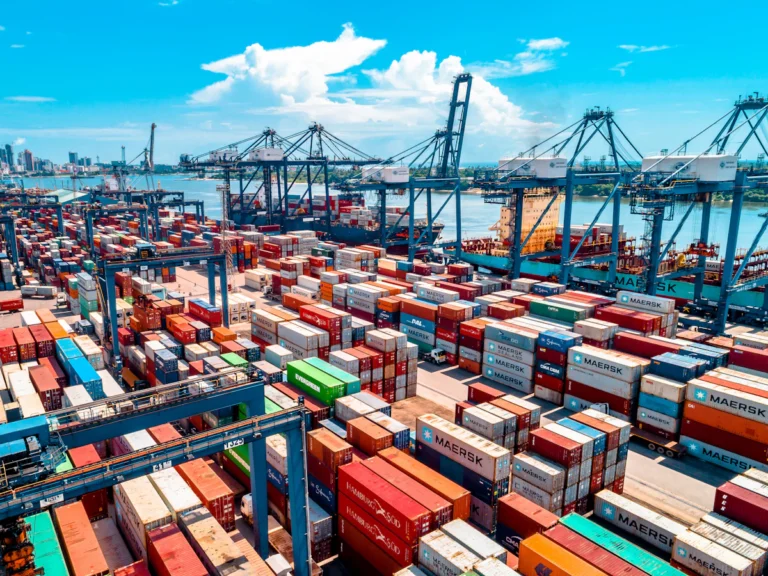
Export documents are the papers that let your cargo leave Cameroon, clear customs at your port and get paid for under the contract. BV Holdings Agro, part of BV Holdings PLC, ships container loads from Douala and Kribi to importers, trading houses and food manufacturers. Every shipment travels with a full document set.
Each paper has its own issuer, purpose and timing. Some prove what the goods are. Others prove where they come from, that they are free of pests or that they match the contract. One, the bill of lading, gives control of the goods themselves.
This page explains each document in turn. It also covers the main rules in buyer markets, such as the EU Deforestation Regulation, residue limits and aflatoxin limits. Finally, it sets out our certification status, plainly and without claims we cannot back.
Export documents at a glance
Here is the standard set. Not every shipment needs every paper, so the contract lists the export documents for your lot.
| Document | Who issues it | When it is needed | What it shows |
|---|---|---|---|
| Commercial invoice | BV Holdings Agro | Every shipment | Goods, quantity, price, Incoterm, buyer and seller |
| Packing list | BV Holdings Agro | Every shipment | Bags, net and gross weights, marks and container numbers |
| Bill of lading | Shipping line or its agent | Every sea shipment | Receipt of goods on board; contract of carriage; title to the goods |
| Phytosanitary certificate | MINADER plant protection service | Plant products, as your country requires | Goods inspected and free of listed pests |
| Certificate of origin | Competent Cameroon authority | Most shipments; for tariff preferences | Goods originate in Cameroon |
| Weight and quality certificate | Agreed inspection company | Where the contract calls for it | Weight and quality against the contract spec |
| Fumigation certificate | Fumigation operator | Where the product or market requires it | Treatment, product used, dose and date |
| ONCC export quality certificate | National Cocoa and Coffee Board (ONCC) | Cocoa and coffee exports | Lot passed export quality control |
| Lab reports | Accredited laboratory | Where agreed | Aflatoxin, pesticide residue, microbiology or oil content |
Commercial export documents: invoice and packing list
Commercial invoice
The commercial invoice is our bill to you. It names the buyer and seller, describes the goods, gives the quantity and price, and states the Incoterm. Customs at your end use it to assess duty. So the product description should match the contract, and it should carry the right HS code.
HS codes come from the Harmonized System run by the World Customs Organization. For example, cocoa beans fall under heading 1801, while green coffee sits under 0901.11.
Packing list
The packing list shows how the goods are packed. It lists the number of bags, the net and gross weights, the bag marks, the lot numbers and the container and seal numbers. Customs, forwarders and your warehouse all use it. In addition, it helps you check the cargo on arrival.

Bill of lading: the key transport document
The shipping line or its agent issues the bill of lading once the goods are on board. It does three jobs. First, it is a receipt for the cargo. Second, it is evidence of the contract of carriage. Third, an original negotiable bill is a document of title, so whoever holds it can claim the goods at the port.
That third job is why the bill matters for payment. Under a letter of credit or documentary collection, the originals pass through banks. You receive them, and with them control of the cargo, under the agreed payment terms. Our export process page explains how this fits into step six.
Plant health and origin: phytosanitary certificate and certificate of origin
Phytosanitary certificate
A phytosanitary certificate shows that plant products were inspected and found free of the pests your country lists. In Cameroon, it is issued by the plant protection service of MINADER, the Ministry of Agriculture and Rural Development. The format follows the International Plant Protection Convention, so border agencies around the world can read it.
Most of our products are plant products, so this certificate is common. However, the exact need depends on your country’s import rules. Please check them before you sign.
Certificate of origin
A certificate of origin confirms that the goods come from Cameroon. It is issued by the competent Cameroon authority, and your customs may ask for it to apply duty. Where your market grants Cameroon tariff preferences, a preferential certificate may be needed. That certificate follows the rules of the trade agreement concerned, so tell us your market early.
Inspection export documents: weight, quality and fumigation
Weight and quality certificate
The weight and quality certificate comes from the agreed inspection company. You may nominate one, such as SGS, Bureau Veritas, Intertek or Cotecna. The inspector samples the lot, checks it against the contract spec and confirms the weight. The contract states whose results are final.
Fumigation certificate
Fumigation kills insects in stored products before shipment. Where the product or the destination requires it, a fumigation operator treats the cargo and issues a certificate. It records the product used, the dose, the exposure time and the date. Some markets set their own rules for this, so we follow the import rules you share with us.
All of these checks are part of our quality and sourcing process, which runs five checkpoints from region to port.
ONCC certificate and lab reports
ONCC export quality certificate
Cocoa and coffee export lots are subject to quality control by Cameroon’s National Cocoa and Coffee Board (ONCC). The board checks the lot and issues an export quality certificate. So every shipment of cocoa beans or green Arabica coffee carries one, in addition to any inspection in your contract.
Lab reports
Lab reports are added where agreed. Common tests include aflatoxin, pesticide residues, microbiology and oil content. An accredited laboratory runs them, and the reports join the other export documents. Tell us which tests your market or your own spec needs, so they are planned before packing.
Export documents and payment under a letter of credit
Under a letter of credit, the bank pays against papers, not goods. So the export documents must match the terms of the credit exactly. A spelling slip in a company name, a weight that differs by one kilo or a late date can lead the bank to refuse the set. That refusal is called a discrepancy.
For this reason, we ask to see the draft credit before your bank issues it. Then we check that every document it asks for can be produced, by the right issuer, in the right form and in time. If a term cannot be met, we raise it early, while it is still easy to amend.
A documentary collection is simpler. The banks pass the export documents to you on payment or on acceptance of a bill of exchange, but they do not check them against a credit. Even so, the papers must match the contract, because your customs and your own buyers will rely on them.
Export documents by product category
The core set is the same for every product. However, some categories add papers or tests. Here is a quick guide.
| Category | Extra papers or tests often needed |
|---|---|
| Cocoa products | ONCC export quality certificate; residue and cadmium tests where agreed; EUDR data for EU buyers |
| Green coffee | ONCC export quality certificate; ochratoxin A where agreed; EUDR data for EU buyers |
| Oil seeds | Aflatoxin and Salmonella tests for food lots where agreed; oil content for sesame on request |
| Vegetable oils | Certificate of analysis; EUDR data for palm products bound for the EU |
| Animal feed | Feed analysis (protein, fat, fibre); aflatoxin to your limit |
| Cereals and pulses | Aflatoxin against destination limits; fumigation certificate |
| Spices | Aflatoxin, ochratoxin A and residue reports where agreed |
| Nuts and kola | Cut test results for raw cashew nuts; aflatoxin where agreed |
| Industrial raw materials | Charcoal: forestry and export papers for legal origin; rubber: EUDR data for EU buyers |
Buyer-market rules: EUDR, MRLs and aflatoxin
Export documents prove what leaves Cameroon. Yet your own market sets the rules for what may enter. Here are the three topics buyers ask about most.
EU Deforestation Regulation (EUDR)
The EU Deforestation Regulation, Regulation (EU) 2023/1115, covers seven commodities and many of their products. Six touch our range: cocoa, coffee, oil palm, soy, rubber and wood, which includes charcoal. The seventh is cattle, which we do not sell.
Under the EUDR, covered goods placed on the EU market must be deforestation-free and produced legally. In practice, this means geolocation data for the plots where the crop was grown. Then the EU operator files a due diligence statement before the goods enter or leave the market.
What does this mean for you? First, tell us early if your lot is bound for the EU. Then we discuss what traceability data is available for that lot before the contract. We do not claim compliance we cannot document. Also note that the EU has revised the application dates, so please check the current timetable on the Commission page.
Pesticide residue limits (MRLs)
Each market sets maximum residue limits, or MRLs, for pesticides in food and feed. The EU sets them under Regulation (EC) No 396/2005, and other markets have their own lists. Residue testing is done by an accredited lab where agreed, and the report travels with the export documents.
Aflatoxin limits
Aflatoxins are mould toxins that can form in maize, groundnuts, spices and other crops. The EU and many other markets set maximum levels, measured in micrograms per kilogram. We test maize and grains against your destination limit. For other products, the test is done on request.
Certifications: our status, stated plainly
Buyers often ask which certificates we hold. Here is the honest answer.
- Organic: not claimed.
- Fairtrade: not claimed.
- Rainforest Alliance: not claimed.
- Certified lots: we do not supply certified lots we cannot document.
What we do provide is a full set of export documents for each shipment, plus independent inspection at your request. In short, we would rather state a gap than make a claim that fails an audit.
Supplier onboarding pack on request
Many importers run a supplier onboarding process before the first order. For this reason, we share our company registration and export documents during onboarding, on request. Please send us your supplier questionnaire with your inquiry, and we will tell you what we can provide.
How we prepare your export documents
Small errors in papers cause big delays. So we follow a simple routine for every shipment.
- Agree the list. The contract names every document, the number of originals and copies, and any special wording.
- Check the credit. Under a letter of credit, we review the draft with you, because documents must match its terms exactly.
- Share drafts. Where helpful, we share draft documents for you to check before issue.
- Match the facts. Weights, marks, lot numbers and descriptions must agree across every paper.
- Release on terms. Originals are released under the payment terms in the contract.
Quick picks: what to tell us about documents
- Your destination country and port
- Any wording your bank or customs needs
- Your limits for residues and aflatoxin
- Whether the lot is bound for the EU (for EUDR)
- Your preferred inspection company
New to buying from Cameroon? Our guide on how to import from Cameroon covers duties, HS codes and customs at your end.
Common errors in export documents, and how to avoid them
Most document problems are small and avoidable. Here are the ones we see most often in commodity trade, with a simple fix for each.
- Names that do not match. The buyer’s name and address should read the same on the contract, credit and every paper.
- Vague descriptions. “Beans” is not enough. State the product, grade and crop as the contract does.
- Weight gaps. Net and gross weights must agree across the invoice, packing list and weight certificate.
- Wrong consignee or notify party. Confirm these with your forwarder and bank before the bill of lading is issued.
- Late requests. A lab test or extra certificate asked for after loading may not be possible.
In short, agree the list of export documents and their wording at contract stage. As a result, the papers flow with the cargo instead of chasing it.
Legal origin papers for charcoal
Charcoal needs extra care. We ship only legally sourced hardwood lump charcoal, with the required forestry and export documents. If a lot cannot be backed by those papers, we do not offer it. See our hardwood charcoal page for the typical specification.
Why buyers rely on our export documents
- A full set every time, from commercial invoice to bill of lading.
- Clear issuers, including MINADER, ONCC and your chosen inspector.
- Honest status on certifications, with no claims we cannot back.
- Market rules in view, such as EUDR, MRLs and aflatoxin limits.
- Group governance from BV Holdings PLC, which oversees finance and compliance.
Export documents FAQ
Which export documents come with each shipment?
The set usually includes a commercial invoice, packing list, bill of lading, phytosanitary certificate, certificate of origin, and a weight and quality certificate. A fumigation certificate is added where required. Cocoa and coffee carry an ONCC export quality certificate. Lab reports, such as aflatoxin or pesticide residue, are added where agreed in the contract.
Who issues the phytosanitary certificate?
In Cameroon, the plant protection service of MINADER, the Ministry of Agriculture and Rural Development, issues it. It shows the goods were inspected and found free of the pests your country lists. Its format follows the International Plant Protection Convention, so border agencies in most markets accept the layout. Your import rules decide whether you need one.
When are export documents released?
Originals are released under the payment terms in the contract. For example, under a letter of credit, documents go through the banks and must match the credit. Under a documentary collection, the banks pass them to you on payment or acceptance. The terms are always agreed per contract before loading.
Can you help with EUDR for cocoa or coffee?
Yes, within what we can document. Tell us early if your lot is bound for the EU. Then we discuss what traceability data, such as plot geolocation, is available for that lot before you sign. The EU operator files the due diligence statement. Please also check the current EUDR timetable, as the EU has revised it.
Does the EUDR cover charcoal?
Yes. Wood is one of the commodities covered, and the regulation lists charcoal among wood products. So EU buyers of charcoal need the same deforestation-free and legality evidence. We ship only legally sourced hardwood lump charcoal with the required forestry and export documents, and we discuss traceability data per lot.
Are your products certified organic or Fairtrade?
No. We do not claim Organic, Fairtrade or Rainforest Alliance certification. We also do not supply certified lots we cannot document. Instead, we provide full export documents, independent inspection at your request and lab reports where agreed. Company registration and export documents are shared during supplier onboarding, on request.
Can you add lab reports to the export documents?
Yes, where agreed in the contract. Common reports cover aflatoxin, pesticide residues, microbiology and oil content. An accredited laboratory runs the tests, and the reports travel with the other papers. Please share your market and limits early, so the right tests are planned before the lot is packed.
What do I need for supplier onboarding?
Send us your supplier questionnaire or list of required papers with your inquiry. We share our company registration and export documents during onboarding, on request. If your process asks for something we cannot provide, we will tell you plainly, so you can decide early whether to continue.

One arm of BV Holdings PLC
BV Holdings Agro is the agricultural export company of BV Holdings PLC, alongside BV Cocoa Products and BV Metal & Minerals.
Get the right papers for your market
Tell us your product, market and any special wording, and we will list the documents in the offer.