Commodity quality control and sourcing checked from region to port
Commodity quality control at BV Holdings Agro runs through five checkpoints, from buying in the producing regions to inspection and loading at Douala or Kribi. Every lot is tested against your contract specification.

Commodity quality control at BV Holdings Agro starts in the producing regions and ends only when the container is sealed at Douala or Kribi. We are a Cameroon agricultural export house and part of BV Holdings PLC. We buy from producer groups and aggregators, consolidate lots and check them against your contract before loading.
Good quality is not a single test at the port. Instead, it is a chain of small steps: buying the right crop, drying it well, storing it off the ground, testing it against the spec and packing it with care. A weak link anywhere can spoil a good lot.
This page sets out how our commodity quality control works. It covers our sourcing, the five checkpoints, how lots are sampled, which tests apply to each product, aflatoxin and residue limits, inspection companies and storage. In short, it shows what we check, how and why.
How we source commodities in Cameroon
We buy from producer groups and aggregators in the main growing regions, then consolidate lots for export. Buying close to the farm is the first link in our commodity quality control, because it lets us see the crop early. As a result, we can judge drying, sorting and storage before a lot reaches the coast.
| Category | Main producing regions |
|---|---|
| Cocoa | Centre, South, South-West, East, Littoral |
| Coffee | Robusta: East and Littoral; Arabica: West highlands |
| Sesame, sorghum, millet, cotton | North, Far North, Adamawa |
| Maize | Adamawa, North, West, North-West |
| Spices | Littoral (Moungo), West, Centre |
| Rice | Far North (Logone plains), North-West (Ndop plain) |
Sourcing in many regions has a clear benefit: we can match a lot to your spec. However, it also means lots differ by area and season. For this reason, commodity quality control must start at the buying stage, not at the port.
Our 5 commodity quality control checkpoints
Every export lot passes the same five checkpoints. The tests change by product, but the order does not.
1. Buy in region
Our buyers work with producer groups and aggregators in the growing areas. They look at the crop before purchase: colour, smell, dryness and visible defects. Lots that clearly miss the target are not bought for export.
2. Dry and store
Crops are dried to a target moisture, because wet produce invites mould and insects. Then the goods are stored off the ground in covered warehouses. Pallets keep bags away from damp floors, while roofs and walls keep out rain.
3. Sample and test
Next, we sample each lot and test it against the contract specification. Moisture and foreign matter are checked on all lots. Other tests depend on the product, as the table further down shows.
4. Clean, sort and pack
The lot is then cleaned and sorted to remove stones, dust, husks and defective items. Finally, it is packed in new export-marked bags, each carrying a lot number. That number links every bag to its test results.
5. Inspect, fumigate and load
Before loading, an independent inspection takes place where agreed. Fumigation is done where the product or the destination requires it. Then the goods are loaded at Douala or Kribi and the container is sealed.
These checkpoints also form step five of our export process, which runs from inquiry to shipment.
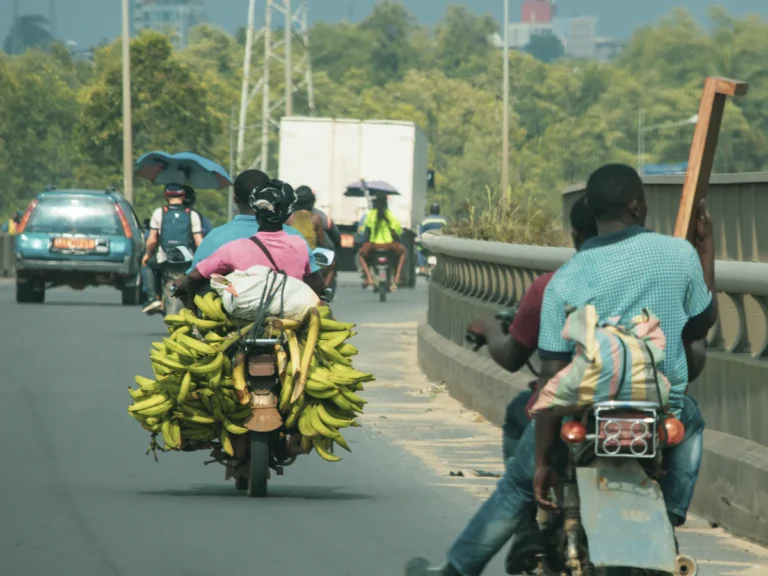
How commodity quality control sampling works
A test result is only as good as the sample behind it. So sampling is the quiet core of commodity quality control. A lot of several hundred bags cannot be tested bag by bag. Instead, a sample must stand for the whole lot.
In general, sampling follows these steps:
- Draw. Small amounts are taken from a set share of bags, often with a sampling spear (trier) pushed into the bag.
- Combine. These draws are mixed into one composite sample for the lot.
- Divide. The composite is split into equal parts, for example one for testing, one for the buyer and one kept as a reference.
- Seal and label. Each part is sealed and labelled with the lot number, date and product.
The exact sampling plan, such as how many bags are drawn, is agreed in the contract. Many buyers refer to a recognised ISO standard or trade-body rules. Where an inspection company is nominated, its staff usually draw and seal the samples themselves.
Pre-shipment samples for buyers
Where relevant, we also send a sample before the contract. As a result, your lab can test the product before you commit. Sample terms are agreed case by case.
Commodity quality control tests by category
We sell across nine categories, and each has its own key tests. The table below lists the typical commodity quality control tests for each one. Tests marked “on request” are run where the contract calls for them.
| Category | Products | Core tests | Extra tests (on request) |
|---|---|---|---|
| Cocoa products | Beans, shells, butter, powder, liquor, cake | Beans: moisture, cut test (mouldy, slaty, insect-damaged), bean count, foreign matter | Fat content; derivatives: free fatty acids, fineness, pH, microbiology |
| Green coffee | Arabica, Robusta | Moisture, screen size, defect count (black and broken beans), foreign matter, odour | Cup test, ochratoxin A, residues |
| Oil seeds | Sesame, soybeans, groundnuts, palm kernels | Moisture, purity or admixture, foreign matter | Sesame oil content and free fatty acids; aflatoxin; Salmonella for food sesame |
| Vegetable oils | Crude palm oil, palm kernel oil | Free fatty acids, moisture and impurities | DOBI for crude palm oil, iodine value, melting point |
| Animal feed | Cocoa shells, palm kernel cake, soybean meal, yellow maize, rice bran | Moisture, crude protein, fat, fibre, ash, foreign matter | Aflatoxin to your limit; urease activity for soybean meal |
| Cereals and pulses | Maize, sorghum, millet, rice, red kidney beans | Moisture, foreign matter, broken grain, aflatoxin against destination limits | Residues; for beans, admixture and off-colour counts |
| Spices | Ginger, turmeric, peppers, garlic | Moisture, extraneous matter, mould and insect damage | Volatile oil, aflatoxin, ochratoxin A, pesticide residues |
| Nuts and kola | Raw cashew nuts, kola nuts, bitter kola | Moisture, foreign matter; cashew: kernel outturn (KOR) and nut count | Aflatoxin, residues or microbiology |
| Industrial raw materials | Natural rubber, cotton lint, charcoal | Rubber: dirt, ash, volatile matter, plasticity; cotton: staple, micronaire, strength; charcoal: fixed carbon, ash, moisture | Charcoal: calorific value and fines; extra rubber or cotton tests by contract |
Each product page lists a typical specification for that product. For example, see Cameroon cocoa beans, green Robusta coffee or raw cashew nuts. Final specifications are confirmed in each contract and verified before loading.
The tests change from product to product. Yet the commodity quality control logic stays the same: measure what affects value, safety and shelf life, then record it against the lot number.
Key commodity quality control tests explained
Some commodity quality control tests appear on almost every certificate. Here is what they mean in plain English.
Moisture
Moisture is the most important single number in commodity quality control. Too much water lets mould grow and adds weight you pay for. Too little can make beans brittle. Therefore, every lot is checked for moisture, and the contract sets a maximum.
Foreign matter
Foreign matter means anything that is not the product: stones, sticks, dust, husks or string. It is checked on all lots. Cleaning and sorting at checkpoint four keep it within the contract limit.
Cut test for cocoa
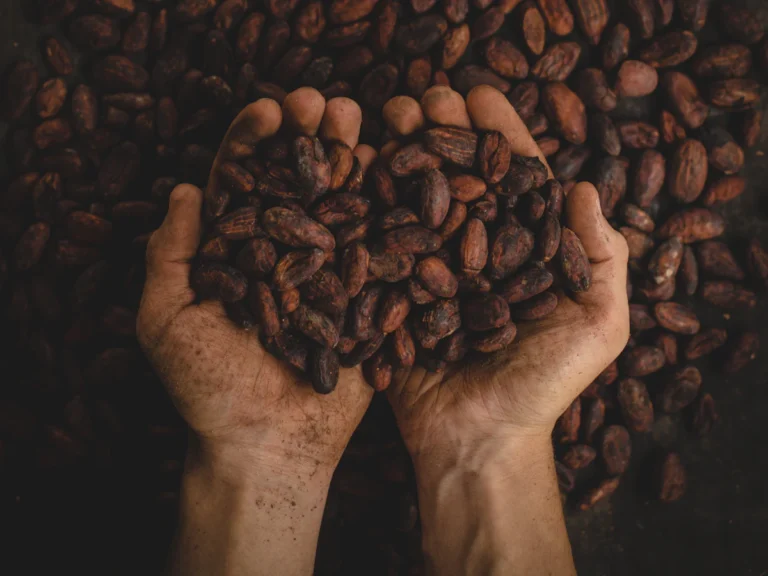
In a cut test, beans are cut lengthwise and the inside is examined. Mouldy, slaty (unfermented), insect-damaged or germinated beans are counted. The result shows how well the beans were fermented and dried.
Screen size and defects for coffee
Green coffee beans are shaken through sieves with holes of set sizes. Screen 18, for example, means beans that stay on an 18/64-inch screen. Then a sample is checked for black, broken and other defective beans.
Oil content and free fatty acids
For sesame, oil content shows the value to a crusher. Free fatty acids show whether the oil has started to break down. Both are tested on request.
Aflatoxin and pesticide residue limits (MRLs)
Two lab topics matter more each year: aflatoxins and pesticide residues. Both are set by the country that imports the goods, not by the exporter. So commodity quality control must aim at your destination limit.
Aflatoxin
Aflatoxins are toxins made by certain moulds, mainly Aspergillus flavus and Aspergillus parasiticus. They can form in maize, groundnuts, spices and other crops when produce stays warm and damp. Good drying and dry storage are the first line of defence.
Limits are measured in micrograms per kilogram, or parts per billion. The EU sets maximum levels in its contaminants rules, and many other markets set their own. For this reason, we test maize and grains for aflatoxin against your destination limit. For other products, such as spices or groundnuts, the test is done on request.
Pesticide residues (MRLs)
A maximum residue limit, or MRL, is the highest level of a pesticide residue legally allowed in a food or feed. The EU sets MRLs under Regulation (EC) No 396/2005, while Codex Alimentarius, run by FAO and WHO, sets international reference values. Limits differ by market and by product.
Residue testing is done by an accredited lab where agreed in the contract. Please tell us your market and any limits in your own buying spec. Then we can plan the test before the lot is packed.
Independent inspection: companies the buyer may nominate
Independent third-party inspection can be arranged at your request. You may nominate an inspection company such as SGS, Bureau Veritas, Intertek or Cotecna. In that case, the inspector acts on the terms set in the contract.
An independent inspector adds a second pair of eyes to our own commodity quality control. Many buyers, and many banks under letters of credit, ask for a third-party certificate for this reason.
Typical tasks include:
- Drawing and sealing samples from the lot
- Checking quality against the contract specification
- Weighing or check-weighing bags
- Checking bag condition, marks and lot numbers
- Inspecting containers before stuffing, for cleanliness and dryness
- Supervising loading and fumigation where required
- Issuing the weight and quality certificate
The contract should say who inspects, where and when, and whose results are final. As a result, both sides know which certificate settles any question on quality or weight.
ONCC: cocoa and coffee commodity quality control in Cameroon
Cocoa and coffee have an extra layer of control. Export lots are subject to quality control by Cameroon’s National Cocoa and Coffee Board, known by its French initials ONCC. The board checks export lots and issues the export quality certificate.
So a cocoa or coffee buyer usually gets two sets of checks. First, there is the ONCC export quality control. Second, there are the tests set in your contract, such as a cut test by your nominated inspector. For more on cocoa grades and the market, the International Cocoa Organization publishes useful data.
Storage and handling between test and loading
Good test results can be lost in a poor warehouse. Therefore, commodity quality control continues after the test, until the doors close on the container.
- Off the ground. Bags sit on pallets in covered warehouses, away from damp floors and walls.
- Lots kept apart. Each lot is stacked and labelled on its own, so test results stay linked to the right bags.
- Air and dryness. Stores are kept dry and aired to limit moisture pick-up.
- Pest control. Stores are checked for insects and rodents, with fumigation where required.
- Clean containers. Containers are checked before stuffing for holes, smells, damp and old residue.
Coastal air in Douala is warm and humid. For this reason, the time between drying and loading matters. Where needed, extra steps such as container liners are agreed with you. In short, commodity quality control is a habit, not a single event.
What commodity quality control can and cannot do
Commodity quality control reduces risk, but it is honest to say what it cannot do. Natural products vary from bag to bag. A sample stands for the lot, yet it cannot capture every single bean. In addition, long voyages through warm seas can cause condensation inside a container, often called “container rain”.
That is why the contract matters so much. It sets the tolerances, the sampling method and whose results are final. It should also state how any quality claim is raised and settled. Clear terms protect both sides far better than broad promises.
Quick picks for a strong quality clause
A good commodity quality control plan starts with a clear contract. Use these points when you draft yours:
- State the grade and every limit you care about, with units.
- Name your destination limits for aflatoxin and residues.
- Agree the sampling plan and the inspection company.
- Say whether loading-port or destination results are final.
- List the lab reports you need with the documents.
The certificates and reports that come out of this work are explained on our documents and compliance page.
Why buyers trust our commodity quality control
- Five checkpoints from region to port, on every lot.
- Tests matched to the product and to your destination limits.
- Your inspector, your terms. Nominate SGS, Bureau Veritas, Intertek, Cotecna or another firm.
- Lot numbers on new export bags, linked to test results.
- No claims we cannot document. We do not supply certified lots we cannot prove.
Commodity quality control FAQ
What does your commodity quality control cover?
It covers five checkpoints. We buy in the producing regions, dry and store the goods, then sample and test them against the contract spec. Next, we clean, sort and pack each lot in new export-marked bags with a lot number. Finally, independent inspection and fumigation take place where agreed or required, before loading.
Which commodity quality control tests are done on every lot?
Moisture and foreign matter are checked on all lots. Other tests depend on the product. For example, cocoa gets a cut test, coffee gets screen and defect counts, and maize and grains get aflatoxin tests against destination limits. Oil content and free fatty acids on sesame are tested on request.
Can I nominate my own inspection company?
Yes. Independent third-party inspection can be arranged at your request. You may nominate a company such as SGS, Bureau Veritas, Intertek or Cotecna. The contract then states where and when the inspection takes place, which tests the inspector runs and whose results are final if there is any difference.
How is aflatoxin handled in commodity quality control?
Prevention comes first: good drying and dry storage off the ground. Then we test maize and grains for aflatoxin against your destination limit. For other products, such as groundnuts or spices, the test is run on request. Please tell us your market and limit, so the right test is planned before packing.
What is the ONCC?
The ONCC is Cameroon’s National Cocoa and Coffee Board. Cocoa and coffee export lots are subject to its quality control, and it issues an export quality certificate. This sits alongside any tests in your contract. So cocoa and coffee buyers get both the ONCC check and their own agreed inspection.
Do you test for pesticide residues?
Yes, where agreed in the contract. Residue limits, or MRLs, are set by the importing market, such as the EU under Regulation (EC) No 396/2005. Tell us your market and any limits in your buying spec. Then an accredited lab can run the test, and the report travels with the documents.
Can I get a sample before I sign?
Yes, where relevant. A sample lets your own lab or end buyer test the product before you commit. For example, a chocolate maker may run a cut test, while a roaster may cup green coffee. Sample terms, such as courier costs, are agreed case by case with the offer.
Are your lots organic or Fairtrade certified?
No. We do not claim Organic, Fairtrade or Rainforest Alliance certification, and we do not supply certified lots we cannot document. What we offer is clear commodity quality control against your contract spec, plus independent inspection on request. Company registration and export documents are shared during supplier onboarding on request.

One arm of BV Holdings PLC
BV Holdings Agro is the agricultural export company of BV Holdings PLC, alongside BV Cocoa Products and BV Metal & Minerals.
Get a lot checked to your spec
Tell us your grade, limits and preferred inspection company, and we will build the checks into the offer.