Cameroon Raw Cashew Nuts exported to your specification
BV Holdings Agro supplies Cameroon raw cashew nuts, in shell, for cashew processors and RCN traders. Each lot is cut-tested for KOR, nut count and moisture, and the results are shared before you sign.
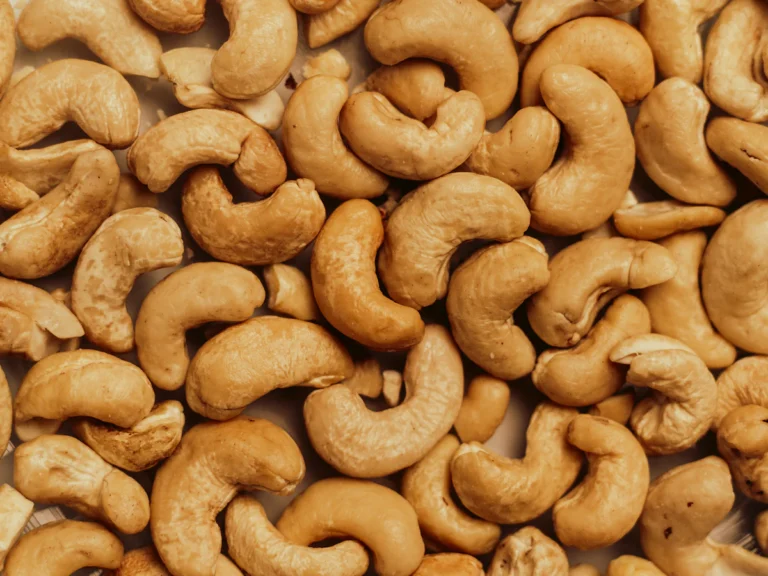
BV Holdings Agro exports Cameroon raw cashew nuts, in shell, to cashew processors and RCN traders. Our nuts come from the North and Adamawa regions, where cashew planting has grown in recent years. We buy from producer groups and aggregators, then dry, sort, bag and cut-test each lot before it ships from Douala or Kribi.
Raw cashew nuts, or RCN, trade on a few hard numbers. Kernel outturn, nut count and moisture decide what a processor can earn from each bag. So we share those numbers for Cameroon raw cashew nuts before you sign, not after the nuts arrive.
This page explains where the nuts grow, the typical specification, how the cut test works and how an order runs. In addition, it covers packing, documents and the drivers behind each offer. As a result, you can compare Cameroon raw cashew nuts with other origins on the same terms.
Where Cameroon raw cashew nuts are grown
Cashew trees grow best in hot areas with a long, clear dry season. In Cameroon, that means the savannah of the North region and parts of Adamawa. The trees need little rain once they are established. However, they need dry weather while the nuts ripen and fall.
Season and harvest
The trees flower in the dry season. Then the nuts ripen over several weeks, so the harvest runs from about February to May. Farmers collect fallen fruit from the ground, often every day or two. Our Cameroon harvest calendar shows this window next to other crops.
Farming and collection
Most cashew trees grow on small farms and family plots. Many farmers also grow cereals, groundnuts or cotton on the same land. After collection, they twist the nut off the cashew apple. The apple is soft and spoils fast, so it is eaten or pressed into juice locally. The nut, meanwhile, goes on to drying.
A growing origin
Cameroon is a smaller cashew origin than West African leaders such as Côte d’Ivoire. However, new orchards in the North and Adamawa are coming into bearing. As a result, Cameroon raw cashew nuts are reaching export markets in larger lots than before. For buyers, a newer origin can add supply in the same season as West Africa. It also spreads sourcing risk across more countries.
Drying and post-harvest handling
Fresh nuts carry too much water for safe storage. Therefore farmers sun-dry them on mats or clean floors for several days. Good drying brings moisture down to about 8% to 10%. Next, the nuts are bagged and sold to local buyers. Producer groups and aggregators then pool them into larger lots, where we buy, check and sort Cameroon raw cashew nuts for export.
Typical specification of Cameroon raw cashew nuts
The table shows typical values for Cameroon raw cashew nuts, in shell. KOR and nut count change from lot to lot, so each lot is cut-tested.
| Parameter | Typical value |
|---|---|
| Product | Raw cashew nuts (RCN), in shell |
| HS code | 0801.31 |
| Origin | North and Adamawa regions |
| Kernel outturn ratio (KOR) | 44 to 48 lbs per 80 kg bag |
| Nut count | 180 to 210 nuts per kg |
| Moisture | 10% max. |
| Defective nuts | 10% max. |
| Float rate | 20% max. |
| Foreign matter | 1% max. |
| Crop | Latest season |
Final specifications are confirmed in each contract and verified before loading.

Key quality terms for RCN buyers
RCN trades on a short list of numbers. So here is what each one means and why it matters.
- KOR (kernel outturn ratio): pounds of usable kernel from one 80 kg bag of raw nuts. A higher KOR means more kernel per tonne, so it is the main price driver.
- Nut count: the number of nuts in one kilo. A lower count means bigger nuts, which usually give larger, higher-value kernel grades.
- Moisture: dry nuts store better and resist mould at sea. Wet nuts lose weight and quality in transit.
- Defective nuts: spotted, immature, shrivelled or empty nuts found in the cut test.
- Float rate: the share of nuts that float in water. Floaters are often light, empty or poorly filled.
- Foreign matter: sand, stones, shell pieces and other debris.
Choosing a lot
Most processors set a minimum KOR and a maximum nut count. Then they check moisture and defects. Lots with a higher KOR earn a higher price, while lots near the lower limit trade at a discount. Tell us your targets, so we can offer Cameroon raw cashew nuts that fit your plant.
Crop year matters too. New-crop nuts are fresh from the current harvest, while old-crop nuts have spent months in store. Old-crop nuts can lose KOR and gain defects over time. Therefore most processors ask for new crop and check the crop year in the contract.
Do not confuse RCN with kernel grades. Grades such as W320 or W240 describe shelled kernels after processing. Raw cashew nuts, by contrast, are sold in shell, on KOR and nut count.
Cut test and quality control for Cameroon raw cashew nuts
Our checks follow five steps, as our quality and sourcing page explains. First, we buy in the region. Second, we dry and store the nuts. Third, we sample and cut-test each lot against the contract. Fourth, we clean, sort and pack them. Finally, inspection and loading take place at the port.
How the cut test works
- Sampling: nuts are drawn from many bags across the lot, then mixed and divided.
- Nut count: a 1 kg sample is counted to give nuts per kg.
- Cutting: each nut in the sample is cut in half to show the kernel.
- Sorting: kernels are split into good, spotted and rejected, then weighed.
- Calculation: the weights give the KOR in lbs per 80 kg bag. Many contracts count spotted kernels at half weight.
Why half weight for spotted kernels? Spotted kernels can still be sold, but only as lower grades. So the formula gives them partial credit, while rejects count for nothing. Your contract should state the exact method, so both sides read the result the same way.
Moisture is measured at the same time with a calibrated meter. In addition, a float test can be run on a separate sample. Our guide to raw cashew nut KOR explains the maths step by step.
Independent inspection
You can nominate an inspection company, such as SGS, Bureau Veritas, Intertek or Cotecna. The inspector draws samples at our warehouse, runs the cut test and checks the weight. Then the inspector issues the weight and quality certificate. As a result, you get a neutral view of Cameroon raw cashew nuts before the container is sealed.
Uses and buyers of Cameroon raw cashew nuts
Raw cashew nuts are a semi-finished product. They must be steamed or roasted, shelled, peeled and graded before anyone can eat them. So the buyers of Cameroon raw cashew nuts are processors and the traders who supply them.
- Cashew processors: plants that shell, peel and grade kernels for food markets.
- RCN traders: trading houses that buy West and Central African nuts for processors.
- Kernel buyers further along the chain: snack, confectionery, bakery and plant-based food makers.
Most of the world’s raw cashew nuts are processed in Vietnam and India. However, processing in Africa is also growing, as more countries aim to keep value at home. Either way, a processor wants reliable KOR, steady nut count and dry nuts.
By-products
Cashew shells hold a dark, caustic oil called cashew nut shell liquid (CNSL). Industry uses it in resins, coatings and friction materials such as brake linings. The shells are also burnt as fuel in some plants. Meanwhile, the thin skin around the kernel, the testa, can go into feed. In short, a processor can use almost every part of Cameroon raw cashew nuts.
The FAO tracks cashew as an important cash crop across Africa and Asia.
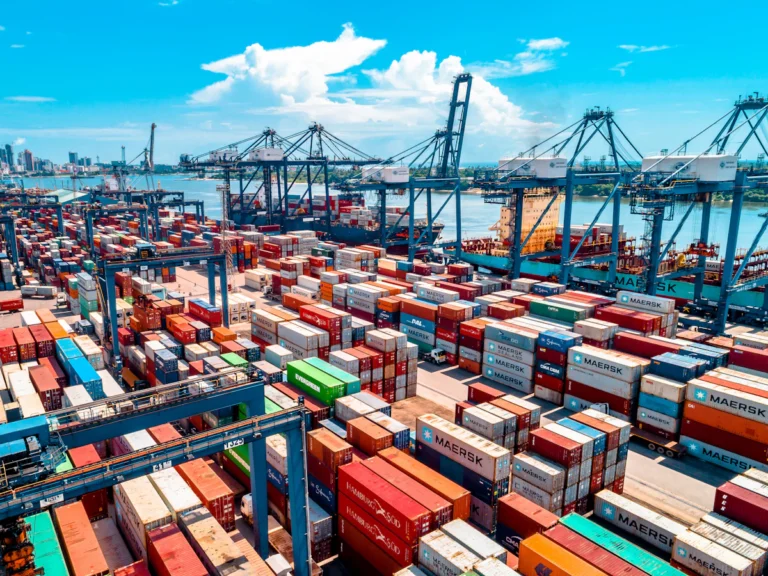
Packaging, loading and container capacity
We pack Cameroon raw cashew nuts in new 80 kg jute bags. Jute lets the nuts breathe, which helps them stay dry. Each bag carries export marks and a lot number, so every bag traces back to its lot.
Container loads
- 20ft container: about 17 to 18 MT, or about 210 to 225 bags of 80 kg.
- 40ft container: about 25 to 27 MT, subject to payload and road limits. We confirm the load per booking.
- Minimum order: one 20ft container.
Preventing container sweat
RCN can sweat in a closed container, because warm days and cool nights cause condensation. Wet nuts then grow mould and lose value. For this reason, we line the walls and roof with kraft paper and add desiccants. We also load only well-dried nuts. Fumigation is done before loading where your country requires it, by a licensed operator.
Storage after arrival
Good storage keeps the nuts sound until processing. First, place the bags on pallets in a dry, well-aired store. Then stack them with gaps for air to move. Also check moisture and look for insects every few weeks. Stored this way, dry Cameroon raw cashew nuts hold their quality for many months.
We load at Douala or Kribi. Nuts from the North travel by road or rail to the port. Therefore we plan transport early, so the lot reaches port in time for the vessel.
Export documents and compliance
Every shipment travels with a full set of export documents. Our export process page shows when each one is issued.
- Commercial invoice and packing list.
- Bill of lading.
- Phytosanitary certificate, issued by the MINADER plant protection service.
- Certificate of origin.
- Weight and quality certificate, with cut-test results, from the agreed inspection company.
- Fumigation certificate, where required.
Import rules differ by country. For example, processing countries set their own plant health and fumigation rules for RCN. So tell us your destination early, and we will plan the documents for your Cameroon raw cashew nuts.
Cashew nuts in shell fall under HS 0801.31 in the WCO Harmonized System. Shelled kernels, by contrast, fall under 0801.32. We also confirm any export duties or levies in force with each offer.
Some buyers ask for lab reports, such as pesticide residue or aflatoxin tests on kernels. Where agreed, an independent lab can test samples of Cameroon raw cashew nuts before shipment. However, we never make a claim that a lab report or official document cannot support.
How pricing works for Cameroon raw cashew nuts
We do not publish fixed prices, because RCN prices move through the season. Instead, each offer reflects the lot, the date and your terms. These are the main drivers.
- KOR and nut count: better outturn and bigger nuts earn a higher price.
- World kernel prices: kernel markets set what processors can pay for raw nuts.
- Season timing: prices often change as the harvest builds and as other origins come to market.
- Moisture and defects: wet or defective lots trade at a discount.
- Incoterm: FOB covers the goods loaded at port, while CFR and CIF add sea freight, and CIF also adds insurance.
- Inspection and fumigation: these costs are priced into the offer.
Many processors compare origins on a simple sum: price per bag divided by KOR. That gives the cost per pound of kernel. So a lot of Cameroon raw cashew nuts with a higher KOR can be the better buy, even at a higher price per tonne.
Offers for Cameroon raw cashew nuts usually hold for a short time, since RCN prices can move week by week. For a plain guide to terms, read FOB vs CIF.
How to order from BV Holdings Agro
Ordering follows four clear steps. Moreover, one team in Yaoundé handles your order from start to finish.
- Inquiry: you send your KOR and nut count targets, volume, destination port, Incoterm and shipment window.
- Offer and sample: we send a written offer with cut-test results and, where possible, a sample.
- Agreement: we both sign a contract that covers the spec, price, Incoterm, payment terms, inspection and timing.
- Shipment: we prepare, inspect and load the lot, then release documents per the payment terms.
A good inquiry for Cameroon raw cashew nuts answers six points: KOR target, nut count, tonnage, port, Incoterm and timing. With those facts, we can check stock and send an offer fast.
Payment security is agreed in the contract. For example, buyers may use a letter of credit or documentary collection. Our guide on how to import from Cameroon explains each step in more detail.
Why buy from BV Holdings Agro
- Direct sourcing in Cameroon, so one team in Yaoundé manages your order.
- Cut-test results on every lot of Cameroon raw cashew nuts, shared before you sign, so price matches quality.
- Kraft lining, desiccants and dry nuts to cut the risk of container sweat.
- Independent inspection by your chosen company, if you ask for it.
- Part of BV Holdings PLC, which also runs BV Cocoa Products and BV Metal & Minerals.
- Related nuts in the same range, such as kola nuts and bitter kola.
FAQ: Cameroon raw cashew nuts
What KOR do Cameroon raw cashew nuts reach?
Lots usually test at about 44 to 48 lbs per 80 kg bag. However, KOR varies with the season, the area and how well the nuts were dried. So we cut-test every lot and share the results before you sign. You can also ask an independent inspector to repeat the test.
What nut count do Cameroon raw cashew nuts have?
Typical lots run at about 180 to 210 nuts per kg. A lower count means bigger nuts, which usually give larger kernel grades. Nut count can vary between lots and through the season. Therefore we state the count for each lot in the offer, based on the cut test.
When is the cashew season in Cameroon?
The main harvest in northern Cameroon runs from about February to May. Nuts then need drying, pooling and sorting before export. As a result, the first export lots usually follow a few weeks after the harvest starts. We confirm stock and the shipment window in each offer.
How are Cameroon raw cashew nuts packed?
We pack the nuts in new 80 kg jute bags with export marks and a lot number. A 20ft container usually takes about 17 to 18 MT. We line each container with kraft paper and add desiccants to reduce sweat. Fumigation is done where the destination requires it.
Can a third party inspect before loading?
Yes. You can nominate an inspection company, such as SGS, Bureau Veritas, Intertek or Cotecna. The inspector samples at our warehouse, runs the cut test, checks moisture and weight, and can witness loading. Its cost is agreed in the contract, and the inspector then issues the weight and quality certificate.
Do you sell cashew kernels?
No, we export raw cashew nuts in shell only. Shelled kernels need a processing plant, which is a separate business. Our buyers are processors and traders that turn RCN into kernels. If you need kernels, a processor that buys our raw nuts may be the right partner.
Which ports and Incoterms do you offer?
We load at Douala or Kribi. We quote FOB at the Cameroon port, or CFR and CIF to your destination port. With CIF, we also arrange minimum cargo insurance. Tell us your port and preferred term, so the offer includes the right freight and insurance from the start.
What is the minimum order?
The minimum order is one 20ft container, which holds about 17 to 18 MT of RCN. Larger orders are quoted per container and can ship in one lot or in stages. Each container then carries its own lot number, cut-test results and documents, so you can track quality by container.
Related commodities
Export markets we quote

One arm of BV Holdings PLC
BV Holdings Agro is the agricultural export company of BV Holdings PLC, alongside BV Cocoa Products and BV Metal & Minerals.
Request a Cameroon raw cashew nuts quote
Ready to buy? Send us your KOR target, nut count, volume and port, so we can prepare an offer with cut-test results. Request a quote for Cameroon raw cashew nuts today. You can also browse our full nuts and kola range .