Cameroon to India raw materials for Indian processors
BV Holdings Agro ships farm commodities from Cameroon to India, led by cut-tested raw cashew nuts, cocoa, natural rubber and cotton lint. We load at Douala or Kribi and quote CFR or CIF to Tuticorin, Kochi and Nhava Sheva.
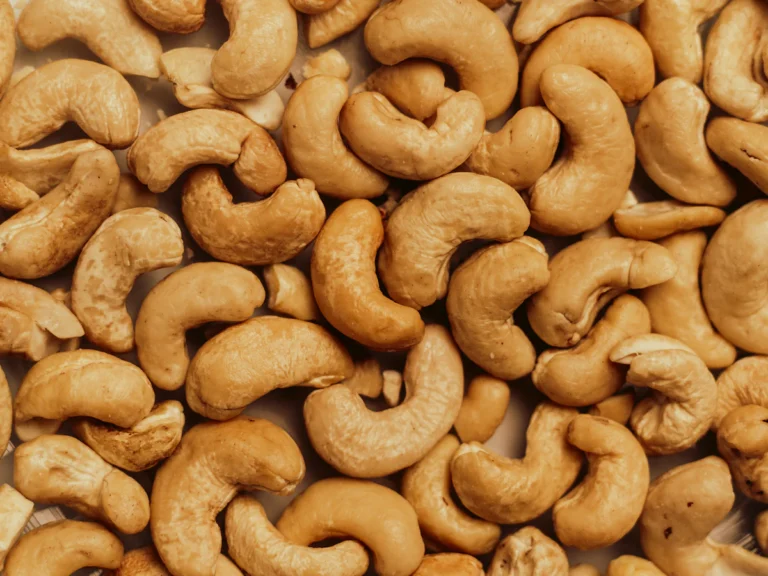
BV Holdings Agro ships farm commodities from Cameroon to India for processors, importers and trading houses. Raw cashew nuts lead most Indian inquiries, followed by cocoa beans, natural rubber, cotton lint and sesame seeds. We load at Douala or Kribi and quote FOB, CFR or CIF to the main Indian ports.
India is one of the world’s great processing economies. Its cashew factories, chocolate plants, tyre makers and spinning mills all rely on imported raw material for part of the year. Cameroon can fill some of those gaps, because its crops come in at different times from Asian and East African supply.
This page sets out what we source for Indian buyers, which rules apply on arrival, how the cargo moves and how to order. It is written for buyers who know their own market well, but want a clear view of the Cameroon side.
What Indian buyers source from Cameroon
The Cameroon to India trade is mainly about raw materials for Indian factories. Cashew processors in Kerala, Karnataka and Tamil Nadu need raw nuts in shell. Chocolate and cocoa makers need beans and semi-finished cocoa. Meanwhile, tyre plants want natural rubber, and textile mills want cotton lint.
Cameroon fits this pattern well. Its cashew comes from the dry savannah of the North and Adamawa regions. Its cocoa grows in the southern forest belt, and its cotton comes from the far north. As a result, one Cameroon trading house can cover very different Indian industries from the same two ports.
We only offer products from our own list. Each product page has a typical specification, packing details and FAQ. Indian trading houses also buy Cameroon to India cargo for onward sale to local factories. You can also browse by category, such as nuts and kola, cocoa products or industrial raw materials.
Products in demand for the Cameroon to India route
The table lists the products we most often quote from Cameroon to India. Buyer types are typical for the Indian market, not a list of our clients. HS codes are shown at six digits; your customs broker confirms the full Indian tariff item.
| Product | Typical buyer or use in India | HS code |
|---|---|---|
| Cameroon raw cashew nuts | Cashew processors and RCN traders | 0801.31 |
| Cameroon cocoa beans | Cocoa grinders and chocolate makers | 1801.00 |
| Cocoa butter | Chocolate, bakery fillings and cosmetics | 1804.00 |
| Cocoa powder | Malted drinks, biscuits and ice cream makers | 1805.00 |
| Natural rubber (TSR 10 / TSR 20) | Tyre plants and rubber goods makers | 4001.22 |
| Cotton lint | Spinning mills and cotton merchants | 5201.00 |
| Cameroon sesame seeds | Sesame hullers, sorters and traders | 1207.40 |
| Green Robusta coffee | Instant-coffee makers and blenders | 0901.11 |
| Red kidney beans | Pulse importers and wholesale traders (rajma) | 0713.33 |
In short, cashew is the anchor product. However, cocoa and rubber buyers often want regular loads through the year. Red kidney beans are a smaller, seasonal line for pulse traders who know the rajma market.
Cocoa for Indian chocolate and food makers
India grows some cocoa of its own, mainly in the south. However, demand from chocolate, biscuit and malted-drink makers is larger than local supply. So Cameroon to India cocoa lots can help grinders and food plants that want a second origin. Grinders often value Cameroon cocoa for its fat content and the reddish tone of its powder. We also offer semi-finished cocoa through our cocoa division, BV Cocoa Products, for buyers who prefer butter or powder to beans.
Rubber and cotton for Indian industry
India’s tyre and rubber goods industry is large, and it buys imported natural rubber to top up local supply. Our Cameroon to India rubber offers are for TSR 10 and TSR 20 in film-wrapped bales, with lab results per lot. Meanwhile, Indian spinning mills buy imported cotton when they need specific fibre qualities or extra volume. Cameroon lint is hand-picked in the north, which tends to keep trash levels low. For both products, we share the test data before you sign.

Raw cashew nuts: the core of Cameroon to India trade
Indian cashew factories buy raw nuts from many origins, and Africa supplies a large share. So raw cashew is where the Cameroon to India route matters most. Our nuts come from the North and Adamawa regions, where the harvest runs from about February to May.
Indian processors judge raw nuts on a few hard numbers:
- Kernel outturn ratio (KOR): the pounds of usable kernel per 80 kg bag. It drives the processor’s yield.
- Nut count: the number of nuts per kilo. Lower counts mean bigger nuts and larger kernel grades.
- Moisture: dry nuts store better and resist mould on the voyage.
- Defects: spotted, immature or empty nuts found in the cut test.
We cut-test every lot and share the numbers before you sign. Our raw cashew nut KOR guide explains how KOR is measured and why it varies. In addition, an independent inspector can sample the lot at our warehouse, so your factory can compare the loading test with its own outturn test in India.
Timing matters too. Cameroon nuts are easiest to export from about March to July, close to the main West African season. So they give Indian factories one more origin to compare during that buying period.
Cameroon to India trade relationship and market access
There is no free trade agreement between India and Cameroon. India also runs a duty-free scheme for least developed countries, but Cameroon is not on the UN list of least developed countries. So Cameroon to India cargo usually pays India’s standard customs duty for each tariff item.
Duty rates change with India’s budget and with policy decisions. For example, duty treatment on cotton has changed in recent years. Therefore, ask your customs broker to confirm the current rate for your exact HS code before you agree a price.
FSSAI food import clearance
Food imports into India are controlled by the Food Safety and Standards Authority of India (FSSAI). The importer needs an Import Export Code and an FSSAI central licence for import. Consignments are then cleared through FSSAI’s Food Import Clearance System (FICS), which links to Indian customs.
In practice, food lots go through document checks, visual inspection and sampling. Samples are tested at an FSSAI-notified laboratory. When the lot passes, FSSAI issues a no objection certificate, and customs can release the goods. Bulk goods such as nuts and pulses can have labelling details on the master packing or in the documents, under conditions set by the regulations. You can read the official rules on the FSSAI website.
FSSAI also registers some foreign food factories. Today, that registration covers high-risk groups such as milk, meat, egg powder, infant food and nutraceuticals. It does not list our product lines, but your importer should confirm the position for each shipment.
Plant quarantine in India
Plant products are also covered by India’s Plant Quarantine (Regulation of Import into India) Order, 2003. It is run by the Directorate of Plant Protection, Quarantine and Storage. The importer applies for an import permit in advance, through India’s single-window system. A new commodity may need a pest risk analysis first.
The permit can set special conditions, such as a named fumigation treatment or extra wording on the phytosanitary certificate. So send us a copy of the permit before loading. We will then match the fumigation and the certificate wording to it.
Shipping from Cameroon to India: ports, containers and transit
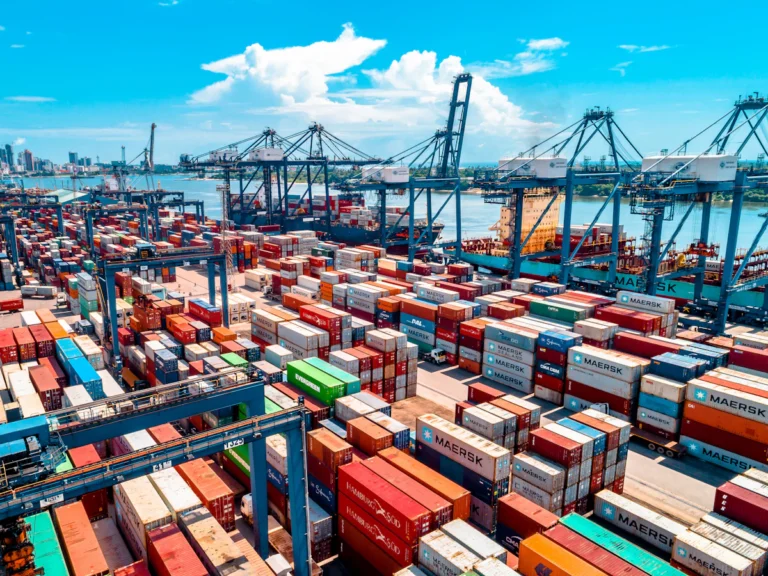
We load at Douala or Kribi. Most sailings from Cameroon to India tranship at a hub port, often in the Mediterranean, the Middle East or South Asia. The shipping line confirms the exact routing at booking.
We can quote CFR or CIF to the main Indian ports, for example:
- Tuticorin (V.O. Chidambaranar), Kochi and New Mangalore: close to the cashew factories of the south and south-west.
- Nhava Sheva (JNPT) and Mundra: large gateways for western and northern India.
- Chennai: for buyers in Tamil Nadu and the south-east.
- Kolkata and Visakhapatnam: for eastern India, quoted on request.
Transit on the Cameroon to India route is typically a few weeks, confirmed at booking. Raw cashew usually ships in new 80 kg jute bags, at about 17 to 18 tonnes per 20ft container. Cocoa beans travel in jute bags with a container liner or lining paper. Cotton bales are light for their size, so 40ft units usually give better freight value. Rubber bales are dense, so they normally ship in 20ft units.
Moisture control matters on a long, warm voyage. Raw cashew and cocoa can sweat inside a closed box, which risks mould. So we dry lots to the agreed moisture, use clean and dry containers, and add liners or desiccants where the contract asks for them. For Cameroon to India cashew, the contract can also ask for the bags to be fumigated and stacked to allow some air flow. We note these points in the offer, so you know exactly how each container will be packed.
Import documents for Cameroon to India shipments
Indian clearance depends on matching papers. The invoice, packing list, bill of lading and phytosanitary certificate must agree with each other and with the import permit. So we agree the document set in the contract, before we book the ship.
| Document | Issued by | Why India needs it |
|---|---|---|
| Commercial invoice and packing list | BV Holdings Agro | Customs value, weights and marks |
| Bill of lading | Shipping line | Title and release at the Indian port |
| Phytosanitary certificate | MINADER plant protection service | Plant quarantine clearance against the permit |
| Fumigation certificate | Licensed fumigation provider | Where the import permit requires a treatment |
| Certificate of origin | Authorised Cameroon body | Customs records and origin checks |
| Weight and quality certificate | Agreed inspection company | Matching the lot to the contract |
| ONCC export quality certificate | National Cocoa and Coffee Board | Required for cocoa and coffee exports |
Lab reports can be added where agreed, such as aflatoxin, pesticide residue or microbiological tests. These help your importer prepare for FSSAI sampling, but they do not replace it. For the full list, see our export documents page.
Incoterms that suit buyers in India
We quote FOB, CFR and CIF on the Cameroon to India route. The right term depends on who handles freight and insurance best.
- FOB Douala or Kribi: suits large processors and traders with their own freight contracts. You book the vessel; we deliver on board.
- CFR Indian port: we book freight to Tuticorin, Kochi, Nhava Sheva or your chosen port. You insure the cargo in India, which many importers prefer.
- CIF Indian port: we add minimum cargo insurance. This helps when a bank wants an insurance document under a letter of credit.
Payment security for Cameroon to India contracts is agreed in writing, for example a letter of credit or documentary collection. Customs value in India is normally based on the landed value, so freight and insurance costs matter even on FOB terms. The ICC Incoterms rules give the official definitions of each term.
When to buy: seasons for Cameroon to India cargo
Each crop has its own window in Cameroon. Our Cameroon harvest calendar shows every product month by month. For Indian buyers, the key dates are:
- Raw cashew nuts: harvest about February to May; export lots easiest from about March to July.
- Cocoa beans: main crop September to February, mid-crop May to August.
- Cotton lint: ginned lint ships mainly from January to June.
- Sesame: harvest October to December; lots easiest from November to March.
- Red kidney beans: two seasons, with lots easiest around August to September and December to February.
- Natural rubber: tapped all year, with a dip in the dry-season wintering.
So book Cameroon to India cashew contracts early in the crop, before the best lots are sold. Rubber and cocoa, by contrast, suit a steady monthly or quarterly programme.
How to order from Cameroon to India with BV Holdings Agro
Buying from Cameroon to India with us follows four steps. Our export process page gives more detail on each one.
- Inquiry: send the product, grade, volume, Indian port, Incoterm and any limits from your import permit.
- Offer and sample: we send a written offer and, where possible, a sample. For cashew, we include the cut-test results.
- Agreement: we sign a contract covering specification, price, Incoterm, payment terms, inspection method and shipment window.
- Shipment: we prepare, inspect, fumigate where required and load, then release documents under the payment terms.
Our quality and sourcing page shows the five checkpoints from producing region to port.
Why buy from BV Holdings Agro
- Cut-tested cashew: KOR, nut count and moisture shared before you sign.
- Permit-ready papers: fumigation and certificate wording matched to your Indian import permit.
- Several industries, one supplier: cashew, cocoa, rubber, cotton and sesame from Douala or Kribi.
- Your inspector welcome: SGS, Bureau Veritas, Intertek, Cotecna or another agreed company.
- No inflated claims: we never claim certifications we cannot document.
Sourcing for other Asian plants too? See our pages on shipping to Vietnam and shipping to China, or browse all export markets.
Cameroon to India FAQ
Which products do you ship from Cameroon to India?
We quote raw cashew nuts, cocoa beans, cocoa butter, cocoa powder, natural rubber, cotton lint, sesame seeds, green Robusta coffee and red kidney beans. Other products on our list can also be offered. Each has a typical specification, and the final specification is confirmed in each contract and verified before loading.
Is there a trade deal that cuts duty on Cameroon to India cargo?
No free trade agreement covers this route. India’s duty-free scheme is for least developed countries, and Cameroon is not one of them. So standard Indian customs duty usually applies. Ask your customs broker to confirm the current rate for your exact HS code before you agree a price.
Does my import need an FSSAI licence?
Yes, for food products. The importer needs an Import Export Code and an FSSAI central licence for import. Lots are cleared through FSSAI’s Food Import Clearance System, with inspection, sampling and lab testing. Non-food goods such as cotton and rubber follow other rules, so check with your broker.
Do I need a plant quarantine import permit?
Most plant products do need one under India’s Plant Quarantine Order, 2003. The importer applies in advance through the single-window system. The permit can name a fumigation treatment or extra wording for the phytosanitary certificate. Send it to us before loading, so the papers match.
What KOR can I expect on Cameroon raw cashew nuts?
KOR varies from lot to lot and from season to season, so we never promise a fixed figure in advance. Instead, we cut-test each lot and share the KOR, nut count and moisture before you sign. An independent inspector can also sample the lot, so your own test can be compared fairly.
Which Indian ports do you quote?
We quote CFR or CIF to Tuticorin, Kochi, New Mangalore, Nhava Sheva, Mundra and Chennai, plus other ports on request. Most sailings tranship at a hub on the way. The shipping line confirms the routing and transit time at booking, and we state the shipment window in the contract.
What is the minimum order?
The minimum order is one 20ft container. For raw cashew, that is about 17 to 18 tonnes in 80 kg jute bags. Larger orders can ship over several containers or as a programme. For light cargo such as cotton lint, a 40ft container usually gives better freight value per tonne.
Are your products certified organic or Fairtrade?
No. We do not claim organic, Fairtrade or Rainforest Alliance certification. Instead, we describe quality through typical specifications, test results and independent inspection. If your Indian customer needs a certified supply chain, tell us at the inquiry stage. We will be clear about what we can and cannot provide.
Other Asia markets

One arm of BV Holdings PLC
BV Holdings Agro is the agricultural export company of BV Holdings PLC, alongside BV Cocoa Products and BV Metal & Minerals.
Plan your Cameroon to India shipment
Tell us the product, grade, volume and Indian port, and we will reply with a written offer.