Cameroon to Indonesia cocoa and raw materials for Indonesian mills
BV Holdings Agro supplies cocoa beans and other commodities from Cameroon to Indonesia for grinders, mills and food makers. We also quote cotton lint, soybeans and soybean meal, loaded at Douala or Kribi on FOB, CFR or CIF terms.
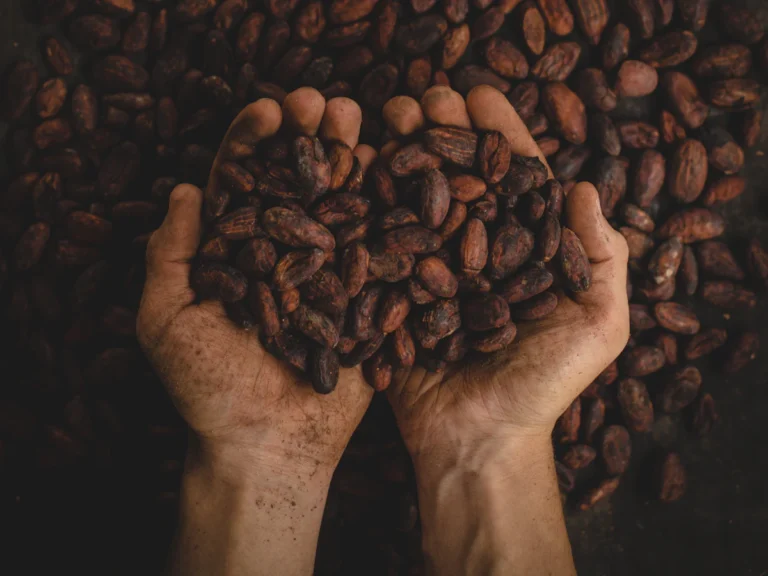
BV Holdings Agro supplies cocoa beans and other farm commodities from Cameroon to Indonesia for grinders, food makers, mills and trading houses. Cocoa leads most Indonesian inquiries, followed by cotton lint, soybeans, soybean meal, groundnuts, sesame and dried chili. We load at Douala or Kribi and quote FOB, CFR or CIF to the main Indonesian ports.
Indonesia grows cocoa, but its grinders can process far more beans than local farms supply. Its textile mills also buy imported cotton, and its tofu and tempeh makers depend on imported soybeans. So Indonesian buyers look abroad for raw material, and Cameroon is one of the origins they can compare.
This page explains which of our products suit Indonesian buyers, what the import rules require, how cargo moves and how to order. It also covers when each crop is easiest to buy.
What Indonesian buyers source from Cameroon
Most Cameroon to Indonesia demand comes from processors. Cocoa grinders want fermented, dried beans for butter, powder and liquor. Spinning mills want cotton lint with steady fibre data. Meanwhile, food makers and feed mills want soybeans, soybean meal, groundnuts, sesame and dried chili.
Cameroon covers these needs from very different regions. Cocoa grows in the southern forest belt. Cotton, sesame and groundnuts come from the dry North, Far North and Adamawa regions, while soybeans grow in Adamawa, the North and the western highlands. As a result, one Cameroon trading house can serve several Indonesian industries from the same two ports.
Indonesian trading houses also buy for resale to local factories. For them, a supplier that agrees the document set early, and keeps it consistent, saves time at clearance. That matters in a market where quarantine timing rules are strict.
We only offer products from our own list. Each product page has a typical specification, packing details and FAQ. You can also browse by category, such as cocoa products, oil seeds or industrial raw materials.
Products in demand for the Cameroon to Indonesia route
The table lists the products we most often quote from Cameroon to Indonesia. Buyer types describe the Indonesian market in general, not our client list. HS codes are shown at six digits; your customs broker confirms the full Indonesian tariff code.
| Product | Typical buyer or use in Indonesia | HS code |
|---|---|---|
| Cameroon cocoa beans | Cocoa grinders and chocolate makers | 1801.00 |
| Cotton lint | Spinning mills and cotton merchants | 5201.00 |
| Cameroon soybeans | Tempeh, tofu and soy drink makers | 1201.90 |
| Soybean meal | Poultry, livestock and aquafeed mills | 2304.00 |
| Groundnuts (peanuts) | Snack, sauce and peanut butter makers | 1202.42 |
| Cameroon sesame seeds | Bakeries, snack makers and oil mills | 1207.40 |
| Dried chili | Sambal, sauce and seasoning makers | 0904.21 |
In short, cocoa is the anchor product. Cotton and soybean meal suit buyers who want regular loads, while groundnuts, sesame and chili depend on price and season against other origins.
Cotton, soybeans and food lines
Indonesia’s textile industry buys most of its cotton abroad. According to USDA data, it ranked seventh among world cotton importers in 2024/25. Cameroon lint is hand-picked in the north, which tends to keep trash levels low. For Cameroon to Indonesia cotton, we share HVI data per lot, including staple length, micronaire and strength.
Soybeans are another large need, because tempeh and tofu are daily foods across Indonesia. Cameroon soybeans are offered with moisture, foreign matter and splits values per lot. Soybean meal suits feed mills that want a second protein source. Our palm kernel cake vs soybean meal guide compares common feed proteins.
Groundnuts, sesame and dried chili are smaller lines. Groundnuts and chili are tested for aflatoxin against your limits. Sesame is checked for purity and moisture, with oil content on request. Final specifications are confirmed in each contract and verified before loading.

Cocoa beans: the core of Cameroon to Indonesia trade
Indonesia is a major cocoa grinding hub. According to the industry ministry, its grinders processed 422,176 tonnes in 2025, about 8.5 percent of global processed cocoa demand. In July 2026, the ministry also said that 11 plants could grind more than 750,000 tonnes a year, but they ran at only about 60 percent because beans were short.
That shortage is where Cameroon to Indonesia cocoa fits. Our beans come from the Centre, South, South-West, East and Littoral regions. The main crop runs from about September to February, and a mid-crop follows from May to August. Indonesian grinders usually check:
- Bean count: beans per 100 g, which links to size and yield.
- Cut test: the share of mouldy, slaty, insect-damaged and germinated beans.
- Moisture: dry beans ship better and resist mould in a humid climate.
- Fat content and free fatty acid: key for butter yield and quality, tested on request.
Indonesia’s own cocoa comes mainly from Sulawesi, and it suits many local products. However, grinders often blend beans from several origins to reach a target flavour, fat level or powder colour. Cameroon beans can play that role. For this reason, a grinder can start with a single trial container, test it in its own plant, and then decide on a programme. A trial shows the real performance of the beans before you commit to larger volumes.
Every cocoa export lot is subject to quality control by Cameroon’s National Cocoa and Coffee Board (ONCC). We also test against your contract and welcome your chosen inspector. Our cocoa division, BV Cocoa Products, adds a dedicated cocoa team. For market data, the International Cocoa Organization publishes regular reports.
Cameroon to Indonesia trade relationship and market access
Indonesia has a growing list of trade agreements, but none with Cameroon. Cameroon is also not part of the ASEAN or regional deals that cut Indonesian duties for many Asian suppliers. So Cameroon to Indonesia cargo normally pays Indonesia’s standard duty for each tariff line. Some commodities also need an import approval or licence on the Indonesian side. Your customs broker should confirm the duty rate and any licence for your exact HS code.
Quarantine: prior notice and plant health certificates
Plant products are controlled by Indonesia’s quarantine agency, known as Barantin. Under its Regulation 14/2024, the exporter must submit a prior notice through the agency’s quarantine information system before the cargo leaves the origin. The plant health (phytosanitary) certificate must also follow set timing rules. As reported by the US Department of Agriculture, a certificate issued before departure should be used within 21 days.
So timing matters on the Cameroon side. We plan the inspection, the phytosanitary certificate and the vessel together, and the prior notice is part of our shipping checklist for Cameroon to Indonesia cargo. Your importer then handles inspection on arrival. If the vessel is delayed after the certificate is issued, we tell you at once, so both sides can check whether a new certificate or an amended date is needed.
Fresh food of plant origin
Indonesia also controls fresh food of plant origin, such as beans, nuts and seeds, through a system of approved origins and laboratories. Where an origin is not on the approved list, a certificate of analysis from an approved laboratory may be needed. Your importer should check the current status for each Cameroon-origin product before the contract is signed.
Halal requirements
Indonesia’s mandatory halal certification for imported food and food ingredients applies from 18 October 2026. Some unprocessed plant materials are treated differently, and official lists set out exemptions. We do not claim halal certification. So if your products need it, raise it at the inquiry stage, and your importer can confirm which rules apply.
Shipping from Cameroon to Indonesia: ports, containers and transit
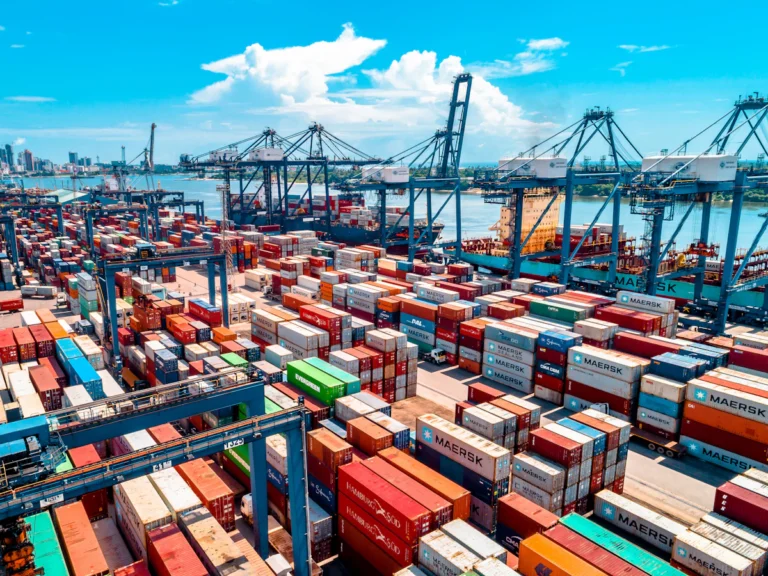
We load at Douala or Kribi. Most sailings from Cameroon to Indonesia tranship at a hub port, often in Asia. The shipping line confirms the routing at booking.
We can quote CFR or CIF to the main Indonesian ports, for example:
- Tanjung Priok (Jakarta): the busiest port, serving Jakarta, Banten and West Java.
- Tanjung Perak (Surabaya): for East Java’s food, feed and cocoa plants.
- Tanjung Emas (Semarang): for Central Java, including its textile mills.
- Belawan (Medan), Makassar and Batam: for Sumatra, Sulawesi and the Riau Islands, quoted on request.
Transit on the Cameroon to Indonesia route is typically a few weeks, confirmed at booking. Cocoa beans travel in jute bags of about 62.5 to 65 kg, at about 12 to 12.5 tonnes per 20ft container, often with a liner or lining paper. Cotton bales are light for their size, so 40ft containers usually give better freight value. Soybeans and soybean meal go in bags or bulk liners by agreement.
Humidity is the main risk on a tropical route. Condensation in a closed box can harm cocoa, nuts and seeds. So we dry lots to the agreed moisture, use clean and dry containers, and add liners or desiccants where the contract asks for them.
Import documents for Cameroon to Indonesia cargo
Indonesian customs and quarantine officers check that every paper matches. So we agree the document set and wording in the contract, before booking.
| Document | Issued by | Why Indonesia needs it |
|---|---|---|
| Commercial invoice and packing list | BV Holdings Agro | Customs value, weights and marks |
| Bill of lading | Shipping line | Title and release at the port |
| Phytosanitary certificate | MINADER plant protection service | Quarantine checks, with timing rules |
| Certificate of origin | Authorised Cameroon body | Customs records and origin checks |
| ONCC export quality certificate | National Cocoa and Coffee Board | Required for cocoa exports |
| Weight and quality certificate | Agreed inspection company | Matching the lot to the contract |
| Fumigation certificate and lab reports | Licensed provider / agreed laboratory | Where rules or the contract require them |
Grinders and mills often test cargo again on arrival. So it helps to agree in the contract which sampling method applies and how any difference between the loading and arrival results is handled. On Cameroon to Indonesia cocoa, we suggest naming the inspection company, the cut-test method and the tolerance in writing. That way, both sides know the rules before the beans leave Douala or Kribi.
HS codes must match across every paper. The WCO Harmonized System sets the first six digits, and Indonesia adds its own national digits. For the full list of papers, see our export documents page.
Incoterms that suit buyers in Indonesia
We quote FOB, CFR and CIF for Cameroon to Indonesia contracts. Each term moves cost and risk at a different point.
- FOB Douala or Kribi: suits grinders and large traders with their own freight contracts. You book the ship; we deliver on board.
- CFR Indonesian port: we book freight to Tanjung Priok, Surabaya or your chosen port. You insure the cargo in Indonesia.
- CIF Indonesian port: we add minimum cargo insurance, which helps when a bank needs an insurance document under a letter of credit.
Payment security is agreed in the contract, for example a letter of credit or documentary collection. On CFR or CIF, each Cameroon to Indonesia offer states the freight basis and how long it is valid. Ask us for a side-by-side cost comparison of the three terms for your port.
When to buy: seasons for Cameroon to Indonesia cargo
Each crop has its own window in Cameroon. Our Cameroon harvest calendar shows every product by month. For Indonesian buyers, the key dates are:
- Cocoa beans: main-crop lots easiest from about October to March; mid-crop lots from June to September.
- Cotton lint: ginned lint ships mainly from January to June.
- Soybeans and soybean meal: lots easiest from about November to March.
- Groundnuts: lots easiest from October to February.
- Sesame: lots easiest from November to March.
- Dried chili: spread through much of the year, with the best drying in the northern dry season.
So plan Cameroon to Indonesia cocoa contracts early in the main crop, when good lots are easiest to secure. Cotton and soybean meal, by contrast, suit a programme spread over several months.
How to order from Cameroon to Indonesia with BV Holdings Agro
Ordering from Cameroon to Indonesia follows four steps. Our export process page explains each one in more detail.
- Inquiry: send the product, grade, volume, Indonesian port, Incoterm and any licence or halal needs.
- Offer and sample: we send a written offer and, where possible, a sample for your own lab.
- Agreement: we sign a contract with specification, price, Incoterm, payment terms, inspection method and shipment window.
- Shipment: we prepare, inspect and load, then release documents under the agreed payment terms.
Our quality and sourcing page shows the five checkpoints from producing region to port.
Why buy from BV Holdings Agro
- Cocoa depth: forest-belt beans under ONCC control, backed by our cocoa division.
- Timed paperwork: certificate dates and vessel planned together for Indonesian rules.
- Several lines: cocoa, cotton, soybeans, feed and food crops from one supplier.
- Your inspector welcome: SGS, Bureau Veritas, Intertek, Cotecna or another agreed company.
- Straight answers: we never claim certifications we cannot document.
Sourcing for other plants in the region? See our pages on shipping to Malaysia and shipping to China, or return to all export markets.
Cameroon to Indonesia FAQ
What do you ship from Cameroon to Indonesia?
We quote cocoa beans, cotton lint, soybeans, soybean meal, groundnuts, sesame seeds and dried chili. Other products on our list can be offered too. Each has a typical specification, and the final specification is confirmed in each contract and verified before loading.
Is there a trade agreement for Cameroon to Indonesia cargo?
No. Indonesia has no free trade agreement with Cameroon, so its standard duty rates normally apply. Some commodities also need an import approval or licence. Your customs broker should confirm the current duty rate and any licence for your exact HS code before you agree a price.
What is Indonesia’s prior notice rule?
Under Barantin Regulation 14/2024, the exporter submits a prior notice through Indonesia’s quarantine information system before the cargo leaves the origin. The phytosanitary certificate also has timing rules. So we plan inspection, certification and the vessel together, and we confirm the current procedure with your importer.
Do your products have halal certification?
No. We do not claim halal certification. Indonesia’s mandatory halal rules for imported food and ingredients apply from 18 October 2026, with exemptions for some plant materials. So tell us at the inquiry stage if your products need halal status, and your importer can confirm which rules apply.
Which Indonesian ports do you quote?
We quote CFR or CIF to Tanjung Priok, Tanjung Perak (Surabaya) and Tanjung Emas (Semarang), plus Belawan, Makassar and Batam on request. Most sailings tranship at a hub on the way. The shipping line confirms routing and transit time at booking, and the contract sets the shipment window.
How long does shipping from Cameroon to Indonesia take?
Transit is typically a few weeks, confirmed at booking. It depends on the carrier, the transhipment port and the season. In addition, allow time for inland transport to Douala or Kribi, inspection and loading. We state the shipment window in the contract, so you can plan factory intake.
What is the minimum order?
The minimum order is one 20ft container. For cocoa beans, that is about 12 to 12.5 tonnes in jute bags. Larger orders can ship over several containers or as a programme. For light cargo such as cotton lint, a 40ft container usually gives better freight value.
Are your products certified organic or Fairtrade?
No. We do not claim organic, Fairtrade or Rainforest Alliance certification. Instead, we describe quality through typical specifications, test results and independent inspection. If your buyer needs a certified supply chain, tell us early, and we will be clear about what we can and cannot provide.
Other Asia markets

One arm of BV Holdings PLC
BV Holdings Agro is the agricultural export company of BV Holdings PLC, alongside BV Cocoa Products and BV Metal & Minerals.
Plan your Cameroon to Indonesia shipment
Tell us the product, grade, volume and Indonesian port, and we will reply with a written offer.