Cameroon to Malaysia cocoa beans for Malaysian grinders
BV Holdings Agro ships cocoa beans and other commodities from Cameroon to Malaysia for grinders, manufacturers and traders. We also quote natural rubber, green coffee, feed and spices, loaded at Douala or Kribi on FOB, CFR or CIF terms.
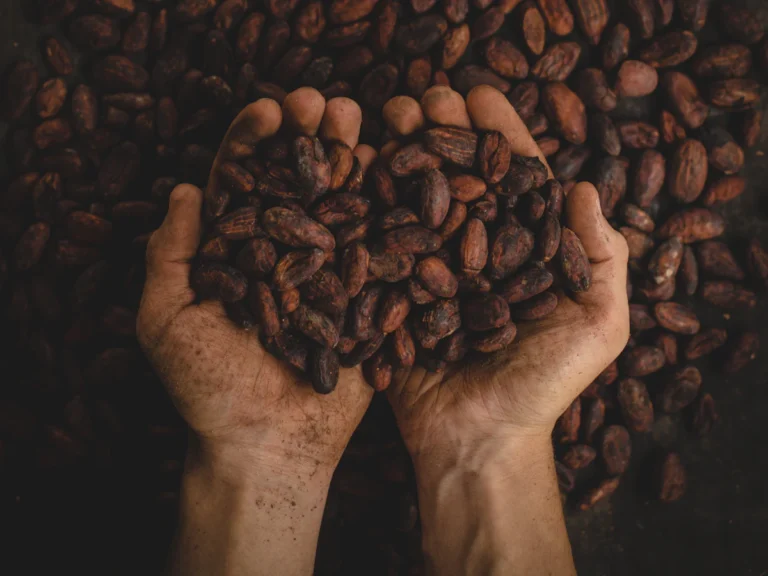
BV Holdings Agro ships cocoa beans and other farm commodities from Cameroon to Malaysia for grinders, manufacturers and trading houses. Cocoa leads most Malaysian inquiries, followed by natural rubber, green coffee, feed ingredients and spices. We load at Douala or Kribi and quote FOB, CFR or CIF to Port Klang and other Malaysian ports.
Malaysia is a cocoa grinding centre with a small farm base. Its grinders turn imported beans into butter, powder and liquor for export across Asia and beyond. As a result, Malaysian buyers look to West and Central Africa for beans, and Cameroon is one of the origins they can consider.
This page sets out which of our products suit Malaysian buyers, what the import rules require, how cargo moves and how to order. It also explains when each crop is easiest to buy.
What Malaysian buyers source from Cameroon
Most Cameroon to Malaysia demand comes from processors. Cocoa grinders want fermented, dried beans with a steady bean count and a clean cut test. Rubber goods makers want technically specified rubber with lab data. Coffee roasters and instant-coffee makers want green Robusta, and some want Arabica too.
There is also demand from feed mills and food makers. Malaysia’s poultry and livestock sector buys imported maize and protein meals. Meanwhile, spice traders and food factories buy pepper, ginger and groundnuts for sauces, snacks and blends.
Trading houses in Malaysia also buy for onward sale across South-East Asia. For them, a supplier with several product lines and two loading ports can simplify planning. In addition, a clear document set helps when a cargo is resold while it is still at sea.
We only offer products from our own list. Each product page has a typical specification, packing details and FAQ. You can also browse by category, such as cocoa products, industrial raw materials or spices.
Products in demand for the Cameroon to Malaysia trade
The table lists the products we most often quote from Cameroon to Malaysia. Buyer types describe the Malaysian market in general, not our client list. HS codes are shown at six digits; your customs agent confirms the full Malaysian tariff code.
| Product | Typical buyer or use in Malaysia | HS code |
|---|---|---|
| Cameroon cocoa beans | Cocoa grinders and chocolate makers | 1801.00 |
| Natural rubber (TSR 10 / TSR 20) | Rubber goods and tyre makers | 4001.22 |
| Green Robusta coffee | Roasters, instant and “white coffee” makers | 0901.11 |
| Green Arabica coffee | Café chains and specialty roasters | 0901.11 |
| Yellow maize | Poultry and livestock feed mills | 1005.90 |
| Soybean meal | Feed mills and aquafeed makers | 2304.00 |
| Black pepper | Spice traders and food factories | 0904.11 |
| White pepper | Spice blenders and sauce makers | 0904.11 |
| Dried ginger | Spice processors and drink makers | 0910.11 / 0910.12 |
| Groundnuts (peanuts) | Snack makers and food traders | 1202.42 |
In short, cocoa beans are the main product. Rubber and coffee suit buyers who want regular loads, while feed and spices depend on price against nearer origins.
Natural rubber for Malaysian manufacturers
Malaysia is famous for rubber gloves, and it also makes tyres, hoses, belts and many moulded parts. Local estates cannot meet all of that demand, so manufacturers also buy rubber from abroad. Our Cameroon to Malaysia rubber offers cover TSR 10 and TSR 20 from the South-West, Littoral and South regions. Each lot is graded by lab tests for dirt, ash, volatile matter and plasticity. As a result, your incoming-goods team can check the data against its compound specification before the bales leave Cameroon.
Green coffee for Malaysian roasters
Malaysians drink a lot of coffee, from kopitiam blends to instant and “white coffee” mixes. Most of that demand is met by imported green beans. Cameroon Robusta from the Littoral and East regions suits blends and soluble coffee. Cameroon Arabica from the western highlands suits café and specialty roasters. Our Arabica vs Robusta guide explains the difference. Every coffee lot is graded by screen size and defects and carries an ONCC export quality certificate.
Feed ingredients and spices
Malaysian feed mills rely heavily on imported maize and soybean meal. For these lines, each Cameroon to Malaysia offer states moisture, aflatoxin and protein values per lot, plus the bag or bulk basis. Spice buyers, meanwhile, can source black and white pepper from the Moungo valley, dried ginger from the West and Littoral regions, and groundnuts from the north. Final specifications are confirmed in each contract and verified before loading.

Cocoa beans: the heart of Cameroon to Malaysia trade
Malaysia’s commodities ministry describes the country as one of the world’s largest cocoa processing and grinding centres. In October 2026, its minister also noted that much of the raw material for the industry is still imported. That gap is where Cameroon to Malaysia cocoa fits.
Our beans come from the forest belt of the Centre, South, South-West, East and Littoral regions. The main crop runs from about September to February, and a smaller mid-crop follows from May to August. Malaysian grinders usually check:
- Bean count: beans per 100 g, which links to size and yield.
- Cut test: the share of mouldy, slaty, insect-damaged and germinated beans.
- Moisture: dry beans store and ship better and resist mould.
- Fat content and free fatty acid: key for butter yield and quality, tested on request.
Every cocoa export lot is subject to quality control by Cameroon’s National Cocoa and Coffee Board (ONCC). We also test against your contract and invite your chosen inspector. Our cocoa division, BV Cocoa Products, covers processed cocoa as well. For industry data, the International Cocoa Organization publishes market reports.
Cameroon to Malaysia trade relationship and market access
Malaysia has many trade agreements, but none with Cameroon. So Cameroon to Malaysia cargo normally pays Malaysia’s standard duty rate for each tariff line, and some raw materials carry low or zero duty. Your customs agent should confirm the current rate for your exact HS code.
Plant import permits and MAQIS
In Peninsular Malaysia and Labuan, the Malaysian Quarantine and Inspection Services (MAQIS) is the competent authority for plant imports. In Sabah and Sarawak, the state agriculture departments apply the Plant Quarantine Act 1976. Permits are needed for many plant products, including grains and beans, while processed plant products are generally outside the permit rule.
A phytosanitary certificate is also needed. The importer can apply for the permit online, and it should be in place before the goods arrive. So ask your importer to start the permit as soon as the contract is signed.
Cocoa-specific rules
Malaysia takes cocoa plant health seriously. Its rules restrict some plant products from countries where certain cocoa diseases are present. In addition, the Malaysian Cocoa Board has a legal role in regulating the import and export of cocoa. The commodities ministry’s cocoa industry page links to its import requirements for cocoa beans. Therefore, your importer should confirm the current conditions for Cameroon-origin beans before you sign.
Food safety rules
Food imports must meet Malaysia’s Food Act 1983 and Food Regulations 1985, which set limits such as pesticide residues and contaminants. The Ministry of Health checks food at the border. We can add lab reports, such as aflatoxin tests on groundnuts and maize, where agreed. If your finished products carry a halal mark, ask early which supplier documents you need; we do not claim halal certification.
Shipping from Cameroon to Malaysia: ports, containers and transit
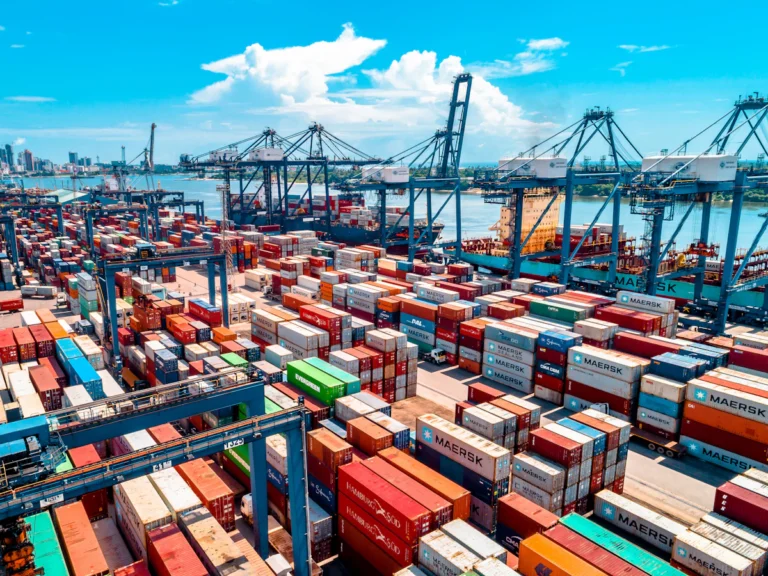
We load at Douala or Kribi. Most sailings from Cameroon to Malaysia tranship at a hub port, and Malaysia’s own ports are major hubs. The shipping line confirms the exact routing at booking.
We can quote CFR or CIF to the main Malaysian ports, for example:
- Port Klang: Malaysia’s busiest port, serving the Klang Valley and the west coast.
- Tanjung Pelepas and Pasir Gudang: in Johor, convenient for plants in the south.
- Penang: for buyers in the north of the peninsula.
- Kota Kinabalu and Kuching: for Sabah and Sarawak, quoted on request.
Transit on the Cameroon to Malaysia route is typically a few weeks, confirmed at booking. Cocoa beans travel in new jute bags of about 62.5 to 65 kg, at about 12 to 12.5 tonnes per 20ft container, often with a liner or lining paper. Rubber bales are dense, so they usually ship in 20ft units on pallets or in crates. Green coffee travels in 60 kg jute bags, with hermetic liners on request.
Humidity is the main risk on a tropical route. Warm, damp air can form condensation inside a closed box, which can cause mould. So we dry lots to the agreed moisture, use clean and dry containers, and add liners or desiccants where the contract asks for them.
Import documents for Cameroon to Malaysia cargo
Malaysian customs and quarantine officers check each paper against the permit. So we agree the document set and wording in the contract, before booking.
| Document | Issued by | Why Malaysia needs it |
|---|---|---|
| Commercial invoice and packing list | BV Holdings Agro | Customs value, weights and marks |
| Bill of lading | Shipping line | Title and release at the port |
| Phytosanitary certificate | MINADER plant protection service | Quarantine check against the import permit |
| Certificate of origin | Authorised Cameroon body | Customs records and origin checks |
| ONCC export quality certificate | National Cocoa and Coffee Board | Required for cocoa and coffee exports |
| Weight and quality certificate | Agreed inspection company | Matching the lot to the contract |
| Fumigation certificate and lab reports | Licensed provider / agreed laboratory | Where the permit or contract requires them |
Grinders often test cocoa again when it reaches the factory. So it helps to agree in the contract which sampling method applies and how any difference between the loading and arrival results is handled. On Cameroon to Malaysia cocoa, we suggest naming the inspection company, the cut-test method and the tolerance in writing.
If the import permit names a treatment or extra wording, send us a copy before loading. We will then match the fumigation and the certificate text to it. For the full list, see our export documents page.
Incoterms that suit buyers in Malaysia
We quote FOB, CFR and CIF for Cameroon to Malaysia contracts. Each term moves cost and risk at a different point.
- FOB Douala or Kribi: suits grinders and traders with their own freight contracts from West Africa. You book the ship; we deliver on board.
- CFR Malaysian port: we book freight to Port Klang or your chosen port. You insure the cargo in Malaysia.
- CIF Malaysian port: we add minimum cargo insurance, which helps when a bank wants an insurance document under a letter of credit.
Freight rates to Asia can change quickly. On CFR or CIF, each offer states the freight basis and how long the offer is valid. For a regular Cameroon to Malaysia programme, such as monthly cocoa or rubber loads, we can also agree in advance how freight changes are shared between shipments.
Payment security is agreed in the contract, for example a letter of credit or documentary collection. Ask us for a side-by-side cost comparison of the three terms for your port.
When to buy: seasons for Cameroon to Malaysia cargo
Each crop has its own window in Cameroon. Our Cameroon harvest calendar shows every product month by month. For Malaysian buyers, the main points are:
- Cocoa beans: main-crop lots easiest from about October to March; mid-crop lots from June to September.
- Green Robusta: lots easiest from January to May. Arabica: December to April.
- Black and white pepper: lots easiest from January to May.
- Dried ginger: lots easiest from January to May, after drying.
- Groundnuts: lots easiest from October to February.
- Natural rubber: tapped all year, with a dip during the dry-season wintering.
So plan Cameroon to Malaysia cocoa contracts early in the main crop. Rubber and coffee, by contrast, suit a steady monthly or quarterly programme.
How to order from Cameroon to Malaysia with BV Holdings Agro
Buying from Cameroon to Malaysia follows four steps. Our export process page explains each one in more detail.
- Inquiry: send the product, grade, volume, Malaysian port, Incoterm and any permit conditions.
- Offer and sample: we send a written offer and, where possible, a sample for your own lab.
- Agreement: we sign a contract with specification, price, Incoterm, payment terms, inspection method and shipment window.
- Shipment: we prepare, inspect and load, then release documents under the agreed payment terms.
Our quality and sourcing page shows the five checkpoints from producing region to port.
Why buy from BV Holdings Agro
- Cocoa focus: forest-belt beans, ONCC-controlled, with our own cocoa division behind us.
- Lab data on rubber: TSR 10 and TSR 20 with results per lot.
- Permit-matched papers: fumigation and certificate wording agreed before loading.
- Your inspector welcome: SGS, Bureau Veritas, Intertek, Cotecna or another agreed company.
- No inflated claims: we never claim certifications we cannot document.
Sourcing for other plants in the region? See our pages on shipping to Indonesia and shipping to China, or return to all export markets.
Cameroon to Malaysia FAQ
What do you ship from Cameroon to Malaysia?
We quote cocoa beans, natural rubber, green Robusta and Arabica coffee, yellow maize, soybean meal, black and white pepper, dried ginger and groundnuts. Other products on our list can be offered too. Each has a typical specification, and the final specification is confirmed in each contract and verified before loading.
Do Cameroon cocoa beans need a permit for Malaysia?
Your importer should expect plant import rules to apply. MAQIS issues import permits for many plant products in Peninsular Malaysia, and the Malaysian Cocoa Board has a role in regulating cocoa imports. Some cocoa disease rules also apply by origin. So confirm the current conditions for Cameroon-origin beans before signing.
Is there a trade agreement for Cameroon to Malaysia cargo?
No. Malaysia has no free trade agreement with Cameroon, so standard duty rates normally apply. Rates vary by product, and some raw materials carry low or zero duty. Your customs agent should confirm the current rate for your exact HS code before you agree a price.
Which Malaysian ports do you quote?
We quote CFR or CIF to Port Klang, Tanjung Pelepas, Pasir Gudang and Penang, plus Kota Kinabalu and Kuching on request. Most sailings tranship at a hub on the way. The shipping line confirms routing and transit time at booking, and the contract sets the shipment window.
How long does shipping from Cameroon to Malaysia take?
Transit is typically a few weeks, confirmed at booking. It depends on the carrier, the transhipment port and the season. In addition, allow time for inland transport to Douala or Kribi, inspection and loading. We state the shipment window in the contract, so you can plan grinding schedules.
What cocoa quality checks do you run?
We check moisture, bean count and the cut test on every cocoa lot, plus fat content and free fatty acid on request. Each export lot is also subject to ONCC quality control. You can appoint an independent inspector to sample the lot, so your own lab can compare results fairly.
What is the minimum order?
The minimum order is one 20ft container. For cocoa beans, that is about 12 to 12.5 tonnes in jute bags. Larger orders can ship over several containers or as a programme. We price every offer per container load and confirm the approximate tonnes per container in the offer.
Are your products certified organic, Fairtrade or halal?
No. We do not claim organic, Fairtrade, Rainforest Alliance or halal certification. Instead, we describe quality through typical specifications, test results and independent inspection. If your buyer needs a certified supply chain, tell us early, and we will be clear about what we can and cannot provide.
Other Asia markets

One arm of BV Holdings PLC
BV Holdings Agro is the agricultural export company of BV Holdings PLC, alongside BV Cocoa Products and BV Metal & Minerals.
Plan your Cameroon to Malaysia shipment
Tell us the product, grade, volume and Malaysian port, and we will reply with a written offer.