Export insights for Cameroon commodity buyers seven practical guides
Export insights from BV Holdings Agro help importers and trading houses buy Cameroon commodities with fewer surprises. Seven practical guides cover harvest timing, import steps, Incoterms and key products.
All export insights guides
Cameroon Harvest Calendar
This Cameroon harvest calendar shows when every crop we export comes in, month by month.
Read the guide02GuideHow to Import from Cameroon
This guide shows how to import from Cameroon in ten clear steps.
Read the guide03GuideFOB vs CIF
FOB vs CIF is the key Incoterms choice when you buy from Cameroon.
Read the guide04GuideArabica vs Robusta
Arabica vs Robusta coffee is the first choice every green coffee buyer makes.
Read the guide05GuidePenja Pepper
Penja pepper is Cameroon's most famous spice, grown on volcanic soils in the Moungo valley.
Read the guide06GuidePKC vs Soybean Meal
Palm kernel cake vs soybean meal is a common choice for feed buyers in the tropics.
Read the guide07GuideRaw Cashew Nut KOR
Raw cashew nut KOR is the number that drives most of the value in a bag of in-shell cashews.
Read the guide08GuideEUDR & Cameroon Exports
Cameroon EUDR compliance now shapes how EU buyers source cocoa, coffee, palm products, rubber, soy and charcoal.
Read the guide
Export Insights is the BV Holdings Agro guide library for buyers who source farm commodities from Cameroon. Each guide answers a real question that importers, trading houses and food makers ask us before they sign a contract. The tone is plain, the advice is practical, and the facts are checked.
Cameroon can look complex from the outside. It has two climate zones, two export ports, dozens of crops and a long list of export papers. However, the trade runs on a few clear rules. Once you know them, buying a container of cocoa, coffee, sesame or pepper becomes a steady routine.
So we wrote these export insights to save you time. Read one guide before your first call, or read them all before you plan a full season. In both cases, you will ask sharper questions, compare offers more fairly and avoid the mistakes that cost buyers money.
Why read our export insights before you buy
Most buying problems start before the goods are even loaded. A vague spec, the wrong Incoterm or a shipment window that ignores the harvest can all lead to delays. For this reason, our export insights focus on the decisions you make early, when changes are still cheap.
Here is what the library helps you do:
- Time your contracts around real harvest windows, not guesses.
- Write a clear specification that both sides can test against.
- Choose between FOB, CFR and CIF with your costs and risks in view.
- Plan payment security, inspection and documents in the right order.
- Prepare for buyer-country rules, such as the EU Deforestation Regulation.
- Pick the right product form, grade or feed ingredient for your use.
In addition, every guide links to the matching product pages. You can move from an idea to a typical specification in one click. Then, when you are ready, you can send an inquiry with the details we need to make an offer. Good export insights should end in a better order, after all.
Our export insights are written by the team that handles sourcing, quality checks and shipping every week. As a result, the advice reflects how the trade works on the ground in Yaoundé, Douala and Kribi, not just how it looks in a textbook.
Cameroon at a glance: key market facts for buyers
Before the guides, a few facts set the scene. The table below sums up the points buyers ask about most. These export insights apply to every product we trade.
| Topic | What buyers should know |
|---|---|
| Location | Central Africa, on the Gulf of Guinea, between Nigeria and the Congo Basin |
| Climate zones | Humid forest south with two rainy seasons; drier savannah north with one |
| Main export crops | Cocoa, coffee, palm products, cotton, rubber, sesame, spices, cashew |
| Export ports | Douala (the main port) and Kribi (deep-water port on the coast) |
| Trade terms we quote | FOB Douala or Kribi; CFR or CIF to your destination port |
| Order size | Container loads, from one 20ft container; no retail quantities |
| Quality control | Moisture, foreign matter and product tests; cocoa and coffee lots also checked by the ONCC |
| Key documents | Phytosanitary certificate, certificate of origin, bill of lading, packing list, weight and quality certificates |
| Currency | Central African CFA franc (XAF), pegged to the euro; contracts are often in USD or EUR |
Two of these facts shape almost every deal. First, the north and south harvest at different times, so supply moves around the calendar. Second, the port and the Incoterm decide who pays for what. Our export insights explain both in detail.

The seven guides in our export insights library
Each guide covers one topic in depth. Start with the one that matches your next decision, because our export insights build on each other. Meanwhile, the short summaries below show what each guide covers.
1. Cameroon harvest calendar
The Cameroon harvest calendar lists every crop we trade, month by month. It explains why the forest south has two seasons while the northern savannah has one. It also shows how to time contracts so your shipment window matches fresh supply. If you buy more than one product, this is the guide to bookmark.
2. How to import from Cameroon
Our step-by-step import guide walks through the full process. It starts with supplier checks and specs. Then it covers samples, contracts, payment security, inspection, export documents, EUDR and customs at your end. First-time buyers should read it before anything else.
3. FOB vs CIF
The FOB vs CIF guide explains the three Incoterms 2020 rules we quote. It uses Douala and Kribi examples to show where risk passes and who pays freight and insurance. A clear table compares FOB, CFR and CIF side by side. Finally, it gives simple rules for when to choose each one.
4. Arabica vs Robusta coffee
Cameroon grows both coffee species. The Arabica vs Robusta guide compares where each grows, how it tastes, how it is processed and who buys it. Roasters and green coffee traders will find it useful when they plan a blend or a new origin. It links to our Green Arabica Coffee and Green Robusta Coffee pages.
5. Penja pepper
Penja pepper grows on the volcanic soils of the Moungo valley in the Littoral. It holds PGI status, first through OAPI in 2013 and later in the EU in 2022. The Penja pepper guide tells its story and explains what the label means for buyers. PGI-labelled lots can be discussed on request.
6. Palm kernel cake vs soybean meal
Feed buyers often weigh these two protein sources. The palm kernel cake vs soybean meal guide compares protein, fibre, uses and storage. It helps feed mills and livestock firms decide which ingredient fits their rations. You can then compare the typical specs on our Palm Kernel Cake and Soybean Meal pages.
7. Raw cashew nut KOR
Cashew buyers judge a lot by its kernel outturn ratio, or KOR. The raw cashew nut KOR guide explains how the cut test works, what nut count and moisture mean, and how they affect value. It is a must-read before you buy Raw Cashew Nuts from the northern harvest.
Quick picks: which of our export insights to read first
Not sure where to start? Use these quick picks. They match common buyer types to the export insights that help them most.
- First-time importer: read How to Import from Cameroon, then FOB vs CIF.
- Commodity trader planning a season: start with the Cameroon harvest calendar.
- Coffee roaster or green coffee trader: read Arabica vs Robusta.
- Spice importer or fine food brand: read the Penja pepper guide.
- Feed mill or livestock firm: read Palm Kernel Cake vs Soybean Meal.
- Cashew processor: read the Raw Cashew Nut KOR guide.
- Finance or logistics team: read FOB vs CIF and the payment section of the import guide.
Of course, many buyers fit more than one type. In that case, the harvest calendar and the import guide are the best pair to read together.
Six export insights every first-time buyer should know
If you only have five minutes, read this section. These six export insights come up in almost every first conversation we have with a new buyer.
Harvests set the rhythm
Cocoa, coffee, sesame and cashew all have clear seasons. Fresh lots are easiest to source soon after harvest. So a contract that asks for shipment in the wrong month can be slow or costly to fill.
The spec is the contract
Moisture, foreign matter, bean count, screen size or KOR must be written down. Otherwise, there is nothing to test against. A clear spec also makes the inspection simple and fair for both sides.
Samples come before signatures
Ask for a sample of the type of lot you want, and test it in your own lab if you can. Then use the result to agree the final spec. Samples and offers follow an inquiry.
Incoterms decide who carries the risk
Under FOB, CFR and CIF, risk passes once the goods are on board the vessel at Douala or Kribi. However, the cost split differs. That gap is what our FOB vs CIF guide explains.
Payment security is your call
Buyers often use a letter of credit or a documentary collection. Other terms can be agreed in the contract. Either way, documents are released according to the payment terms you both sign.
Your market has its own rules
The EU, the UK, the US and Asian markets each set their own import rules. For example, the EU Deforestation Regulation covers cocoa, coffee, palm oil, rubber, soy and wood. So tell us your destination early, and we can plan the data and papers you need.
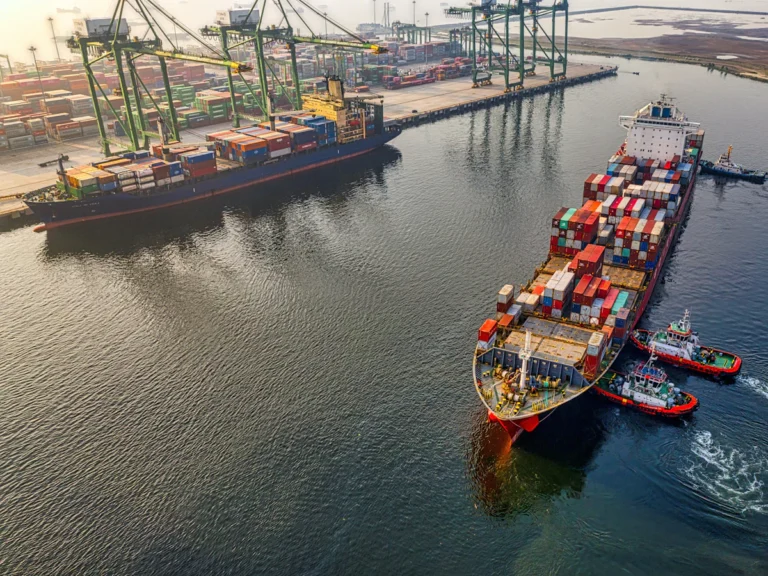
What we export from Cameroon
These export insights refer to the products we actually trade. We list nine categories, all sold in container loads from Douala or Kribi:
- Cocoa Products: cocoa beans, shells, butter, powder, liquor and cake. Our cocoa division, BV Cocoa Products, also supplies nibs and other derivatives.
- Green Coffee: green Arabica from the western highlands and green Robusta from the Littoral, South-West and East.
- Oil Seeds: sesame seeds, soybeans, groundnuts and palm kernels.
- Vegetable Oils: crude palm oil and palm kernel oil.
- Animal Feed Ingredients: cocoa shells, palm kernel cake, soybean meal, yellow maize and rice bran.
- Cereals & Pulses: yellow maize, white maize, sorghum, millet, rice and red kidney beans.
- Spices: ginger, turmeric, black pepper, white pepper, chili, cayenne and garlic.
- Nuts & Kola: raw cashew nuts, kola nuts and bitter kola.
- Industrial Raw Materials: natural rubber, cotton lint and legally sourced hardwood lump charcoal.
Each product page has a typical specification table, packaging details and an FAQ. Also, you can browse the full range on our all commodities page. If a product is not listed, we do not offer it.
Ports, Incoterms and documents: export insights in brief
Two ports
Douala is Cameroon’s main port and handles most of its trade. It sits up the Wouri estuary, close to many producing regions in the Littoral and South-West. Kribi, further south on the open coast, is a newer deep-water port that can take larger ships. We load at either port, depending on the product, the lot location and the shipping lines serving your route. Our export insights on Incoterms use both ports as worked examples.
Three Incoterms
We quote FOB Douala or Kribi, CFR to your destination port, or CIF to your destination port. Under CIF, we arrange freight and minimum cargo insurance. Under FOB, you book the vessel and insure the cargo yourself. These export insights follow the official rules, which are published by the International Chamber of Commerce.
A full document set
Every shipment travels with the papers your customs, bank and quality team need. These include the commercial invoice, packing list, bill of lading, phytosanitary certificate from MINADER plant protection and certificate of origin. In addition, weight and quality certificates come from the agreed inspection company. Cocoa and coffee lots also carry an ONCC export quality certificate. Our export documents page lists every paper in detail.
How our export insights connect to your order
Our export insights are not just reading material. They map onto the six steps of our export process, so you can see which guide helps at each stage.
| Step | Who acts | Most useful guide |
|---|---|---|
| 1. Inquiry | You send product, grade, volume, port and Incoterm | Harvest calendar; FOB vs CIF |
| 2. Offer and sample | We send an offer and a sample | Product guides (coffee, pepper, feed, cashew) |
| 3. Contract | Both sides sign spec, price, Incoterm, payment terms, inspection and shipment window | How to import from Cameroon |
| 4. Payment security | You arrange a letter of credit, documentary collection or other agreed terms | How to import from Cameroon |
| 5. Preparation and inspection | We prepare, test and pack the lot | Product guides; quality page |
| 6. Shipment and documents | We ship; documents are released per payment terms | FOB vs CIF; import guide |
Our quality control page shows the five quality checkpoints behind step 5. They run from buying in the region to drying, testing, packing and independent inspection. In short, the guides explain the why, and the process pages explain the how.
Why buy from BV Holdings Agro
- Part of BV Holdings PLC, with group governance, finance and compliance behind every trade.
- Office in Yaoundé, with loading at Douala or Kribi.
- Sourcing from producer groups and aggregators in the main growing regions.
- Pre-loading quality checks against the contract specification.
- Independent third-party inspection, such as SGS, Bureau Veritas, Intertek or Cotecna, at your request.
- Full export documentation with every shipment.
- Clear, honest answers, including what is in season and what is not.
The same honesty runs through our export insights. We are a B2B trading house. That means container loads only, offers after inquiry, and terms agreed per contract. We would rather tell you a lot is out of season than promise what we cannot ship.
Export insights FAQ
What are BV Holdings Agro export insights?
Our export insights are a free library of buyer guides about sourcing farm commodities from Cameroon. They cover harvest timing, the import process, Incoterms and key products such as coffee, pepper, feed and cashew. Each guide is written by our trading team and links to the matching product pages and the request for quote form.
Who are these export insights written for?
They are written for importers, commodity trading houses, food manufacturers, feed mills and processors. In other words, they suit any business buying in container loads. We do not sell retail quantities. If you are new to Cameroon, start with the import guide. If you already buy here, the harvest calendar is the most useful.
Do your export insights include prices?
No. Commodity prices move with world markets, crop size, freight rates and the Incoterm you choose. So a price on a guide page would be out of date within days. Instead, we send a written offer after your inquiry. The offer states the product, spec, volume, Incoterm, port and shipment window.
Which ports do you ship from?
We load at Douala or Kribi. Douala is the main port and is close to many producing regions in the Littoral and South-West. Kribi is a deep-water port further south that can take larger vessels. The choice depends on the product, where the lot is stored and which shipping lines serve your destination.
What is the minimum order?
Our minimum order is one 20ft container. Larger orders can use 40ft containers or run over several shipments across a season. The net weight per container depends on the product, the bag size and how the goods are stowed. Each product page gives an approximate container load as a guide.
Can I get samples before I order?
Yes. Samples and offers follow an inquiry. Tell us the product, grade, volume, destination port and the use you have in mind. Then we prepare a representative sample and a written offer. We suggest you test the sample in your own lab, because the result helps fix the final contract spec.
Do you hold organic or Fairtrade certification?
No. We do not claim Organic, Fairtrade or Rainforest Alliance certification, and we do not supply certified lots we cannot document. However, company registration and export documents are provided during supplier onboarding on request. If you need specific lab tests or traceability data, please list them in your inquiry.
How often do you add new export insights?
We add guides when buyers keep asking the same question. The current library has seven guides, and each one is reviewed when rules change, such as new EUDR dates or Incoterms updates. If there is a topic you would like covered, send it with your next inquiry and we will consider it.

One arm of BV Holdings PLC
BV Holdings Agro is the agricultural export company of BV Holdings PLC, alongside BV Cocoa Products and BV Metal & Minerals.
Put our export insights to work
Send your product, volume, port and Incoterm, and we will reply with a written offer and sample.