FOB vs CIF for Cameroon commodity buyers Incoterms 2020 made simple
FOB vs CIF is the key Incoterms choice when you buy from Cameroon. This guide explains FOB, CFR and CIF with Douala and Kribi examples, a clear table and simple rules.
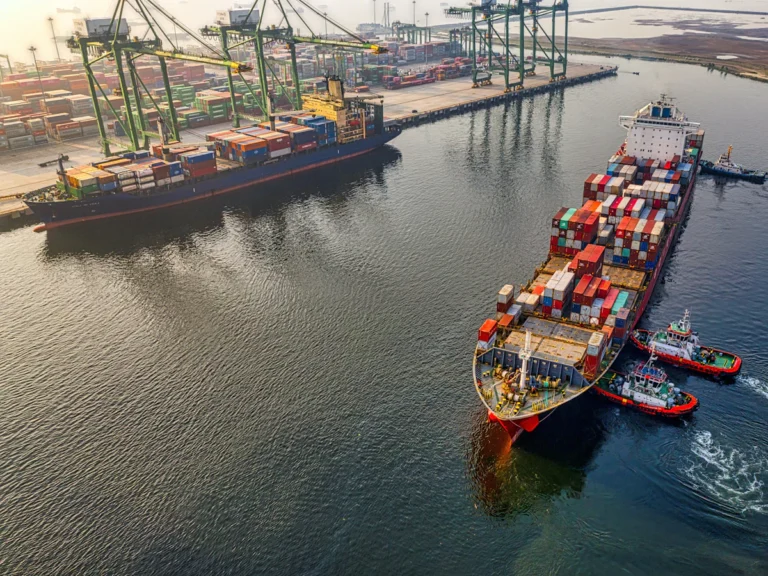
FOB vs CIF is the most common choice a buyer makes when ordering commodities from Cameroon. Both are Incoterms 2020 rules, and both are used every day at Douala and Kribi. Yet they split costs, tasks and paperwork in very different ways. Pick the wrong one, and you may pay twice for freight or sail without the insurance you thought you had.
This guide explains FOB, CFR and CIF in plain English. It uses real Cameroon port examples, a side-by-side table and simple rules for when to choose each. By the end, you will know which term fits your business, your bank and your freight set-up.
We quote all three terms: FOB Douala or Kribi, CFR to your destination port and CIF to your destination port. So this is the same advice we give buyers on our first call.
FOB vs CIF in one minute
Short on time? Here is the core idea.
- FOB (Free On Board): we deliver the goods on board your vessel at Douala or Kribi. You book and pay the sea freight and insure the cargo.
- CFR (Cost and Freight): we book and pay the sea freight to your port. You insure the cargo.
- CIF (Cost, Insurance and Freight): we book and pay the freight and buy minimum cargo insurance for your benefit.
Here is the twist that surprises many buyers. Under all three terms, the risk passes to you at the same point: once the goods are on board the vessel at the port of shipment. So the FOB vs CIF choice is mainly about who pays for and controls the freight and insurance, not about where the risk sits.
What Incoterms 2020 are, and what they are not
Incoterms are standard trade terms published by the International Chamber of Commerce (ICC). The current edition is Incoterms 2020. Each rule uses three letters and sets out who does what between seller and buyer. Every FOB vs CIF decision starts with knowing what the rules actually do.
In particular, each rule covers three things:
- Delivery: where the seller hands the goods over.
- Risk: when loss or damage becomes the buyer’s problem.
- Costs and tasks: who pays for freight, insurance, export clearance and import clearance.
However, Incoterms do not cover everything. They say nothing about the price, the payment method, the transfer of ownership or what happens if a party breaks the contract. Those points belong in your sales contract. That is why our contracts state the spec, price, Incoterm, payment terms, inspection method and shipment window together.
Also, always write the full term with the named port and the edition. For example, write “FOB Kribi, Incoterms 2020” or “CIF Rotterdam, Incoterms 2020”. A term without a port is an open door to a dispute.

FOB explained: a Douala example
Imagine you buy one 40ft container of green Robusta coffee, FOB Douala. Here is who does what.
- We prepare the lot, test it, pack it in bags and arrange the agreed inspection.
- We clear the goods for export in Cameroon and obtain the export papers.
- You, or your freight forwarder, book space with a shipping line that calls at Douala.
- We deliver the container to the line and the goods are loaded on board your nominated vessel.
- At that moment, risk passes to you. From then on, freight, insurance and import costs are yours.
In the FOB vs CIF debate, FOB gives you control. You pick the line, negotiate the rate and choose the insurer. As a result, buyers with large freight contracts or in-house logistics teams often prefer FOB. It also lets you consolidate shipments from several origins with one forwarder.
On the other hand, FOB puts the booking work on you. If your vessel is late or skips the port, the goods wait at the terminal. So FOB works best when you have a reliable forwarder with good coverage of Douala or Kribi.
CFR explained: the middle option
CFR sits between FOB and CIF. We book and pay the main sea freight to your destination port. However, risk still passes to you once the goods are on board at Douala or Kribi. Insurance is not included, so you arrange your own cover.
Many buyers choose CFR because they already hold an annual cargo insurance policy. In that case, CIF would mean paying for cover twice. CFR also suits buyers who want a delivered-port price but have no freight team of their own. In short, CFR is FOB vs CIF with the freight solved and the insurance left to you.
CIF explained: a Kribi example
Now imagine you buy one 20ft container of sesame seeds, CIF Hamburg, loading at Kribi. The steps change in a few key places.
- We prepare, test, pack and inspect the lot, and clear it for export.
- Next, we book the freight from Kribi to Hamburg and pay for it.
- We buy cargo insurance, at least the minimum level the rules require, with you able to claim under it.
- The goods are loaded on board at Kribi. Risk passes to you at this point, even though we paid the freight.
- We send the bill of lading, insurance certificate and other documents, as the payment terms require.
- You clear import customs in Hamburg and pay duties, taxes and port charges at that end.
For the buyer, CIF is the simple side of FOB vs CIF. You receive one price covering goods, freight and insurance to your port. It is popular with banks under letters of credit, because the insurance document is part of the set. It also suits first-time buyers and smaller importers who do not have their own freight contracts.

FOB vs CIF vs CFR: comparison table
This table puts the three terms side by side. It is the quickest way to see the FOB vs CIF gap, with CFR in the middle.
| Item | FOB Douala / Kribi | CFR destination port | CIF destination port |
|---|---|---|---|
| Export clearance in Cameroon | Seller | Seller | Seller |
| Loading on board at Douala or Kribi | Seller | Seller | Seller |
| Risk passes to buyer | On board at port of shipment | On board at port of shipment | On board at port of shipment |
| Books and pays sea freight | Buyer | Seller | Seller |
| Cargo insurance | Buyer (optional, but wise) | Buyer (optional, but wise) | Seller buys minimum cover for the buyer |
| Unloading at destination | Buyer | Buyer, unless included in the freight contract | Buyer, unless included in the freight contract |
| Import clearance, duties and taxes | Buyer | Buyer | Buyer |
| Control over vessel choice | Buyer | Seller | Seller |
| Named place in the term | Port of shipment | Port of destination | Port of destination |
| Best for | Buyers with freight contracts | Buyers with annual insurance | Buyers who want one landed-port price |
Note the “named place” row. FOB names the port of shipment, while CFR and CIF name the port of destination. Yet risk under all three still passes at the port of shipment. Remembering that one fact clears up most FOB vs CIF confusion.
FOB vs CIF costs: what goes into each offer
We never publish prices, because they move with markets and freight. However, we can show which cost items each term includes. Then you can compare offers on a fair basis.
| Cost item | In FOB price | In CFR price | In CIF price |
|---|---|---|---|
| Goods, sorting, bagging and marking | Yes | Yes | Yes |
| Inland transport to Douala or Kribi | Yes | Yes | Yes |
| Export papers, quality control and port handling in Cameroon | Yes | Yes | Yes |
| Sea freight to your port | No | Yes | Yes |
| Minimum cargo insurance | No | No | Yes |
| Destination terminal and import costs | No | No | No |
To compare an FOB offer with a CIF offer, add your own freight quote and insurance premium to the FOB figure. Then compare the total with the CIF figure. Sometimes your own freight contract wins. At other times, the seller’s booking is cheaper. Either way, the FOB vs CIF answer becomes a simple sum.
Remember that third-party inspection, extra lab tests and special packaging can also change an offer. Therefore list any such needs in your inquiry, so every quote covers the same scope.
When to choose FOB, CFR or CIF: quick picks
Still unsure? These quick picks settle the FOB vs CIF question for most buyers.
- Choose FOB if you have your own freight contract, a trusted forwarder, or cargo from several origins to combine.
- Pick CFR if you hold annual cargo insurance but want us to handle the sea freight.
- Go for CIF if you want one price to your port and the simplest paperwork, especially on your first orders.
- Ask for CIF with wider cover if your goods are high value or sensitive to moisture and handling.
- Choose FOB if your country or bank requires imports to be insured locally.
In practice, many buyers start with CIF on their first few containers. Then, once volumes grow, they move to FOB to take control of freight. Both paths are fine. What matters is that the term in the contract matches how you really plan to ship.
A simple FOB vs CIF decision test
If the quick picks still leave you torn, answer three questions. They turn the FOB vs CIF choice into a clear yes or no.
- Do you have a freight contract or forwarder that serves Douala or Kribi at a good rate? If yes, lean towards FOB.
- Do you already hold an annual cargo insurance policy? If yes, CFR or FOB avoids paying for cover twice.
- Does your bank or customer want one landed-port price with insurance in the document set? If yes, CIF is the natural fit.
If you answered no to all three, start with CIF. Then review the FOB vs CIF question again once you ship regularly.
A note on containers: FCA, CPT and CIP
Here is an expert point that many guides skip. The ICC designed FOB, CFR and CIF for goods loaded straight onto a vessel. With containers, the seller usually hands the box to the line at the terminal, days before loading. For that reason, the ICC suggests FCA, CPT or CIP for container cargo, where risk passes at handover.
Even so, FOB, CFR and CIF remain the standard terms in many commodity contracts, including container loads, and they are what we quote. The practical lesson is simple. Know that the box may sit at the terminal before loading, and make sure your insurance covers that gap. This point applies to both sides of FOB vs CIF.
Common FOB vs CIF mistakes
These are the slips we see most often in FOB vs CIF contracts. Each one is easy to avoid once you know it.
- Writing “FOB” without a named port, or with the wrong edition.
- Thinking CIF moves the risk to the destination port. It does not.
- Assuming CIF insurance covers theft or rain damage.
- Buying CIF while also holding an annual policy, and paying twice.
- Booking FOB without checking that your line calls at Douala or Kribi.
- Forgetting destination charges, which are the buyer’s cost under all three terms.
- Opening an LC whose terms do not match the Incoterm in the contract.
Documents and payment under each term
The document set barely changes in FOB vs CIF deals. You receive the commercial invoice, packing list, bill of lading, phytosanitary certificate, certificate of origin and weight and quality certificate. Cocoa and coffee lots also carry an ONCC export quality certificate. Under CIF, you also receive an insurance certificate or policy.
Payment security is your choice, agreed in the contract. Buyers often use a letter of credit or a documentary collection. Whatever you choose, make sure the LC or collection instructions name the same Incoterm and port as the contract. Our export documents page lists each paper, and our import guide explains payment in more detail.
Why buy from BV Holdings Agro
- FOB Douala or Kribi, CFR or CIF to your destination port, on every product.
- Pre-loading quality checks, with independent inspection at your request.
- Full export documentation with every shipment.
- Container loads from one 20ft container, across nine product categories.
Whichever side of FOB vs CIF you choose, we state it clearly in the contract, with the port and shipment window. Browse our Green Coffee, Oil Seeds and Spices ranges, or see how orders run on our export process page.
FOB vs CIF FAQ
What is the main difference in FOB vs CIF?
Under FOB, the buyer books and pays the sea freight and arranges insurance. Under CIF, the seller books and pays the freight and buys minimum cargo insurance for the buyer. In both cases, risk passes to the buyer once the goods are on board at the port of shipment, such as Douala or Kribi.
Does CIF mean the seller carries the risk until my port?
No. This is the most common myth. Under CIF, risk passes to the buyer when the goods are on board the vessel at the port of shipment. The seller pays for freight and insurance to your port, but any loss at sea is claimed by you under the insurance policy, not from the seller.
In FOB vs CIF, which is cheaper?
Neither is always cheaper. An FOB price is lower on paper because it excludes freight and insurance. To compare fairly, add your own freight and insurance costs to the FOB offer, then compare that total with the CIF offer. Your own freight contract may win, or the seller’s booking may be better.
What insurance does CIF include?
Under Incoterms 2020, CIF requires minimum cover, usually Institute Cargo Clauses (C), for at least 110% of the contract value. That covers major events like fire or sinking, but not many everyday risks. If you need wider cover, agree it in the contract or add your own policy.
What does CFR mean?
CFR means Cost and Freight. The seller books and pays the sea freight to your destination port, but does not insure the cargo. Risk passes to you once the goods are on board at the port of shipment. It suits buyers who hold their own annual cargo insurance and want the freight handled.
Which ports do you quote FOB from?
We quote FOB Douala or FOB Kribi. Douala is Cameroon’s main port, on the Wouri estuary. Kribi is a deep-water port further south on the coast. The choice depends on the product, where the lot is stored and which shipping lines serve your route. CFR and CIF are quoted to your destination port.
Who pays destination port charges?
Under FOB, CFR and CIF, the buyer pays import clearance, duties, taxes and most destination terminal charges. Unloading costs are the buyer’s too, unless the seller’s freight contract includes them. So, when you compare offers, add your expected destination costs, because no offer under these terms covers them.
Can I switch between FOB and CIF later?
Yes. Your FOB vs CIF choice applies per contract, so you can change it on a new one. Many buyers start with CIF for simplicity, then move to FOB as volumes grow and they sign their own freight deals. Each contract states one Incoterm, one named port and one shipment window. So the term is fixed for that contract, but you can choose again for the next one.

One arm of BV Holdings PLC
BV Holdings Agro is the agricultural export company of BV Holdings PLC, alongside BV Cocoa Products and BV Metal & Minerals.
Compare FOB, CFR and CIF on a real offer
Tell us your product, volume and port, and we can quote two terms side by side.