Cameroon spices for export seven lines, one origin
Cameroon spices from one trusted source: pepper, ginger, turmeric, chili, cayenne and garlic. We buy in the producing regions, test each lot and ship in container loads from Douala or Kribi.
Browse Cameroon spices
Open any product for its typical specification, packing, documents and FAQ.
Dried Ginger
Cameroon dried ginger in split and whole form for grinders, extractors and food makers.
View specification0910HS 0910.30Dried Turmeric
Cameroon dried turmeric as cured fingers and bulbs, polished or unpolished, for grinders and extract makers.
View specification0904HS 0904.11Black Pepper
Whole Cameroon black pepper, cleaned and graded by bulk density.
View specification0904HS 0904.11White Pepper
Whole Cameroon white pepper from the Moungo valley, home of Penja pepper.
View specification0904HS 0904.21Dried Chili Pepper
Cameroon dried chili, including small bird's eye and larger long chili, as whole pods for spice and sauce makers.
View specification0904HS 0904.21Cayenne Pepper
Cameroon cayenne pepper as whole dried pods for spice grinders and food makers.
View specification0703HS 0703.20Garlic
Cameroon garlic as fresh cured bulbs or dried flakes and granules, with single-origin powder on request.
View specification
Cameroon spices give importers a single origin for seven export lines, from Penja-area pepper to sun-dried ginger and hot bird’s eye chili. BV Holdings Agro buys these spices in the producing regions, then dries, sorts, tests and packs them for container shipment from Douala or Kribi.
This hub explains what each spice offers, where it grows, how we check quality and how an order works. It is written for spice importers, grinders, food manufacturers and trading houses. We sell whole and dried spices in container loads only, and we do not make ground spice blends.
Use the table and quick picks below to find your line fast. Then open the product page for full specs, or send one inquiry for several spices together.
Cameroon spices at a glance: seven export lines
First, here is the full range in one view. Each row links to the product page, which carries the full typical specification and buyer questions.
| Cameroon spices line | Main forms | Main regions | Main harvest | HS code |
|---|---|---|---|---|
| Black pepper | Whole dried berries | Littoral (Moungo, Penja area), South-West | About Nov to Mar | 0904.11 |
| White pepper | Whole decorticated seeds | Littoral (Penja, Njombé, Loum) | About Nov to Mar | 0904.11 |
| Dried ginger | Split or whole, sun-dried; fresh on request | West, Littoral (Moungo), Centre | About Dec to Mar | 0910.11 / 0910.12 |
| Dried turmeric | Fingers or bulbs, cured and dried | West, North-West, Littoral | Follows local rains | 0910.30 |
| Dried chili | Bird’s eye or long chili, whole | West, Littoral, Centre, North | Spread through the year | 0904.21 |
| Cayenne pepper | Whole pods; single-spice ground on request | West, Littoral, Centre, North | Spread through the year | 0904.21 / 0904.22 |
| Garlic | Fresh cured bulbs; dried flakes, granules or powder | West highlands, North, Far North | Dry season | 0703.20 / 0712.90 |
Harvest windows are approximate and shift a little each year with the rains. Our Cameroon harvest calendar shows how these windows fit with other crops. HS codes are a guide, so we confirm the final code on each proforma. For the code system itself, see the World Customs Organization HS overview.
Where Cameroon spices are grown
Cameroon is often called “Africa in miniature” because it packs coast, forest, highlands and savannah into one country. That spread of climates is the reason one origin can supply so many Cameroon spices. Each zone suits a different crop.
The Moungo valley and the Littoral
The Moungo valley, north of Douala, is the home of pepper. Towns such as Penja, Njombé and Loum sit on rich volcanic soil, with heavy rain and warm nights. Pepper vines climb on live supports, and farmers pick the berries by hand. The same area also grows ginger and some chili. In addition, the short road to Douala port keeps transit times low for these Cameroon spices.
The West and North-West highlands
The highlands around Bafoussam, Dschang and Bamenda are cooler and very fertile. Here, ginger and turmeric grow well in deep, well-drained soil. Garlic also does best at altitude, because it needs a cool spell to form good bulbs. Meanwhile, many small farms grow chili beside other food crops.
The Centre region
The Centre, around Yaoundé, adds ginger, chili and cayenne from mixed farms. Its two rainy seasons give a longer growing window. As a result, chili supply from the Centre can run through much of the year.
The North and Far North
The north is dry, hot and sunny for months at a time. So it is ideal for sun-drying chili and cayenne pods. Farmers in the North and Far North also grow garlic in the dry season, often beside onions on irrigated plots. Low humidity here helps keep mould risk down during drying.

Spice by spice: what each line offers
Next, here is a plain-English guide to each product. Every line has its own page with a full typical specification table.
Black pepper
Cameroon black pepper is the whole berry, picked and sun-dried in its skin. Moungo valley pepper is known for a bold, warm aroma. We offer it by bulk density grade, with moisture at 12% max and volatile oil tested per lot. It suits grinders, table pepper packers and meat processors.
White pepper
Cameroon white pepper is the seed alone, after farmers soak the ripe berries and remove the outer skin. It has a clean, cream to grey-white look and a sharp heat. Penja white pepper is famous with chefs. Penja pepper holds a protected geographical indication, so PGI-labelled lots can be discussed on request. However, standard lots are sold as Cameroon origin.
Dried ginger
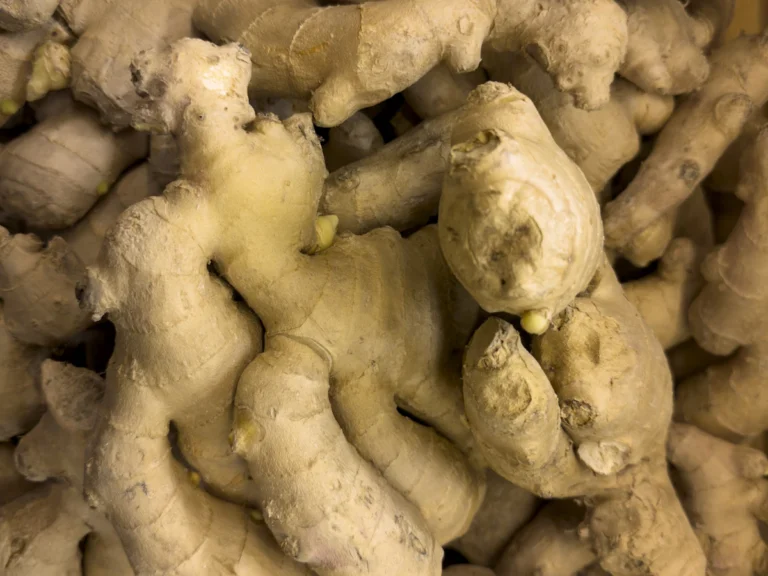
Cameroon dried ginger comes split (sliced) or whole, and sun-dried to 10–12% moisture max. It is known for strong pungency and a light brown colour. Fresh ginger is also possible on request, subject to season and reefer space. Buyers include grinders, tea makers, extract plants and beverage firms.
Dried turmeric
Cameroon dried turmeric ships as fingers or bulbs, cured and dried, polished or unpolished. Curcumin is typically 2–4%, and we test it per lot. So you can match each lot to your use, whether that is colour, curry powder or extraction.
Dried chili
Cameroon dried chili covers bird’s eye chili and long chili, whole, stem-on or stemless. Bird’s eye is very hot, while long chili gives deeper red with gentler heat. We test heat in Scoville units per lot, because pungency changes with each harvest.
Cayenne pepper
Cameroon cayenne pepper gives a medium, even heat and a bright red colour. We ship whole dried pods, and single-spice ground cayenne can be quoted on request. It suits hot sauce makers and seasoning firms that blend in their own plants.
Garlic
Cameroon garlic is offered fresh, as cured whole bulbs, or dried as flakes, granules or powder. Fresh supply is seasonal and peaks after the main lifting season. Dried garlic, by contrast, keeps well and can ship across more of the year.
Why importers add Cameroon spices to their sourcing
Most of the world’s pepper, ginger and turmeric comes from a few large origins, mainly in Asia. So a weak crop or a freight delay in one country can hit prices and supply everywhere. Adding Cameroon spices spreads that risk across a second region, with harvests on a different calendar.
There are also flavour reasons. Moungo valley pepper grows on volcanic soil and is prized for its aroma. Cameroon ginger is known for strong pungency. Moreover, chili from the dry north is sun-dried in low humidity, which helps colour and keeps mould risk down.
Finally, logistics are simple. Douala is a major gateway port for Central Africa, and Kribi adds a deep-water option. For this reason, Cameroon spices can join regular container routes to Europe, the Middle East, Asia and the Americas.
Quick picks: which spice suits your business
Not sure where to start? These quick picks match common buyer needs to the right line of Cameroon spices.
- Table pepper and grinding: black pepper, chosen by bulk density grade.
- Light sauces and premium retail packs: white pepper from the Moungo valley.
- Tea, beverages and extracts: split dried ginger with tested volatile oil.
- Natural colour and curry bases: dried turmeric fingers, chosen by curcumin result.
- Very hot sauces and chili oils: bird’s eye chili.
- Balanced seasonings and powders: cayenne pods, or single-spice ground cayenne on request.
- Snack coatings and seasoning plants: dried garlic granules or powder.
Many buyers start with one line and add a second later. For example, a grinder may take black pepper first, then add white pepper or ginger to the same supply plan.
Quality control for Cameroon spices before loading
Spices are food, so quality and safety come first. We follow five checkpoints for every lot of Cameroon spices, as set out on our quality and sourcing page.
- Buy in the region: we buy from producer groups and aggregators, then keep lots apart by origin.
- Dry and store: spices reach target moisture and sit off the ground in covered warehouses.
- Sample and test: we test each lot against the contract specification.
- Clean, sort and pack: lots are cleaned, sorted and packed in new export-marked bags with a lot number.
- Inspect and load: independent inspection and fumigation take place where required, then we load at Douala or Kribi.
What we test
Moisture and foreign matter are checked on every lot. Then each spice has its own key tests. Pepper is checked for bulk density, light berries and volatile oil. Ginger is checked for volatile oil, ash and colour. Turmeric is tested for curcumin. Chili and cayenne are tested for heat and colour.
In addition, lab tests for aflatoxin, ochratoxin A, pesticide residues and microbes can be agreed per contract. These matter most for chili, ginger and turmeric, because mould can grow if drying is slow. Buyers may also nominate an inspection company, such as SGS, Bureau Veritas, Intertek or Cotecna.
Packaging, loading and container planning
Most Cameroon spices ship in new 25 kg jute or PP bags, with inner liners where required. Pepper and ginger can also go in 50 kg bags by agreement. Chili and cayenne often ship in 10–25 kg PP bags or pressed cartons, because pods are light and bulky. Fresh garlic, meanwhile, travels in mesh bags or cartons.
Every bag carries export marks and a lot number. So each bag traces back to its lot and its test results. Private marks can be discussed on request.
How much fits in a container?
Net weight per container depends on the spice, the bag and the density. Dense spices such as pepper fill a container by weight. Light, bulky spices such as whole chili fill it by volume first. Therefore we confirm the net weight on each offer, rather than quote a single figure for all lines.
Our minimum order is one 20ft container. Mixed loads of two spices in one container can be discussed where the products and packing allow it. We load at Douala or Kribi, and the container is fumigated where the buyer’s market requires it.
Export documents and food-safety rules for Cameroon spices
Each shipment of Cameroon spices travels with a full document set. See our export documents page for detail on each paper.
- Commercial invoice and packing list
- Bill of lading
- Phytosanitary certificate from MINADER plant protection
- Certificate of origin
- Weight and quality certificate from the agreed inspection company
- Fumigation certificate, where required
- Lab reports for aflatoxin, pesticide residue or microbes, where agreed
Destination rules to plan for
Spice markets set strict limits. For example, the EU sets maximum levels for aflatoxins and ochratoxin A in spices such as chili and ginger. It also sets maximum residue levels (MRLs) for pesticides. Other markets have their own limits and import permits.
So tell us your destination at the inquiry stage. Then we can plan the right tests before loading. We describe these rules to help you plan; however, we do not claim certifications we cannot document. Organic, Fairtrade and Rainforest Alliance are not claimed.
How pricing works for Cameroon spices
We do not publish fixed prices, because spice markets move fast. Instead, each offer reflects the market on the day. Here is what shapes a quote for Cameroon spices.
- World markets: large crops in Vietnam, India or Brazil can soften pepper or turmeric prices, while short crops lift them.
- Local season: prices often ease after harvest and firm up before the next one.
- Grade and form: higher bulk density pepper, split ginger and high-curcumin turmeric all affect value.
- Tests and packing: extra lab tests, liners and private marks add cost.
- Incoterm and freight: FOB, CFR or CIF, plus the destination port.
We quote FOB Douala or Kribi, CFR or CIF to your port. Under FOB you book the sea freight, while under CFR or CIF we arrange it. The ICC explains each term in its Incoterms rules. Payment terms are agreed per contract.
How to order Cameroon spices from BV Holdings Agro
Ordering follows our six-step export process. First, you send an inquiry with the spice, grade, volume, destination and Incoterm. Then we reply with an offer and arrange a sample.
Next, both sides sign a contract. It sets the specification, price, Incoterm, payment terms, inspection method and shipment window. After that, you arrange payment security, such as a letter of credit or documentary collection. Meanwhile, we prepare the lot and run inspection. Finally, we ship and release the documents per the payment terms.
Why buy from BV Holdings Agro
- One origin for seven spice lines, with one contact for all of them.
- Lots bought in the producing regions and kept apart by origin.
- Moisture and foreign matter checked on every lot, plus spice-specific tests.
- Independent inspection by the company of your choice, on request.
- Full export documents and loading at Douala or Kribi.
- Part of BV Holdings PLC, a Cameroon group with group oversight of governance and compliance.
Do you buy other Cameroon lines too? Many spice buyers also take cashew and kola nuts, cereals and pulses or cocoa products. For Penja pepper in depth, read our Penja pepper guide.
Cameroon spices FAQ
Which Cameroon spices do you export?
We export seven lines: black pepper, white pepper, dried ginger, dried turmeric, dried chili, cayenne pepper and garlic. All are sold whole or dried, in container loads. We do not sell ground spice blends. However, single-spice ground cayenne and dried garlic powder can be quoted on request. Each product page carries a full typical specification.
Is your pepper Penja PGI pepper?
Our pepper comes from the Moungo valley, which includes the Penja area. Penja pepper holds a protected geographical indication, registered by OAPI in 2013 and in the EU in 2022. Our standard lots are sold as Cameroon origin. PGI-labelled lots can be discussed on request, so tell us in your inquiry if your market needs the label.
When is the best time to buy Cameroon spices?
It depends on the spice. Pepper is harvested from about November to March, and ginger from about December to March. Chili and cayenne come in through much of the year. Fresh garlic follows the dry season. Booking early helps, because the best lots of each crop sell first. Our harvest calendar shows each window.
What is the minimum order for Cameroon spices?
Our minimum order is one 20ft container. Mixed loads of two spices in one container can be discussed where packing allows. We do not sell retail or small parcel quantities. For a trial, we can send a sample first, then plan a full container once you approve the quality.
Which lab tests can you arrange?
Moisture and foreign matter are checked on every lot. In addition, we test spice-specific values such as volatile oil, curcumin and heat. Lab tests for aflatoxin, ochratoxin A, pesticide residues and microbes can be agreed per contract. You may also nominate an inspection company, such as SGS, Bureau Veritas, Intertek or Cotecna.
Can Cameroon spices meet EU limits?
The EU sets limits for mycotoxins and pesticide residues in spices. We plan drying, storage and testing to meet the limits in your contract. Lab reports from an agreed laboratory can travel with the shipment. We confirm results before loading, so you know where each lot stands before it leaves Douala or Kribi.
How are Cameroon spices packed?
Most lines ship in new 25 kg jute or PP bags, with inner liners where required. Pepper and ginger can go in 50 kg bags. Chili and cayenne often use 10–25 kg PP bags or pressed cartons. Fresh garlic travels in mesh bags or cartons. Every bag carries export marks and a lot number.
Can I buy spices with other commodities?
Yes. Many buyers combine Cameroon spices with cashew, kola, cereals or cocoa from the same supplier. Send one inquiry listing each line, its volume and the destination. Then we will build a single offer with a shipment plan for each container. Each product still keeps its own specification and tests.

One arm of BV Holdings PLC
BV Holdings Agro is the agricultural export company of BV Holdings PLC, alongside BV Cocoa Products and BV Metal & Minerals.
Source Cameroon spices in one inquiry
Send the spice, grade, volume and destination, and we will reply with an offer and sample plan.