Cameroon agricultural commodities 36 products, 9 categories
Explore Cameroon's agricultural commodities in one catalogue: 36 export products across 9 categories, from cocoa and coffee to spices, grains, nuts and rubber. Every lot is checked and shipped from Douala or Kribi.
Browse all commodities
Each category page lists every product with its specification, packing and documents.
Cocoa Products
Cocoa Beans, Cocoa Shells, Cocoa Butter, Cocoa Powder, Cocoa Liquor, Cocoa Cake.
View category2productsGreen Coffee
Green Arabica Coffee, Green Robusta Coffee.
View category4productsOil Seeds
Palm Kernels, Sesame Seeds, Soybeans, Groundnuts.
View category2productsVegetable Oils
Crude Palm Oil, Palm Kernel Oil.
View category5productsAnimal Feed Ingredients
Cocoa Shells, Palm Kernel Cake, Soybean Meal, Rice Bran, Yellow Maize.
View category6productsCereals & Pulses
Yellow Maize, White Maize, Sorghum, Millet, Rice, Red Kidney Beans.
View category7productsSpices
Dried Ginger, Dried Turmeric, Black Pepper, White Pepper, Dried Chili Pepper, Cayenne Pepper, Garlic.
View category3productsNuts & Kola
Raw Cashew Nuts, Kola Nuts, Bitter Kola.
View category3productsIndustrial Raw Materials
Natural Rubber, Raw Cotton Lint, Hardwood Lump Charcoal.
View category
BV Holdings Agro exports Cameroon’s main agricultural commodities: 36 products across 9 categories, from cocoa and coffee to spices, grains, oils, nuts and industrial lines. We buy in the producing regions, check every lot against the contract and load in full containers at Douala or Kribi.
This page is the master catalogue of our commodities. It lists every product we offer, with its main regions, harvest window and HS code. It also explains where each crop grows, how quality and documents work, and how to source several lines in one plan.
We sell to importers, commodity trading houses and food manufacturers only. There are no retail quantities, and our minimum order is one 20ft container per line.
Cameroon commodities at a glance: all 36 products
First, here is the full range in one table. Each product links to its own page, with a typical specification, packing details and buyer questions. Harvest windows are approximate and shift with the rains each year.
| Category | Product | Main regions | Harvest or supply window | HS code |
|---|---|---|---|---|
| Cocoa Products | Cocoa beans | Centre, South, South-West, East, Littoral | Main crop Sep–Feb; mid-crop May–Aug | 1801.00 |
| Cocoa Products | Cocoa shells (husk) | From cocoa processing | Year-round, follows processing | 1802.00 |
| Cocoa Products | Cocoa butter | Cocoa-belt beans | Year-round, processed | 1804.00 |
| Cocoa Products | Cocoa powder | Cocoa-belt beans | Year-round, processed | 1805.00 |
| Cocoa Products | Cocoa liquor | Cocoa-belt beans | Year-round, processed | 1803.10 |
| Cocoa Products | Cocoa cake | Cocoa-belt beans | Year-round, processed | 1803.20 |
| Green Coffee | Green Arabica | West and North-West highlands | About Oct–Jan | 0901.11 |
| Green Coffee | Green Robusta | Littoral (Moungo), South-West, East | About Nov–Feb | 0901.11 |
| Oil Seeds | Sesame seeds | North, Far North, Adamawa | About Oct–Dec | 1207.40 |
| Oil Seeds | Soybeans | Adamawa, North, West, North-West | From about Oct in the north | 1201.90 |
| Oil Seeds | Groundnuts (peanuts) | North, Far North, Adamawa | About Sep–Nov | 1202.41 / 1202.42 |
| Oil Seeds | Palm kernels | Littoral, South-West, Centre, South | Year-round, with seasonal peaks | 1207.10 |
| Vegetable Oils | Crude palm oil | Littoral, South-West, Centre, South | Year-round, with seasonal peaks | 1511.10 |
| Vegetable Oils | Palm kernel oil | Littoral, South-West, Centre, South | Year-round, with seasonal peaks | 1513.21 |
| Animal Feed | Palm kernel cake | Littoral, South-West, Centre, South | Year-round, from crushing | 2306.60 |
| Animal Feed | Soybean meal | Adamawa, North, West, North-West | Year-round, from crushing | 2304.00 |
| Animal Feed | Rice bran | Far North, North, North-West | Follows rice milling | 2302.40 |
| Cereals & Pulses | Yellow maize (also feed) | West, North-West, Adamawa, North, Centre | South Jul–Aug and Nov–Dec; North Sep–Nov | 1005.90 |
| Cereals & Pulses | White maize | Adamawa, North, West, North-West, Centre | South Jul–Aug and Nov–Dec; North Sep–Nov | 1005.90 |
| Cereals & Pulses | Sorghum | Far North, North, Adamawa | About Sep–Nov; dry-season crop Jan–Mar | 1007.90 |
| Cereals & Pulses | Millet | Far North, North, Adamawa | About Aug–Oct | 1008.29 |
| Cereals & Pulses | Rice | Far North (Logone plains), North-West (Ndop plain) | Seasonal; confirmed per inquiry | 1006 |
| Cereals & Pulses | Red kidney beans | West, North-West, Adamawa | About Jun–Aug and Oct–Dec | 0713.33 |
| Spices | Dried ginger | West, Littoral (Moungo), Centre | About Dec–Mar | 0910.11 / 0910.12 |
| Spices | Dried turmeric | West, North-West, Littoral | Follows local rains | 0910.30 |
| Spices | Black pepper | Littoral (Moungo, Penja area), South-West | About Nov–Mar | 0904.11 |
| Spices | White pepper | Littoral (Penja, Njombé, Loum) | About Nov–Mar | 0904.11 |
| Spices | Dried chili | West, Littoral, Centre, North | Spread through the year | 0904.21 |
| Spices | Cayenne pepper | West, Littoral, Centre, North | Spread through the year | 0904.21 / 0904.22 |
| Spices | Garlic | West highlands, North, Far North | Dry season | 0703.20 / 0712.90 |
| Nuts & Kola | Raw cashew nuts | North, Adamawa | About Feb–May | 0801.31 |
| Nuts & Kola | Kola nuts | West, Centre, South-West, Littoral, East | Varies by species and zone | 0802.70 |
| Nuts & Kola | Bitter kola | South-West, Littoral, Centre, South, East | Seasonal; confirmed per inquiry | Varies (often 0802.90 or 1211.90) |
| Industrial | Natural rubber | South-West, Littoral, South | Year-round; lower in dry-season wintering | 4001.22 |
| Industrial | Cotton lint | North, Far North, Adamawa | Picking about Oct–Jan | 5201.00 |
| Industrial | Hardwood charcoal | Legal sources in Centre, South, East | Year-round; slower in heavy rains | 4402.90 |
Cocoa shells and yellow maize also sit in our animal feed range. HS codes are a guide, so we confirm the final code on each proforma. The World Customs Organization explains how the HS system works.
Nine categories of export commodities
Next, here is what each category covers and who usually buys it. Each heading links to a category hub with more detail.
Cocoa Products
Cocoa is Cameroon’s best-known export crop. We offer beans plus butter, powder, liquor, cake and shells. Our cocoa division, BV Cocoa Products, handles the processed lines. Buyers include chocolate makers, grinders, bakeries and feed mills.
Green Coffee
Cameroon grows both species. Washed Arabica comes from the cool western highlands, while natural Robusta comes from the Moungo valley, South-West and East. Roasters and green coffee traders buy both.
Oil Seeds
Sesame, soybeans, groundnuts and palm kernels serve crushers, food makers and traders. Sesame and groundnuts come mainly from the dry north, while palm kernels come from the humid south.
Vegetable Oils
Crude palm oil and palm kernel oil serve refiners, soap makers and food plants. They ship in flexitanks, ISO tanks or drums, on request.
Animal Feed Ingredients
Palm kernel cake, soybean meal, rice bran, yellow maize and cocoa shells serve feed mills. Many feed buyers combine two or three of these lines in one supply plan.
Cereals & Pulses
Yellow and white maize, sorghum, millet, rice and red kidney beans serve millers, food makers and grain traders. For a full overview of maize, see our Cameroon maize exporter page.
Spices
Black and white pepper, ginger, turmeric, chili, cayenne and garlic serve grinders, packers and seasoning firms. Moungo valley pepper, from the Penja area, is the star of the range.
Nuts & Kola
Raw cashew nuts from the north serve processors. Kola nuts and bitter kola serve wholesalers, diaspora distributors and ingredient buyers.
Industrial Raw Materials
Natural rubber, cotton lint and legally sourced hardwood charcoal serve tyre makers, spinning mills and BBQ brands. Unlike food commodities, these trade mainly on lab data and technical grades.
Where Cameroon’s commodities grow: four farming zones
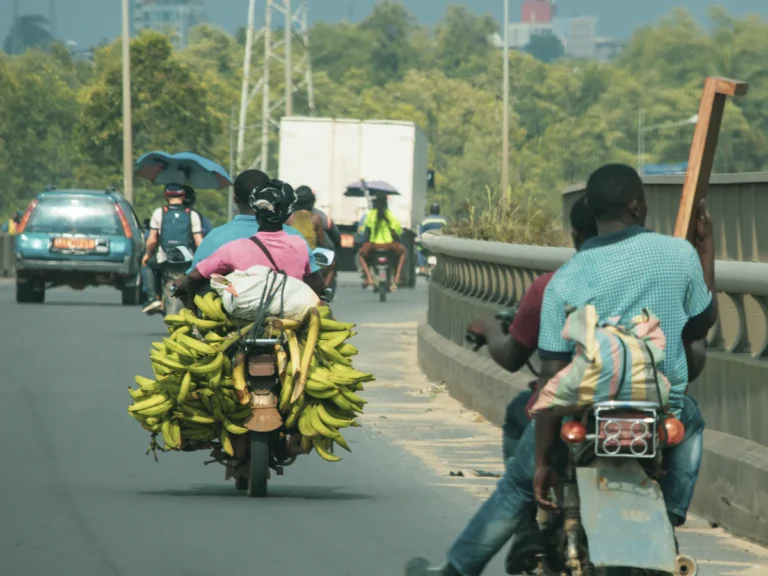
Cameroon stretches from the Atlantic coast to Lake Chad. That range of climates is why one country can supply so many commodities. Broadly, there are four zones.
The humid south and coast
The Centre, South, East, Littoral and South-West are warm and wet, with forest and rich soils. Here, cocoa, Robusta coffee, oil palm, rubber, kola, bitter kola and pepper grow well. The coast also holds Douala and Kribi, the two ports we load from.
The western highlands
The West and North-West are cooler and very fertile. So they grow Arabica coffee, beans, maize, ginger, turmeric and garlic. Rainfall comes in two seasons, which allows two harvests of some crops each year.
The Adamawa plateau
Adamawa sits between the south and the north. It is a key zone for maize and soybeans, and it also adds sesame, groundnuts, cashew and cotton.
The northern savannah
The North and Far North are hot and dry for much of the year. Therefore they suit sesame, groundnuts, sorghum, millet, cotton, cashew and rice on the Logone plains. The long dry season also helps with sun-drying.
Because each zone has its own rains, harvests fall at different times. As a result, some of our commodities are in season in almost every month.
When export commodities come to market
Here is a simple month-by-month view. For the full chart, see our Cameroon harvest calendar.
- September to February: main cocoa crop; Arabica from October and Robusta from November.
- September to December: northern harvests of groundnuts, sorghum, sesame, soybeans and maize.
- October to January: cotton picking in the north.
- November to March: pepper harvest; ginger from December.
- February to May: raw cashew nut harvest in the north.
- May to August: cocoa mid-crop; first maize and bean harvests in the south and highlands.
- Year-round: palm products, cocoa derivatives, feed meals, rubber and charcoal.
Booking early helps with seasonal commodities, because the best lots of each crop tend to sell first.
How to source several commodities together
Many buyers take more than one of our commodities. That saves time, because one supplier handles the contract, inspection and papers for all of them. Here is how a multi-line plan works.
- One inquiry: list each product, grade, volume, destination and Incoterm in a single message.
- One offer: we reply with an offer per product and a shipment plan for each container.
- Separate specs: each product keeps its own specification, tests and lot numbers.
- Staggered shipments: we can time each line to its harvest, so each one ships at its best.
- Mixed loads: compatible dried goods can sometimes share a container, where packing and rules allow.
We never load food lines with charcoal or rubber. Most lines also ship best in their own containers, because each has its own fumigation and packing needs.
Quick picks: popular combinations of commodities
- Feed mill: yellow maize, soybean meal, palm kernel cake and rice bran.
- Spice importer: black pepper, white pepper, ginger and turmeric.
- Food manufacturer: cocoa powder, sesame seeds and groundnuts.
- Grain trader for the Sahel: sorghum, millet, white maize and red kidney beans.
- African grocery distributor: kola nuts, bitter kola, dried chili and garlic.
- Industrial buyer: natural rubber and cotton lint.
Our guide to how to import from Cameroon walks through the steps for first-time buyers.
Quality control across all commodities
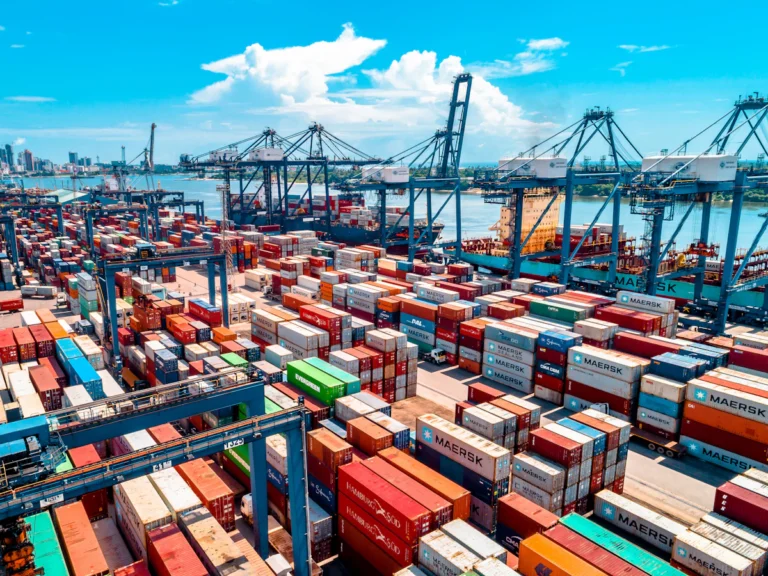
Every lot of our commodities passes the same five checkpoints, set out on our quality and sourcing page.
- Buy in the region: from producer groups and aggregators, with lots kept apart.
- Dry and store: to target moisture, off the ground in covered warehouses.
- Sample and test: against the contract specification.
- Clean, sort and pack: in new export-marked bags with a lot number.
- Inspect and load: independent inspection and fumigation where required, then loading at Douala or Kribi.
Moisture and foreign matter are checked on every lot. Then each line has its own key tests. For example, cocoa gets a cut test, and coffee gets screen and defect counts. Maize and grains are tested for aflatoxin against your limit. Sesame can be tested for oil and FFA on request. In addition, cocoa and coffee export lots are subject to quality control by Cameroon’s National Cocoa and Coffee Board (ONCC).
Buyers may also nominate an inspection company, such as SGS, Bureau Veritas, Intertek or Cotecna.
Export documents and EUDR for regulated commodities
Each shipment travels with a full set of papers. Our export documents page explains each one.
- Commercial invoice, packing list and bill of lading
- Phytosanitary certificate from MINADER plant protection
- Certificate of origin
- Weight and quality certificate from the agreed inspection company
- Fumigation certificate, where required
- ONCC export quality certificate for cocoa and coffee
- Lab reports for aflatoxin, residues, microbes or oil content, where agreed
EU deforestation rules
The EU Deforestation Regulation (EUDR) covers several of our commodities: cocoa, coffee, palm oil, rubber, soy and wood products such as charcoal. The EU operator must show these goods are deforestation-free after 31 December 2020 and legally produced. These are buyer duties. However, we explain what origin data is available for each lot.
We do not claim Organic, Fairtrade or Rainforest Alliance certification. Company registration and export documents are provided during supplier onboarding, on request.
Packing, ports and Incoterms
Packing follows the trade norm for each of our export commodities. Cocoa beans go in 62.5–65 kg jute bags, and green coffee in 60 kg jute bags. Grains and oil seeds usually ship in new 25 or 50 kg PP bags. Spices use 25 kg jute or PP bags, with liners where required. Palm oils ship in flexitanks, ISO tanks or drums, while rubber and cotton ship in bales.
We load at Douala or Kribi. Quotes are FOB Douala or Kribi, CFR or CIF to your port. Under CIF, we also arrange minimum cargo insurance. The ICC sets out each term in its Incoterms rules.
How pricing works for agricultural commodities
We do not publish fixed prices, because agricultural commodities move with world markets, local harvests and freight. Instead, each offer reflects the market on the day.
- World markets: futures or benchmark prices set the tone for cocoa, coffee, rubber, cotton and palm oil.
- Local season: prices often ease after harvest and firm up before the next one.
- Grade and tests: tighter specs and extra lab work add cost.
- Packing: liners, private marks and special bags change the price.
- Incoterm and freight: FOB, CFR or CIF, plus the destination port.
Payment terms, such as a letter of credit or documentary collection, are agreed per contract.
How to order from BV Holdings Agro
Every order follows our six-step export process. First, you send an inquiry naming the commodities you need. Then we send an offer and sample. Next, both sides sign a contract that sets the spec, price, Incoterm, payment terms, inspection method and shipment window. After that, you arrange payment security. Meanwhile, we prepare and inspect the goods. Finally, we ship and release documents per the payment terms.
Why buy from BV Holdings Agro
- 36 products across 9 categories, with one contact for all of them.
- Lots bought in the producing regions and kept apart by origin.
- Pre-loading checks and independent inspection on request.
- Full export documents and loading at Douala or Kribi.
- Part of BV Holdings PLC, alongside BV Cocoa Products and BV Metal & Minerals.
For market news and buyer guides, visit our insights section. To learn more about the company, see about us.
Commodities FAQ
Which commodities does BV Holdings Agro export?
We export 36 products across 9 categories. They are cocoa products, green coffee, oil seeds, vegetable oils, animal feed ingredients, cereals and pulses, spices, nuts and kola, and industrial raw materials. The table above lists every product, with its regions, harvest window and HS code. Each product page carries a full typical specification.
Can I buy several commodities from one supplier?
Yes. Send one inquiry listing each product, grade, volume and destination. Then we reply with an offer per product and a shipment plan for each container. Each line keeps its own spec, tests and lot numbers. We can also time each line to its harvest, so each one ships at its best.
What is the minimum order for your commodities?
Our minimum order is one 20ft container per product. We do not sell retail or small parcel quantities. Some compatible dried goods can share a container where packing and rules allow. For a trial, we can send a sample first, then plan a full container once you approve the quality.
Which ports do you ship from?
We load at Douala or Kribi. Douala is Cameroon’s main commercial port, and Kribi adds a deep-water option. Both handle container cargo to Europe, Asia, the Middle East, the Americas and other African ports. We quote FOB at either port, or CFR or CIF to your destination port.
Do your commodities carry Organic or Fairtrade certification?
No. We do not claim Organic, Fairtrade or Rainforest Alliance certification, and we do not supply certified lots we cannot document. Instead, we offer clear specs, lab tests where agreed and independent inspection. Company registration and export documents are provided during supplier onboarding, on request.
Which commodities fall under EUDR?
Among our lines, cocoa, coffee, palm oil, rubber, soy and wood products such as charcoal fall under the EU Deforestation Regulation. Under it, the EU operator must show goods are deforestation-free and legally produced. These are buyer duties. However, we explain what origin data is available for each lot before you sign.
Can I choose my own inspection company?
Yes. You may nominate an inspection company, such as SGS, Bureau Veritas, Intertek or Cotecna. They can sample the goods, check weights and witness loading at Douala or Kribi. Their weight and quality certificate then joins the document set. Cocoa and coffee lots also pass ONCC quality control.
How do I get a price?
Send an inquiry with the product, grade, volume, destination port and Incoterm. We do not publish fixed prices, because markets move daily. So we reply with a firm offer based on the market on the day, plus a sample plan. Payment terms are agreed per contract.
Where Cameroon products go
Destination guides for importers: products, routes from Douala and Kribi, and import rules.
Netherlands
BV Holdings Agro ships farm products from Cameroon to the Netherlands for grinders, refiners, traders and feed mills.
View market guideEuropeExport marketBelgium
BV Holdings Agro supplies cocoa, coffee, spices and rubber from Cameroon to Belgium for chocolate makers, roasters and traders.
View market guideEuropeExport marketFrance
BV Holdings Agro supplies cocoa butter, cocoa liquor, green coffee and spices from Cameroon to France for chocolatiers, roasters and spice houses.
View market guideEuropeExport marketGermany
BV Holdings Agro ships cocoa, green coffee, rubber and spices from Cameroon to Germany for grinders, roasters and manufacturers.
View market guideAsiaExport marketChina
BV Holdings Agro supplies container loads from Cameroon to China, from sesame and cocoa to cotton lint and natural rubber.
View market guideAsiaExport marketVietnam
BV Holdings Agro supplies raw materials from Cameroon to Vietnam, led by cut-tested raw cashew nuts, plus cotton lint, feed ingredients, pepper and sesame.
View market guideEuropeExport marketTurkey
Trade from Cameroon to Turkey centres on sesame, cotton, cocoa, coffee and rubber.
View market guideAmericasExport marketUnited States
Sourcing from Cameroon to the United States needs clear facts on tariffs and FDA rules.
View market guide
One arm of BV Holdings PLC
BV Holdings Agro is the agricultural export company of BV Holdings PLC, alongside BV Cocoa Products and BV Metal & Minerals.
Source several commodities in one inquiry
Send the products, grades, volumes and destination, and we will reply with an offer and sample plan.