Cameroon maize exporter yellow and white, tested per lot
As a Cameroon maize exporter, we supply yellow maize for feed and white maize for milling in full container loads. Every lot is dried, screened for aflatoxin and shipped from Douala or Kribi.
Browse Cameroon maize exporter
Open any product for its typical specification, packing, documents and FAQ.
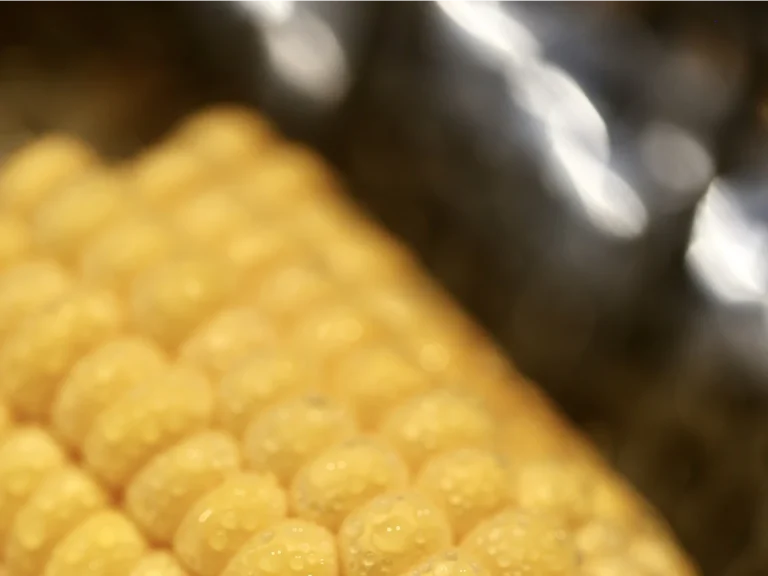
As a Cameroon maize exporter, BV Holdings Agro supplies yellow and white maize in full container loads. Our buyers are feed mills, flour millers, food makers and grain traders. We buy in the producing regions, dry and clean the grain, screen every lot for aflatoxin and load at Douala or Kribi.
This page is an overview of maize from Cameroon. It explains yellow vs white maize, feed vs milling grades, the seasons in the North and South, and how we manage aflatoxin. For full specs, open the Cameroon yellow maize or Cameroon white maize product page.
Both lines sit in our cereals and pulses range. Yellow maize also appears in our animal feed ingredients range, because most of it goes into feed.
Yellow vs white maize at a glance
First, the basics. Yellow and white maize are the same species, but they serve different markets. Here is a side-by-side view of the typical values we work to.
| Parameter | Yellow maize | White maize |
|---|---|---|
| Main use | Animal feed; also grits, meal and starch | Flour, meal and food; lower grades for feed |
| HS code | 1005.90 | 1005.90 |
| Main regions | West, North-West, Adamawa, North, Centre | Adamawa, North, West, North-West, Centre |
| Moisture | 14% max | 14% max |
| Broken grains | 4% max | 3% max |
| Damaged grains | 4% max | 3% max |
| Foreign matter | 1% max | 1% max |
| Off-colour grains | Not critical for feed | Yellow or coloured grains 2% max |
| Test weight | 70 kg/hl min | 70 kg/hl min |
| Aflatoxin | 20 ppb max for feed, or your limit | Per destination limit, e.g. 10 ppb total for food |
| Packing | New 50 kg PP bags | New 50 kg PP bags |
Final specifications are confirmed in each contract and verified before loading. The HS code is a guide, and we confirm it on the proforma.
Why the colour matters
Yellow maize carries carotenoids, the natural pigments that help colour egg yolks and broiler skin. So poultry feed mills prefer it. White maize has almost none of these pigments. Instead, it gives pale flour and a mild taste, which many food markets in Africa prefer for porridge, meal and dough.
Feed grade vs milling grade
A good Cameroon maize exporter grades each lot for its end use. That is because the same grain can pass for feed and fail for food.
Feed grade
Feed grade is sound whole grain within standard limits. It goes into poultry, pig, cattle and fish feed. Maize supplies most of the energy in broiler, layer and pig rations, and feed mills often pair it with soybean meal for protein. Feed buyers care most about moisture, energy, aflatoxin and price.
Milling grade
Milling grade is cleaner grain, with fewer broken and damaged kernels and a tighter aflatoxin limit. Dry millers turn it into grits, meal and flour. Starch plants wet-mill it for starch and glucose syrup. Brewers use maize grits as an adjunct in beer. For white maize, millers also watch for yellow grains, because a few can change the flour colour.
How to choose
- Poultry or pig feed: yellow maize, feed grade.
- Dairy feed: yellow maize with a very low aflatoxin limit, agreed in the contract.
- Maize flour and meal: white maize, food and milling grade.
- Grits for brewing or snacks: milling grade, yellow or white by your recipe.
- Starch and glucose: milling grade, with test weight agreed.

Maize seasons: North vs South
Cameroon has two very different maize zones. So a Cameroon maize exporter can draw grain from more than one harvest each year.
The South and the western highlands
In the south and the West and North-West highlands, rain falls in two seasons. Therefore farmers can harvest twice a year. The first harvest comes in about July and August, and the second in about November and December. The Centre region follows a similar two-season pattern.
The North and Adamawa
In the North, by contrast, there is one longer rainy season. So the main harvest runs from about September to November. Adamawa sits between the two zones and is one of the country’s key maize areas. Its plateau gives good yields and a strong feed-maize trade.
What this means for buyers
Two zones spread the risk of a poor season in one area. In addition, they give more than one window to book new-crop grain. However, Cameroon eats much of its own maize, and the local feed sector uses large volumes too. So export volumes depend on the season, and a Cameroon maize exporter should confirm availability with each offer. Our Cameroon harvest calendar shows these windows beside other crops.
How a Cameroon maize exporter manages aflatoxin
Aflatoxin is the key risk with maize. It is a toxin made by certain moulds, mainly Aspergillus flavus, when grain is warm and damp. So the best defence is fast drying and dry storage, from the farm to the container.
Prevention first
At harvest, maize often carries too much moisture for safe storage. Farmers and aggregators dry the cobs, shell the grain and then dry it again. We bring each lot to 14% moisture max and store it off the ground in covered warehouses. As a result, moulds have little chance to grow.
Testing in two stages
Aflatoxin testing often works in two stages. First, we screen each lot with a rapid test. Then, on request, an accredited lab confirms the result with a method such as HPLC. Sampling matters too, because aflatoxin is not spread evenly through a lot. So samples are drawn from many bags, not from one handful.
Limits by market
Every market sets its own limit, and the limit also depends on end use. So a Cameroon maize exporter must know your market before it quotes.
- EU food: 5 µg/kg aflatoxin B1 and 10 µg/kg total for maize to be sorted or processed before human use.
- EU feed: 20 µg/kg aflatoxin B1 for feed materials, and 5 µg/kg for complete feed for dairy animals.
- United States: the FDA uses an action level of 20 ppb total aflatoxins for food and most feed.
Dairy feed needs special care, because cows pass a form of aflatoxin into milk. Therefore we write your aflatoxin limit into every contract, and the grade, test plan and price all follow from it. Fumonisin can also be tested on request.
Why work with a Cameroon maize exporter
Most of the world’s traded maize comes from a few large origins. So buyers in Central and West Africa, and further afield, often want a closer or second source. A Cameroon maize exporter can offer that, with shorter routes to many African ports.
Cameroon also grows both colours at scale. Yellow maize serves the fast-growing feed sector, while white maize serves flour millers. As a result, one supplier can cover both feed and food buyers from the same ports.
Finally, Douala is a major gateway port for Central Africa, and Kribi adds a deep-water option. Both handle container cargo to Europe, Asia, the Middle East and other parts of Africa. Maize is one of the world’s top three cereals, as the FAO notes, so steady supply matters to many industries.

Who buys from a Cameroon maize exporter
Maize has more uses than almost any other grain. Here are the main buyer groups we serve as a Cameroon maize exporter, and what each one looks for.
- Poultry and pig feed mills: yellow maize as the main energy grain, with tight moisture and aflatoxin limits.
- Cattle and fish feed makers: yellow maize, often in steady monthly loads.
- Flour and meal millers: white maize for fine flour, maize meal and semolina for staple foods.
- Brewers: maize grits as an adjunct, which adds fermentable starch.
- Starch and glucose plants: milling grade grain with a good test weight.
- Grain traders: container lots for onward sale to regional mills.
Many of these buyers work in Central and West Africa, where a nearby Cameroon maize exporter can cut transit time. Others ship to the Middle East or Europe, where tighter food limits apply.
Choosing a Cameroon maize exporter: a buyer checklist
Before you sign with any Cameroon maize exporter, check a few basics. These questions help protect your quality and your cash.
- Can they show test results? Ask for moisture, broken grain and aflatoxin data per lot, not one figure for the season.
- Will they accept your inspector? A good supplier welcomes SGS, Bureau Veritas, Intertek, Cotecna or your chosen firm.
- Do they write your limit into the contract? Your aflatoxin and moisture limits should be in writing.
- Is the paperwork complete? Phytosanitary, fumigation and origin papers should match the bill of lading.
- Do they confirm volume honestly? Local demand is high, so availability should be confirmed per offer.
We answer yes to each of these, and we are happy to send a sample first.
Quality checks before loading
As a Cameroon maize exporter, we pass every lot through the five checkpoints on our quality and sourcing page.
- Buy in the region: from producer groups and aggregators, with lots kept apart by origin.
- Dry and store: to target moisture, off the ground in covered warehouses.
- Sample and test: against the contract spec, including aflatoxin screening.
- Clean, sort and pack: in new 50 kg PP bags, export-marked with a lot number.
- Inspect and load: independent inspection where agreed, fumigation, then loading at Douala or Kribi.
We check moisture, broken and damaged grains, foreign matter, test weight and live insects on every lot. Buyers may also nominate an inspection company, such as SGS, Bureau Veritas, Intertek or Cotecna. Their weight and quality certificate then joins the document set.
Packing and loading with a Cameroon maize exporter
We ship maize in new 50 kg polypropylene bags, marked for export with a lot number. Liner bags for bulk loading can be agreed. Before loading, we check that each container is clean, dry and free of odour and holes.
- 20ft container: about 22 to 25 MT of bagged grain, depending on bag size.
- 40ft container: about 25 to 26 MT, because weight limits apply before space runs out.
- Fumigation: standard before loading, usually with phosphine, with a certificate.
- Minimum order: one 20ft container; larger orders can ship over several containers.
Because a 40ft adds little weight over a 20ft, most maize ships in 20ft containers. Ask your Cameroon maize exporter to confirm the bag count per container on the offer.
Export documents and import rules
Each shipment we make as a Cameroon maize exporter travels with a full document set. Our export documents page explains each one.
- Commercial invoice and packing list
- Bill of lading
- Phytosanitary certificate from MINADER plant protection
- Certificate of origin
- Weight and quality certificate from the agreed inspection company
- Fumigation certificate
- Lab reports for aflatoxin or pesticide residues, where agreed
Import rules differ by market. For example, EU importers face checks on aflatoxin and pesticide residue limits (MRLs). Some countries also need an import permit, a GMO test or an extra declaration on the phytosanitary certificate. So tell us your destination early. We do not claim certifications we cannot document.
How pricing works with a Cameroon maize exporter
As a Cameroon maize exporter, we do not publish fixed prices, because grain markets move daily. Instead, we quote per metric tonne for each container lot, with the Incoterm and port named. These factors shape the offer.
- Local supply: the size of each Cameroon harvest and local food and feed demand.
- Season: prices often ease after harvest and firm up before the next one.
- Grade: milling lots with tight limits cost more to select and test.
- Aflatoxin limit: a tighter limit means more selection and lab work.
- Incoterm and freight: FOB Douala or Kribi, CFR or CIF to your port.
Under FOB you book the freight; under CFR we book it, and under CIF we add minimum cargo insurance. Payment terms are agreed per contract.
How to order from BV Holdings Agro
Ordering follows our six-step export process. First, you send an inquiry with the colour, grade, volume, aflatoxin limit, destination port and Incoterm. Then we reply with an offer and arrange a sample.
Next, both sides sign a contract that sets the spec, price, Incoterm, payment terms, inspection method and shipment window. After that, you arrange payment security, such as a letter of credit. Meanwhile, we prepare, fumigate and inspect the lot. Finally, we ship and release the documents per the payment terms.
Why buy from BV Holdings Agro
- A Cameroon maize exporter with yellow and white maize, in feed and milling grades.
- Aflatoxin screening on every lot, with lab confirmation on request.
- Your aflatoxin limit written into every contract.
- Independent inspection by the company of your choice.
- Full export documents and loading at Douala or Kribi.
- Part of BV Holdings PLC, with group oversight of governance and compliance.
Feed buyers often pair maize with protein meals. See soybean meal and palm kernel cake, or read our palm kernel cake vs soybean meal guide. Grain buyers may also like sorghum and millet.
Cameroon maize exporter FAQ
What does a Cameroon maize exporter supply?
We supply yellow and white maize as whole grain, in feed and milling grades. Both ship in new 50 kg PP bags from Douala or Kribi. We sell in container loads only, from one 20ft container. Each product page carries a full typical specification, and final specs are set in each contract.
Should I buy yellow or white maize?
It depends on your end use. Yellow maize suits poultry and pig feed, because its pigments help colour yolks and skin. White maize suits flour, meal and food uses, where buyers want pale flour. For grits, starch or brewing, either colour can work, so tell us your recipe and mill set-up.
When does maize from Cameroon come to market?
In the south and western highlands, harvests come at about July to August and November to December. In the North, the main harvest runs from about September to November. Grain then needs time to dry and pool. So new-crop export lots usually follow a few weeks after each harvest starts.
How does a Cameroon maize exporter control aflatoxin?
We dry grain to 14% moisture max and store it off the ground under cover. Then we screen each lot with a rapid test, and an accredited lab confirms results on request. Samples come from many bags, not one. Your aflatoxin limit is written into the contract before we load.
Which aflatoxin limit applies to my order?
It depends on your market and end use. For example, the EU sets 20 µg/kg aflatoxin B1 for feed materials, but 10 µg/kg total for maize to be processed into food. The US FDA uses 20 ppb for food and most feed. Dairy feed limits are much lower.
How much maize fits in a container?
A 20ft container holds about 22 to 25 MT of bagged grain, depending on bag size. A 40ft holds about 25 to 26 MT, because weight limits apply first. So most maize ships in 20ft containers. Larger orders can ship over several containers, in one lot or in stages.
Is maize fumigated before shipment?
Yes. Fumigation before loading is standard for maize, usually with phosphine, by a licensed operator. A fumigation certificate joins the document set. In addition, we check each container is clean, dry and free of odour and holes before loading starts.
Can I combine maize with other feed ingredients?
Yes. Many feed buyers ask their Cameroon maize exporter to add soybean meal, palm kernel cake or rice bran from the same supplier. Send one inquiry listing each line, its volume and the destination. Then we will build one offer with a shipment plan for each container. Each product keeps its own spec and tests.

One arm of BV Holdings PLC
BV Holdings Agro is the agricultural export company of BV Holdings PLC, alongside BV Cocoa Products and BV Metal & Minerals.
Get a maize offer for your market
Send the colour, grade, volume, aflatoxin limit and destination, and we will reply with an offer and sample plan.