Cameroon to the Netherlands cocoa, oils and feed by container
BV Holdings Agro ships farm products from Cameroon to the Netherlands for grinders, refiners, traders and feed mills. We load at Douala or Kribi and quote FOB, CFR or CIF to Amsterdam or Rotterdam, with full export documents.
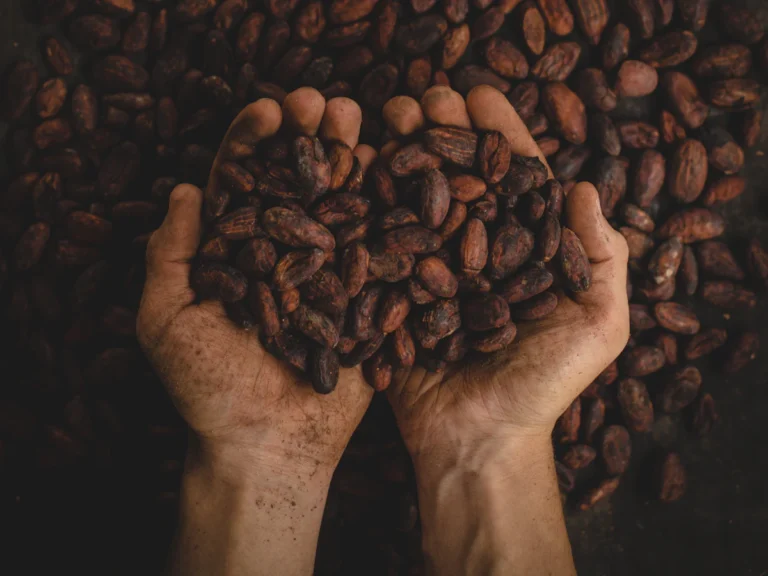
Buyers who move farm goods from Cameroon to the Netherlands usually want cocoa, oils or feed ingredients. BV Holdings Agro, the agricultural export arm of BV Holdings PLC, supplies all three. We buy from producer groups and aggregators in Cameroon’s growing regions. Then we consolidate and test each lot and load it at Douala or Kribi.
The Netherlands is a natural first stop for Cameroon produce. According to CBI, the Dutch government’s import promotion centre, the country is the world’s largest importer of cocoa beans. Amsterdam and the Zaan region host one of the biggest cocoa clusters on earth. Meanwhile, Rotterdam is Europe’s largest seaport and a hub for vegetable oils and agri-bulk.
Cameroon plays a real part in that flow. CBI reports that Cameroon was the third-largest supplier of cocoa beans to the Netherlands in 2025, after Côte d’Ivoire and Nigeria. It also ranks among the top origins for cocoa paste. In other words, the Cameroon to the Netherlands cocoa corridor is well trodden, and Dutch buyers know the origin.
This page explains the Cameroon to the Netherlands trade in practical terms. First, it lists the products Dutch buyers source from us. Then it covers market access, shipping, documents, Incoterms and timing. Finally, it shows how to order. For other EU routes, see our export markets overview.
Products in demand from Cameroon to the Netherlands
Cocoa leads the Cameroon to the Netherlands trade by a wide margin. However, Dutch importers also buy palm products, oilseeds, rubber and spices. The table below lists the lines we quote most often for Dutch ports. Each name links to its product page, with a typical specification.
| Product | Typical buyer or use in the Netherlands | HS code |
|---|---|---|
| Cameroon cocoa beans | Grinders in Amsterdam and the Zaan region; cocoa traders | 1801.00 |
| Cocoa liquor (paste) | Chocolate and coatings makers | 1803.10 |
| Cocoa butter | Chocolate, confectionery and cosmetics makers | 1804.00 |
| Cocoa cake | Powder millers and food ingredient firms | 1803.20 |
| Cocoa shells (husk) | Feed, mulch and biomass users | 1802.00 |
| Crude palm oil | Refiners and oleochemical plants around Rotterdam | 1511.10 |
| Palm kernel oil | Oleochemicals, soaps and food fats | 1513.21 |
| Palm kernel cake | Compound feed mills (dairy and cattle rations) | 2306.60 |
| Sesame seeds | Seed traders, bakeries and tahini makers | 1207.40 |
| Natural rubber | Rubber traders and technical goods makers | 4001.22 |
| Green Robusta coffee | Roasters and green coffee traders | 0901.11 |
| Dried ginger | Spice importers and grinders | 0910.11 / 0910.12 |
In short, cocoa beans and semi-finished cocoa suit the grinding cluster. Palm oil and palm kernel oil suit refiners. Meanwhile, palm kernel cake suits feed mills that blend local rations. You can browse the full range in our cocoa products, vegetable oils and animal feed ingredients categories.
Processed cocoa lines are also handled by our cocoa division, BV Cocoa Products. So if you need butter, liquor or powder, one inquiry covers both sites.
Trade and market access: Cameroon to the Netherlands
Cameroon trades with the Netherlands under the EU’s rules, because Dutch customs applies the common EU tariff. The key deal is the interim Economic Partnership Agreement (EPA) between the EU and Cameroon. It was signed in Yaoundé in January 2009 and has been provisionally applied since 2014.
Under the EPA, the EU gives goods from Cameroon duty-free, quota-free access. That matters most for processed lines. For example, cocoa beans enter the EU duty-free from most origins anyway. However, cocoa butter, paste and powder normally carry EU import duty. With valid proof of Cameroonian origin, they can enter duty-free. Cameroon is also the only Central African country that currently applies an EPA with the EU.
To claim the preference, the importer needs proof of origin. The EU’s Access2Markets page on the Central Africa EPA lists two options. One is an EUR.1 movement certificate issued by Cameroon customs. The other is an invoice declaration, used by approved exporters or for small consignments. Proof of origin stays valid for 10 months.
EUDR and the Cameroon to the Netherlands cocoa trade
The EU Deforestation Regulation (EUDR) adds a new layer for cocoa, coffee, palm oil, rubber, soy and wood, including charcoal. Under the amended rules, large and medium operators must comply from 30 December 2026. Micro and small operators follow from 30 June 2027. The Commission’s 2026 review kept those dates.
In practice, the Dutch importer files a due diligence statement. It needs geolocation data for the plots that grew the product. Therefore, ask us early which data we can attach to a given lot. We describe what we can document, and we never claim data we cannot supply. CBI reports that Cameroon has made fast progress on cocoa farm mapping. Even so, every contract should state the data package clearly.
The EUDR also applies to palm kernel cake, palm oil, natural rubber and charcoal. So the same planning applies to oils and feed on the Cameroon to the Netherlands route, not only to cocoa. A Dutch feed mill buying palm kernel cake will ask the same questions as a cocoa grinder.

Shipping route from Cameroon to the Netherlands
Every Cameroon to the Netherlands shipment starts at one of two ports. Douala, on the Wouri estuary, is Cameroon’s main commercial port. Kribi, further south, is a newer deep-water port with a modern container terminal. We choose the port that suits the product, the origin region and the sailing schedule.
At the Dutch end, two ports matter most. The Port of Amsterdam, together with Zaanstad, describes itself as the largest cocoa cluster in the world. Warehouses there store and sample cocoa for grinders and the futures market. Rotterdam, by contrast, handles most container traffic and many oils and feed cargoes. From there, goods move on by barge, rail or truck to Germany, Belgium and beyond.
Containers and packing for Dutch ports
- Cocoa beans: jute bags of about 62.5–65 kg in 20ft containers. Bulk-in-container with a liner can be discussed for some buyers.
- Cocoa butter, liquor and cake: blocks or kibbled product in cartons or bags, loaded in 20ft containers.
- Crude palm oil and palm kernel oil: flexitanks in 20ft containers, or other liquid units agreed in the contract.
- Palm kernel cake and cocoa shells: bags or bulk in 40ft containers, because both are light for their volume.
- Sesame, ginger and coffee: PP or jute bags in 20ft containers, with liners where needed.
Transit on the Cameroon to the Netherlands route is typically a few weeks. Some sailings are direct, while others call at a transhipment hub. The exact time and route are confirmed at booking. For cocoa and spices, we also plan ventilation and moisture control, because condensation in transit can damage a good lot.
Import requirements and documents in the Netherlands
Dutch import rules follow EU law. However, two Dutch bodies apply them on the ground. Dutch Customs (Douane) clears the goods and checks origin claims. Meanwhile, the Netherlands Food and Consumer Product Safety Authority (NVWA) handles plant health and food and feed safety. Your customs broker confirms which checks apply to each HS code.
Plant health and food safety
Many plant products need a phytosanitary certificate to enter the EU. We supply one from Cameroon’s plant protection service (MINADER) with each shipment as standard. In addition, food must meet EU maximum residue levels (MRLs) for pesticides. EU contaminant rules also set limits for aflatoxins in groundnuts, oilseeds, spices and maize, and for ochratoxin A in coffee and spices. Feed ingredients such as palm kernel cake fall under EU limits for undesirable substances in feed.
Documents for a Cameroon to the Netherlands shipment
A standard set for the Cameroon to the Netherlands route includes:
- commercial invoice and packing list
- bill of lading
- phytosanitary certificate (MINADER)
- certificate of origin, plus EUR.1 or an origin declaration to claim EPA preference
- weight and quality certificate from the agreed inspection company
- ONCC export quality certificate for cocoa and coffee
- fumigation certificate where required
- lab reports (aflatoxin, pesticide residues, oil content) where agreed
Our export documents page explains each one. These are requirements, not guarantees. So we agree the exact list in each contract before loading.
Quality checks for Cameroon to the Netherlands cargo
Dutch buyers are often technical buyers. Grinders, refiners and feed mills test every arrival in their own labs. So the contract specification must be clear before we load. The table shows the checks we most often agree for the Cameroon to the Netherlands route.
| Product | Key checks before loading | Typical target (confirmed per contract) |
|---|---|---|
| Cocoa beans | Moisture, cut test, bean count, foreign matter | Moisture ≤ 7.5%; bean count about 95–105 per 100 g for Grade I |
| Crude palm oil | Free fatty acids, moisture and impurities, DOBI | FFA ≤ 5%; M&I ≤ 0.5% |
| Palm kernel cake | Moisture, protein, oil, aflatoxin | Set against EU feed limits and your formula |
| Sesame seeds | Purity, moisture, oil and FFA on request | As agreed for hulled or natural seed |
| Green Robusta | Screen size, defects, moisture, odour | Moisture ≤ 12.5%; screen by grade |
Final specifications are confirmed in each contract and verified before loading. In addition, Cameroon’s National Cocoa and Coffee Board (ONCC) controls the quality of cocoa and coffee export lots. Therefore, an ONCC certificate travels with every cocoa or coffee container.
Many Dutch buyers also want a sample from the actual lot, not just a type sample. That is a fair request, and we plan for it. As a result, the buyer can compare the pre-shipment sample with the arrival sample. If both match the contract, settlement is simple. If they do not, the agreed inspection report gives both sides a neutral record.
Incoterms for the Cameroon to the Netherlands route
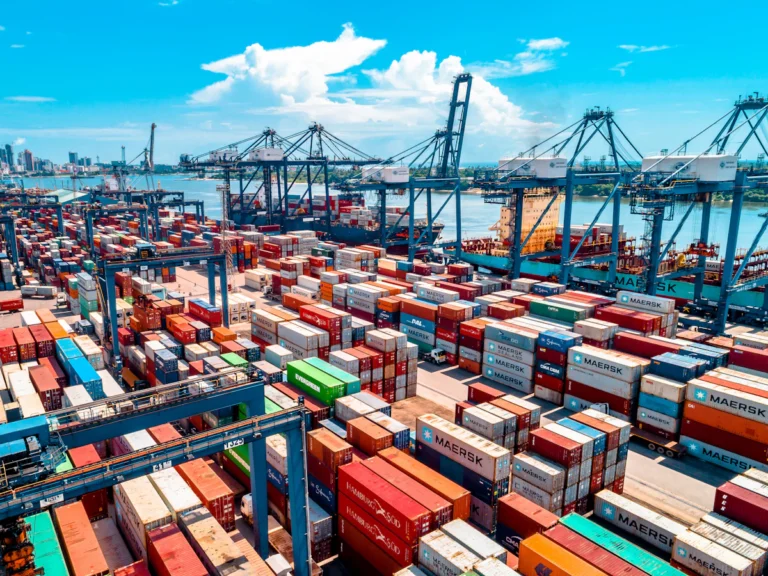
We quote three Incoterms: FOB Douala or Kribi, CFR to your port, and CIF to your port. Each one splits cost and risk differently, so the right choice depends on your set-up.
- FOB Douala/Kribi: best for large Dutch traders with their own freight contracts. You book the vessel and insure the cargo.
- CFR Amsterdam or Rotterdam: we book freight to your port, while you arrange insurance. This suits buyers with a marine cover already in place.
- CIF Amsterdam or Rotterdam: we also add minimum cargo insurance. As a result, it is the simplest option for a first trial container.
Many Dutch buyers choose CFR Rotterdam for oils and feed, and CIF Amsterdam for a first cocoa lot. Either way, we state the port, the Incoterm and the shipment window in writing. Our guide to FOB vs CIF explains the trade-offs in more detail.
Payment terms are agreed per contract. Common options include a letter of credit or documentary collection, which Dutch banks handle every day. Also, think about where the goods go after discharge. If a lot will move by barge to a Dutch or German plant, say so in the inquiry. We can then align the packing, the marks and the delivery terms with that final leg.
When to buy: seasons on the Cameroon to the Netherlands trade
Timing shapes both supply and quality. Cameroon’s cocoa main crop runs from about September to February, with a mid-crop from about May to August. Robusta coffee is harvested from about November to February. Sesame from the North comes in from October to December, while pepper and ginger peak from November to March.
Palm products are less seasonal, although output still dips in the dry months. Therefore, we advise Dutch buyers to plan cocoa contracts before the main crop opens. That gives time for sampling and for the EUDR data checks. Our Cameroon harvest calendar shows each crop month by month.
How to order Cameroon to the Netherlands shipments
Ordering follows four clear steps:
- 1. Inquiry: send the product, grade, volume, port (Amsterdam or Rotterdam) and preferred Incoterm.
- 2. Offer and sample: we reply with a written offer and, where possible, a representative sample.
- 3. Agreement: we sign a contract covering specification, price, Incoterm, payment terms, inspection and shipment window.
- 4. Shipment: we prepare, inspect and load the lot, then release documents under the agreed payment terms.
Our export process page covers each step, including payment security such as a letter of credit. Meanwhile, our quality control page explains how we test moisture, cut test, defects and aflatoxin before loading. You may also nominate an inspection company such as SGS, Bureau Veritas, Intertek or Cotecna.
Why buy from BV Holdings Agro
- One trading house for cocoa, oils, oilseeds, feed and spices from Cameroon.
- Loading at Douala or Kribi, with FOB, CFR or CIF offers to Dutch ports.
- Pre-loading quality checks against your contract specification.
- Full export documents, with ONCC quality control on cocoa and coffee.
- Independent third-party inspection on request.
- Part of BV Holdings PLC, with a dedicated cocoa division in BV Cocoa Products.
We work with container loads only, from one 20ft container upwards. That keeps the Cameroon to the Netherlands supply chain simple for importers, traders and processors.
FAQ: Cameroon to the Netherlands
Do Cameroon to the Netherlands imports pay EU duty?
Under the EU–Cameroon interim EPA, goods of Cameroonian origin enter the EU duty-free and quota-free. To claim this, the importer needs valid proof of origin, such as an EUR.1 movement certificate. Import VAT still applies under Dutch rules. Your customs broker confirms the final treatment for each HS code before the goods arrive.
Which Dutch ports do you quote for?
We usually quote CFR or CIF Amsterdam for cocoa and CFR or CIF Rotterdam for oils, feed and general cargo. We can also quote other EU ports on request. If you prefer to book your own freight, we offer FOB Douala or Kribi instead. The port and Incoterm are always fixed in the contract.
How long does shipping from Cameroon to the Netherlands take?
Transit is typically a few weeks. The exact time depends on the carrier, the loading port and whether the vessel calls at a transhipment hub. We confirm the sailing and estimated arrival at booking. For cocoa, we also plan the shipment window around the crop, so the lot is ready when the vessel is.
Can you supply EUDR data for Cameroon to the Netherlands cocoa?
We discuss traceability and geolocation data for each lot before you sign. Under the EUDR, the Dutch operator must file a due diligence statement for cocoa, coffee, palm oil, rubber, soy and wood products. We tell you clearly what data we can provide for a given lot. We never claim data or certificates we cannot document.
Do you send samples to the Netherlands?
Yes, samples and offers follow an inquiry. Tell us the product, grade, volume and port. We then send a written offer and, where possible, a representative sample. As a result, your lab in the Netherlands can test the product before you commit. Sample shipping terms are agreed case by case.
Is your cocoa certified organic or Fairtrade?
No. We do not claim organic, Fairtrade or Rainforest Alliance status for any lot. Instead, we describe quality through a typical specification, pre-loading tests and independent inspection. If your Dutch customers require a certified supply chain, tell us early. We will be honest about what we can and cannot provide.
What is the minimum order for the Netherlands?
The minimum order is one 20ft container. We do not sell retail or pallet quantities. For light products such as cocoa shells or palm kernel cake, a 40ft container is often more efficient. Larger volumes can be split over several shipments, with each container inspected before loading.
Which documents come with a Cameroon to the Netherlands shipment?
A standard set includes the commercial invoice, packing list, bill of lading, phytosanitary certificate, certificate of origin and a weight and quality certificate. Cocoa and coffee also carry an ONCC export quality certificate. Fumigation certificates and lab reports are added where required or agreed in the contract.
Other Europe markets

One arm of BV Holdings PLC
BV Holdings Agro is the agricultural export company of BV Holdings PLC, alongside BV Cocoa Products and BV Metal & Minerals.
Plan your Dutch container
Tell us the product, grade, volume and Dutch port, and we will reply with a clear written offer.