Cameroon to Nigeria palm oil, grains and kola by sea
Shipping from Cameroon to Nigeria gives refiners, feed mills and food processors a close origin for palm products, grains, soy and kola. We ship by sea from Douala or Kribi with full documents.

Shipping farm goods from Cameroon to Nigeria links two close neighbours, and BV Holdings Agro quotes the route by sea for refiners, feed mills and food processors. We are a Cameroon export trading house in Yaoundé. We buy from producer groups in the growing regions, test each lot, and load at Douala or Kribi.
Nigeria is a huge market next door. Its feed mills, palm oil refiners and food factories often need more raw material than local farms supply in a given season. Cameroon can fill some of that gap with palm products, grains, soy and kola. However, Nigerian import rules are detailed, so we build each offer around them from the start.
This page explains the Cameroon to Nigeria trade in plain terms. It covers products, AfCFTA status, the sea route, Nigerian import rules, Incoterms, seasons and ordering. For other destinations, see our export markets overview.
Products in demand from Cameroon to Nigeria
Nigerian demand centres on oils, feed inputs and food grains. The table lists the lines from our range that best match it. Each link opens the full product page.
| Product | Typical buyer or use in Nigeria | HS code |
|---|---|---|
| Crude palm oil | Refiners, soap and food makers | 1511.10 |
| Crude palm kernel oil | Soap, oleochemical and fat makers | 1513.21 |
| Palm kernels | Kernel crushers | 1207.10 |
| Palm kernel cake | Livestock and poultry feed mills | 2306.60 |
| Yellow maize | Poultry feed mills | 1005.90 |
| White maize | Food millers and flour makers | 1005.90 |
| Sorghum | Brewers, maltsters and feed mills | 1007.90 |
| Soybeans | Soy crushers and food processors | 1201.90 |
| Soybean meal | Poultry and fish feed mills | 2304.00 |
| Cocoa beans | Cocoa grinders | 1801.00 |
| Kola nuts | Wholesale traders, mainly for northern markets | 0802.70 |
| Bitter kola | Wholesale traders and herbal product makers | Confirmed on the proforma |
HS codes are six-digit headings. Nigeria applies its own national tariff lines, so your broker confirms the full code. Final specifications are confirmed in each contract and verified before loading.
Palm products and feed inputs lead most Cameroon to Nigeria inquiries we expect. See our Cameroon vegetable oils and Cameroon animal feed ingredients ranges for full detail.
Why buyers add the Cameroon to Nigeria route
Nigeria grows many of the same crops as Cameroon. So why import at all? The answer is scale and timing. Nigeria’s feed, food and oil industries are large, and local harvests do not always keep pace. In a poor season, mills look across the border first.
Cameroon also has a different crop calendar in places. For example, its dry-season sorghum, called muskwari, is harvested from about January to March. Meanwhile, its southern maize has two seasons a year. As a result, Cameroon lots can arrive when Nigerian stocks run low.
- Feed mills: yellow maize, soybean meal and palm kernel cake.
- Refiners and soap makers: crude palm oil and crude palm kernel oil.
- Brewers and food millers: sorghum and white maize.
- Traders: kola nuts and bitter kola for wholesale markets.
Who sends Cameroon to Nigeria inquiries? Mostly feed compounders, edible oil and soap firms, brewers, flour millers and wholesale traders. Tell us your role, because it changes the spec, packing and approvals you need.

What Nigeria restricts: read this first
Nigeria keeps a list of goods that may not be imported. Some of them sit close to our range. So check this list before you plan a Cameroon to Nigeria order. A summary appears in the US trade guide on Nigeria’s prohibited imports.
- Cocoa butter, powder and cakes are on the prohibited list. For this reason, we do not offer these lines for Nigeria.
- Refined vegetable oils are prohibited, with a few named exceptions. However, crude vegetable oil is not banned.
- Cocoa beans, maize, sorghum and soy are not on that list, although other rules still apply.
Lists can change at short notice. Therefore, confirm the current position with your customs broker before you sign. We would rather lose a quote than ship a lot that cannot clear.
Trade relationship and market access: Cameroon to Nigeria
Both countries are State Parties to the African Continental Free Trade Area, or AfCFTA. The AfCFTA Secretariat runs the agreement. Cameroon took part in its Guided Trade Initiative pilot. In October 2022, Cameroon customs issued its first AfCFTA certificate of origin.
Both Cameroon and Nigeria have completed the AfCFTA tariff schedule process. Even so, using AfCFTA preferences in practice is still work in progress. A 2024 review by a Cameroonian think tank noted that one importer could not use AfCFTA rates on Nigerian goods. Nigeria had not yet completed its domestic steps at the time.
The two countries also sit in different customs unions. Cameroon belongs to CEMAC, while Nigeria belongs to ECOWAS. So goods from Cameroon face the ECOWAS common external tariff unless an AfCFTA preference applies. We cannot promise a preferential rate on any Cameroon to Nigeria shipment. Instead, we supply the certificate of origin your broker needs and follow the rules that apply on the day.
Shipping route from Cameroon to Nigeria
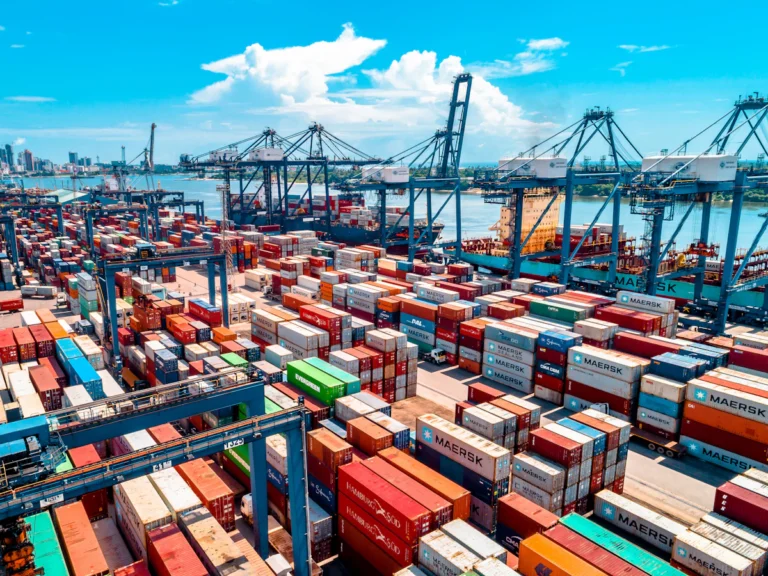
The two countries share a long land border. However, we ship container-load orders by sea from Douala or Kribi. Sea freight gives clear documents, a bill of lading and a clean customs record. As a result, it suits banks and letters of credit far better than road transport.
The main Nigerian arrival ports are Lagos (Apapa and Tin Can Island), the newer Lekki Deep Sea Port, Onne in Rivers State, and Calabar in the south-east. Calabar and Onne are closest to Cameroon. The Cameroon to Nigeria voyage is short by sea, but many services tranship along the coast. So the carrier confirms the schedule at booking.
Containers and tanks
Bagged maize, sorghum, soy, kernels, cake and kola travel in 20ft or 40ft dry containers. Heavy grain usually fills a 20ft by weight. Crude palm oil and palm kernel oil usually ship in flexitanks, with ISO tanks or drums on request.
Coastal humidity is the main cargo risk. So we dry each grain lot to target moisture before packing. Kola nuts need extra care, because fresh nuts lose quality if they dry out or overheat. We agree packing and handling for kola in each contract.
Arrival and clearance
Once the vessel lands, your clearing agent files the entry and books any inspection. Port congestion can add time in busy months, so build some slack into your plan. Most avoidable delays, however, come from paper errors. So we send draft documents for your review before the ship sails. Your agent can then flag a wrong value, weight or HS code while it is still easy to fix.
Nigerian import rules for Cameroon to Nigeria shipments
Several agencies touch every import. Your importer manages most steps, but each step shapes what we supply.
Form M and PAAR
Any physical import into Nigeria starts with a Form M, filed through an authorised dealer bank on the Nigeria Trade Platform. Customs then issues a Pre-Arrival Assessment Report, or PAAR, which starts the clearance. Therefore, your Form M must be in place before we load. Our proforma invoice gives you the data you need to open it.
NAFDAC, NAQS and SON
- NAFDAC regulates food. Processed foods need product registration. Ask NAFDAC or your agent how the rules apply to bulk raw materials.
- NAQS, the Nigeria Agricultural Quarantine Service, enforces plant and animal health rules. Permits apply to feeds and some other commodities.
- SON, the Standards Organisation of Nigeria, sets and enforces product standards.
Foreign exchange
For years, some food imports could not use official foreign exchange. However, the Central Bank of Nigeria lifted those restrictions in October 2023. Even so, FX access and rates still affect timing. So plan your payment route with your bank early.
Export documents for Cameroon to Nigeria
We prepare a full document set for each contract. The list depends on the product and your payment terms. Our export documents and compliance page explains each paper.
- Commercial invoice and packing list
- Bill of lading
- Phytosanitary certificate (MINADER plant protection)
- Certificate of origin, including an AfCFTA certificate where it applies
- Weight and quality certificate from the agreed inspection company
- Fumigation certificate, where required
- ONCC export quality certificate for cocoa beans
- Lab reports for aflatoxin, FFA, moisture or protein, where agreed
Nigerian clearance links the Form M, PAAR and shipping papers. So names, values and HS codes must match across every document. We review the set before release, which helps your agent avoid delays.
Quality checks for the Cameroon to Nigeria trade
Nigerian feed mills watch aflatoxin and moisture closely, while refiners watch free fatty acids. Our process covers both. You can read the full method on our quality control page.
- Buy in region: we source from producer groups and aggregators.
- Dry and store: lots reach target moisture in covered warehouses, off the ground.
- Sample and test: for example, aflatoxin for maize, FFA for palm oil, cut test for cocoa.
- Clean, sort and pack: goods go into new export-marked bags with a lot number.
- Inspect and load: independent inspection and fumigation where required, then loading.
You can nominate SGS, Bureau Veritas, Intertek or Cotecna to inspect each Cameroon to Nigeria lot before loading. Cocoa lots are also subject to quality control by Cameroon’s National Cocoa and Coffee Board (ONCC).
Packaging for Cameroon to Nigeria cargo
Packing is fixed in the contract, so you get a format your plant can handle. For the Cameroon to Nigeria trade, these are the usual choices:
- Maize, sorghum and soybeans: 50 kg PP bags.
- Soybean meal and palm kernel cake: PP bags of an agreed weight.
- Crude palm oil and palm kernel oil: flexitanks, with ISO tanks or drums on request.
- Cocoa beans: jute bags of about 62.5 to 65 kg.
- Kola nuts and bitter kola: breathable bags or baskets agreed per contract.
Every bag is new and carries export marks with a lot number. As a result, your warehouse can trace each bag to its test report. If you need your company name or contract number on the bags, tell us early. We can then print it during packing.
How pricing works on the Cameroon to Nigeria route
We do not publish prices, because they move with the market. Instead, every offer is built for one lot, one port and one shipment window. These are the main drivers:
- World markets: palm oil and cocoa follow global prices, while maize and sorghum follow regional supply.
- Grade and spec: lower FFA or lower aflatoxin limits cost more to secure.
- Packing: flexitanks, drums and bags each carry different costs.
- Incoterm: CFR and CIF include freight, and CIF adds insurance.
- Local demand: Cameroon uses much of its own palm oil and maize, so export volumes change by season.
Payment terms, such as a letter of credit or documentary collection, are agreed per contract.
Incoterms for the Cameroon to Nigeria route
We quote FOB, CFR and CIF. Each term splits cost and risk differently.
| Incoterm | What we cover | Best for |
|---|---|---|
| FOB Douala or Kribi | Goods loaded on your vessel | Importers with their own freight deals |
| CFR Lagos, Lekki, Onne or Calabar | Sea freight to the Nigerian port | Buyers who insure locally |
| CIF Lagos, Lekki, Onne or Calabar | Freight plus minimum cargo insurance | Buyers who want one landed-port price |
Check local insurance rules with your broker before choosing CIF. Many Nigerian importers prefer CFR, so they can insure the cargo locally. If you already hold freight contracts for other origins, ask your forwarder whether they also serve Douala or Kribi. If they do, FOB may give you the best overall cost and more control over timing. Our FOB vs CIF guide explains the trade-offs.
When to buy: Cameroon to Nigeria seasons
Grain timing matters most on this route. So plan your Cameroon to Nigeria orders around the crop calendar.
| Product | Main harvest window |
|---|---|
| Maize | South Jul–Aug and Nov–Dec; North Sept–Nov |
| Sorghum | Rainy-season crop Sept–Nov; dry-season muskwari Jan–Mar |
| Cocoa beans | Main crop Sept–Feb; mid-crop May–Aug |
| Palm oil and palm kernel products | All year, with seasonal peaks by area |
Rainfall shifts these windows a little each year. Our Cameroon harvest calendar gives the full picture, and we confirm availability in every offer.
How to order from Cameroon to Nigeria
Ordering takes four steps. Our export process page sets out the full detail, including payment security.
- Inquiry: send the product, grade, volume, Nigerian port and preferred Incoterm.
- Offer and sample: we reply with a written offer, a proforma for your Form M and, where possible, a sample.
- Agreement: we sign a contract covering spec, price, Incoterm, payment terms, inspection and shipment window.
- Shipment: we prepare, inspect and load, then release documents under the payment terms.
Orders start from one 20ft container or one flexitank. Also, open your Form M early, because loading waits for it.
Why buy from BV Holdings Agro
- One supplier for palm products, grains, soy, cocoa beans and kola.
- Typical specifications in every offer, verified before loading.
- Independent inspection by the company you choose.
- Sea shipments with full papers, quoted to four Nigerian port areas.
- Honest advice on what Nigeria restricts.
Sourcing for other African markets? See our page on shipping from Cameroon to Morocco.
Cameroon to Nigeria FAQ
What can I import from Cameroon to Nigeria?
We supply crude palm oil, crude palm kernel oil, palm kernels, palm kernel cake, yellow and white maize, sorghum, soybeans, soybean meal, cocoa beans, kola nuts and bitter kola. These suit Nigerian refiners, feed mills, brewers and traders. We do not offer cocoa butter, powder or cake for Nigeria, because those goods are on its prohibited list.
Does AfCFTA reduce duty from Cameroon to Nigeria?
It may in future, and in some cases now. Both countries are AfCFTA State Parties and have completed the tariff schedule process. However, practical use of preferences has been uneven. So ask your customs broker whether an AfCFTA rate applies to your HS code today, and we will supply the matching certificate of origin.
Can I import crude palm oil into Nigeria?
Yes. Nigeria prohibits most refined vegetable oils, but crude vegetable oil is not banned. We supply crude palm oil and crude palm kernel oil, usually in flexitanks. Even so, confirm the current rules and any duty with your broker before signing, because import policy can change.
Which Nigerian ports do you quote?
We quote CFR or CIF to Lagos (Apapa and Tin Can Island), Lekki Deep Sea Port, Onne and Calabar. The best port depends on where your plant is. Many services tranship on the coast, so the carrier confirms the route and timing at booking.
Do you ship by road across the border?
No. We ship container-load orders by sea from Douala or Kribi. Sea freight gives a bill of lading and a clear customs trail. This suits letters of credit and Nigerian bank rules far better than road transport.
What do I need before you load?
You need a Form M opened through your bank on the Nigeria Trade Platform. We send a proforma invoice with the data for it. You may also need NAFDAC or NAQS approvals, depending on the product. Your clearing agent can confirm which ones apply.
How do you test maize for Nigerian feed mills?
We test moisture, foreign matter and aflatoxin before loading. Aflatoxin is checked against the limit your contract sets. In addition, you can nominate an inspection company, such as SGS or Intertek, to sample and certify the lot. We share all results before shipment.
What is the minimum order from Cameroon to Nigeria?
Orders start from one 20ft container for bagged goods, or one flexitank for oils. The tonnage depends on the product and packing. We confirm the expected load for your lot in each offer, together with packing and marks.
Other Africa markets

One arm of BV Holdings PLC
BV Holdings Agro is the agricultural export company of BV Holdings PLC, alongside BV Cocoa Products and BV Metal & Minerals.
Source from Cameroon for Nigeria
Send us the product, grade, volume and Nigerian port, and we will reply with a clear written offer.