Export from Cameroon to Spain cocoa, coffee and spices for Spanish buyers
Shipping from Cameroon to Spain is simple with one trading house. We load cocoa, coffee, pepper, feed and rubber at Douala or Kribi, then quote FOB, CFR or CIF to Valencia, Barcelona, Algeciras or Bilbao.
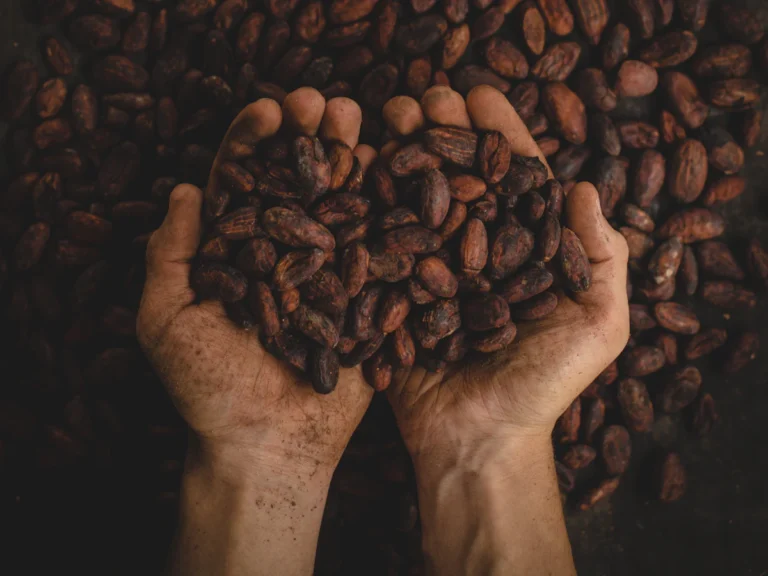
Trade from Cameroon to Spain is a natural fit for cocoa, coffee, spice and feed buyers. Spanish chocolate makers, coffee roasters, feed compounders and commodity traders all use raw materials that Cameroon grows in volume. BV Holdings Agro loads these goods at Douala or Kribi and quotes FOB, CFR or CIF to the Spanish port you name.
This page is written for importers in Spain. First, it lists the products Spanish buyers most often ask about. Then it explains the trade rules, the shipping route, the papers your customs broker will want and the best time to buy. Finally, it shows how an order with us works, step by step.
We are a B2B trading house based in Yaoundé. We buy from producer groups and aggregators in the producing regions, then consolidate, test and pack each lot for export. As a result, you deal with one counterparty from inquiry to bill of lading. Orders start from one 20ft container.
Products in demand from Cameroon to Spain
The table below shows the lines that suit the Spanish market best. Each product name links to its own page, with a typical specification, packing details and FAQ. HS codes are given at six or eight digits; your broker confirms the full Spanish tariff line.
| Product | Typical buyer in Spain | HS code |
|---|---|---|
| Cocoa beans | Chocolate makers, grinders, cocoa traders | 1801.00 |
| Cocoa butter | Chocolate, confectionery and cosmetics firms | 1804.00 |
| Cocoa powder | Bakeries, drink-mix and dairy makers | 1805.00 |
| Green Robusta coffee | Roasters for espresso blends and soluble coffee | 0901.11 |
| Green Arabica coffee | Speciality and blend roasters | 0901.11 |
| White pepper | Spice packers and fine-food importers | 0904.11 |
| Black pepper | Spice millers, meat and charcuterie processors | 0904.11 |
| Sesame seeds | Bakeries and snack makers | 1207.40 |
| Palm kernel cake | Compound feed mills | 2306.60 |
| Natural rubber | Tyre and technical rubber plants | 4001.22 |
| Hardwood charcoal | Hospitality and barbecue distributors | 4402.90 |
In short, cocoa and coffee lead the Cameroon to Spain list. Spices come next, because Spanish cooking and meat curing use a lot of pepper. Meanwhile, feed, rubber and charcoal fill the industrial side. For the full range, see our category pages for cocoa products, green coffee and spices.
Trade and market access: Cameroon to Spain under the EU EPA
Spain applies the EU’s common external tariff, so the key deal is the EU–Central Africa Economic Partnership Agreement. Cameroon is the only Central African country applying this interim agreement. It has been provisionally applied since 2014. Under it, the EU grants zero duties and zero quotas on goods from Cameroon.
For a buyer in Spain, that matters in a simple way. Goods that meet the EPA rules of origin can enter duty-free. Farm goods grown and harvested in Cameroon are “wholly obtained”, so they usually qualify with ease. Processed lines, such as cocoa butter or powder, also qualify when made from Cameroon beans.
However, the preference is not automatic. You must claim it with a valid proof of origin. The EU accepts an EUR.1 movement certificate, issued by Cameroon customs. Smaller consignments can use an invoice declaration instead. Proof of origin is valid for ten months, so plan your clearance with that in mind.
The European Commission’s Access2Markets page on the Central Africa EPA explains these rules in detail. We prepare the certificate of origin with every Cameroon to Spain shipment. Your broker then makes the preference claim at entry. Still, always confirm the current rule for your HS code before you sign.

Shipping route: Douala or Kribi to Spanish ports
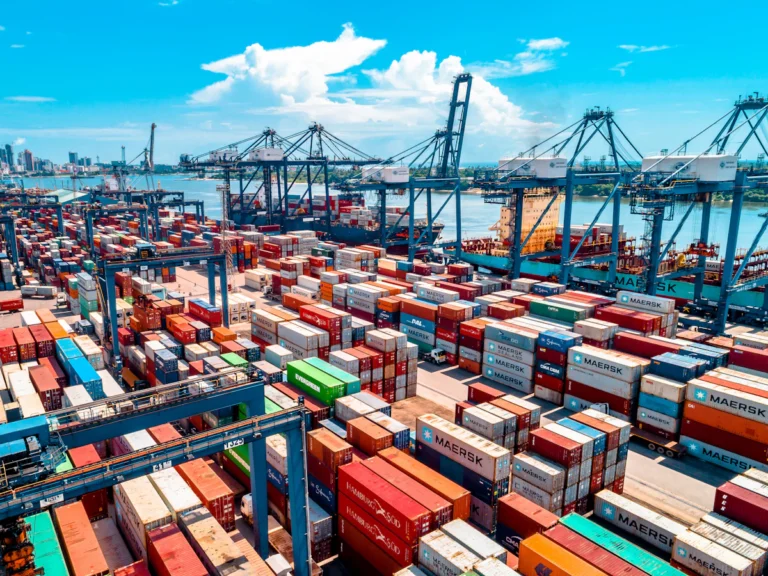
Cargo on the Cameroon to Spain lane leaves from one of two ports. Douala is the country’s main commercial port, on the Wouri estuary. Kribi is a newer deep-water port further south, able to take larger vessels. We choose the port with you, based on the product, the inland origin and the sailing schedule.
On the Spanish side, four container ports handle most of this trade:
- Valencia — the busiest Spanish box port, well placed for Madrid and the east coast.
- Algeciras — a large transhipment hub on the Strait of Gibraltar.
- Barcelona — the gateway for Catalonia’s food, coffee and chocolate industry.
- Bilbao — the main Atlantic port for the Basque Country and the north.
Most Cameroon to Spain cargo moves in standard 20ft or 40ft dry containers. Bagged cocoa and coffee often travel with liners or desiccant to manage moisture. Some services call directly, while others tranship at a hub port. For this reason, transit is typically a few weeks, and we confirm it at booking. Vegetable oils, if needed, move in flexitanks.
So which port should you pick? In general, choose the port closest to your plant or warehouse. Inland trucking in Spain often costs more than a small change of sea route. We quote CFR or CIF to the port you name.
Import requirements and documents in Spain
Spain follows EU law on food, feed and plant health. Checks at the border are run by Spanish authorities. Plant health controls sit with the Ministry of Agriculture, Fisheries and Food. Meanwhile, food of non-animal origin is checked by Sanidad Exterior, the border health service of the Ministry of Health. Your broker handles the filings with both.
For a typical Cameroon to Spain shipment, expect these papers:
- Commercial invoice, packing list and bill of lading.
- Certificate of origin (EUR.1 or invoice declaration) to claim the EPA preference.
- Phytosanitary certificate from MINADER, Cameroon’s plant protection service, for regulated plant goods.
- Weight and quality certificate from the agreed inspection company.
- Fumigation certificate where the product or contract requires it.
- ONCC export quality certificate for cocoa and coffee.
- Lab reports, such as aflatoxin or pesticide residue, where agreed in the contract.
Food safety limits are set at EU level. Pesticide maximum residue levels (MRLs) come from Regulation (EC) No 396/2005. Limits for contaminants, such as aflatoxin and ochratoxin A, come from Regulation (EU) 2023/915. Some product and origin pairs face extra checks at the border. Therefore, tell us your limits early, and we will build the right tests into the offer.
EUDR and the Cameroon to Spain trade
The EU Deforestation Regulation (EUDR) covers cocoa, coffee, palm oil, soy, rubber and wood, including charcoal. It is due to apply from 30 December 2026 for larger firms and from 30 June 2027 for smaller ones. Importers must then file a due diligence statement, backed by plot geolocation data. Please raise EUDR needs at inquiry stage. We will say honestly what traceability data a given lot can carry. Our export documents and compliance page explains each paper in more detail.
Incoterms for Spanish buyers
We quote three Incoterms on the Cameroon to Spain route. Each one splits cost and risk in a different way.
- FOB Douala or Kribi. You book the ship and insure the cargo. This suits Spanish traders with their own freight contracts.
- CFR Valencia, Barcelona, Algeciras or Bilbao. We book and pay sea freight, and you insure. This suits roasters and feed mills that already hold an open cargo policy.
- CIF to your Spanish port. We book freight and buy minimum cargo insurance. This suits first-time importers who want one simple landed price at the port.
Under all three terms on Cameroon to Spain contracts, risk passes to you once the goods are loaded on board in Cameroon. The difference is who arranges and pays for freight and insurance. For example, a large chocolate maker may prefer FOB to use its own lines. A smaller spice packer may prefer CIF Valencia for simplicity. Our FOB vs CIF guide explains the trade-offs in plain terms.
When to buy: seasons on the Cameroon to Spain route
Timing matters, because most Cameroon crops have clear harvest windows. Buying early in a season gives you more choice of grade and lot. In addition, it gives more time for testing and documents before your production plan needs the goods.
| Product | Main harvest window | Tip for Spanish buyers |
|---|---|---|
| Cocoa beans | Main crop Sept–Feb; mid-crop May–Aug | Contract main-crop beans in early autumn |
| Robusta coffee | Nov–Feb | Ask for samples from January |
| Arabica coffee | Oct–Jan | Book early for the best screen sizes |
| Black and white pepper | Nov–Mar | Lock in volume before spring demand |
| Sesame seeds | Oct–Dec | Fresh crop ships from late in the year |
Seasons shift a little each year with the rains. For the full picture, see our Cameroon harvest calendar. Then plan your Cameroon to Spain contracts so cargo lands well before your peak, such as the Christmas chocolate season.
Quality checks for Cameroon to Spain cargo
Every Cameroon to Spain lot goes through five checkpoints before loading. First, we buy in the producing region. Second, we dry and store the goods off the ground in covered warehouses. Third, we sample and test against your contract spec. Fourth, we clean, sort and pack in new export-marked bags with a lot number. Finally, independent inspection and fumigation, where required, take place before loading.
The tests depend on the product. For example, cocoa gets a cut test for mould, slate and insect damage. Coffee is graded by screen size and defect count. Grains and seeds are tested for aflatoxin against EU limits. Moisture and foreign matter are checked on every lot. In addition, cocoa and coffee export lots are subject to quality control by Cameroon’s National Cocoa and Coffee Board (ONCC).
You can also nominate your own inspector. Spanish buyers often use SGS, Bureau Veritas, Intertek or Cotecna. The inspector samples the lot, checks weight and issues a certificate before shipment. Our quality and sourcing page sets out each step.
Packing and container loads for Cameroon to Spain
Packing follows the product and the buyer’s plant. Cocoa beans travel in new jute bags of about 62.5 to 65 kg. Green coffee uses new 60 kg jute bags, with hermetic liners on request. Spices ship in 25 to 50 kg jute or PP bags, with liners where needed. Meanwhile, cocoa butter goes in 25 kg cartons with a food-grade liner.
Container loads are approximate and depend on bag size and density. For example, a 20ft holds about 12 to 12.5 tonnes of bagged cocoa beans. Feed and grain products load heavier in the same box. We state the expected net weight in the offer, so your Cameroon to Spain plan has no surprises at the warehouse door.
Labels matter too. Every bag carries an export mark and a lot number. As a result, your quality team can trace each bag back to its tested lot. If your Spanish plant needs special marks, such as your own codes, tell us before packing starts.
How pricing works for Cameroon to Spain offers
We do not publish prices, because commodity prices move every day. Instead, each offer is built for your lot, your port and your timing. Several factors shape a Cameroon to Spain quote:
- World markets. Cocoa and coffee follow the ICE futures in London and New York, plus a differential for origin and quality.
- Grade and spec. Tighter limits on moisture, defects or aflatoxin cost more to meet.
- Season. Prices and availability change between early and late crop.
- Incoterm and freight. CFR and CIF prices include sea freight, which changes with the market.
- Volume and packing. Liners, special bags and extra lab tests add cost.
Payment terms also matter. A confirmed letter of credit lowers risk for both sides. All terms are agreed in each contract. In short, the clearer your inquiry, the faster and sharper our Cameroon to Spain offer will be.
How to order from Cameroon to Spain with BV Holdings Agro
Ordering is simple and runs in four steps:
- 1. Inquiry. Send the product, grade, volume, Spanish port and Incoterm.
- 2. Offer and sample. We send a written offer and, where possible, a sample of the lot.
- 3. Agreement. We sign a contract covering spec, price, Incoterm, payment terms, inspection and shipment window.
- 4. Shipment. We prepare, inspect and load the goods, then release documents per the agreed payment terms.
Payment security, such as a letter of credit or documentary collection, is agreed in the contract. You arrange it on your side. Our export process page shows the full six-step version, including payment security and preparation. Meanwhile, buyers in other EU markets can read our pages for Cameroon to France and Cameroon to Italy.
Why buy from BV Holdings Agro
- One counterparty. We source, test, pack and ship, so you have one contact.
- Two loading ports. Douala and Kribi give flexible Cameroon to Spain sailings.
- Clear paperwork. EUR.1, phytosanitary and inspection papers come with each lot.
- Honest claims. We never claim certificates or data we cannot document.
- Group backing. We are part of BV Holdings PLC, with a cocoa division at BV Cocoa Products.
Today, the link runs the other way, from Africa’s forest farms to Spanish factories. In short, the Cameroon to Spain cocoa trade continues a very old story. To see every market we serve, visit our export markets hub.
FAQ
Is shipping from Cameroon to Spain duty-free?
In most cases, yes. Under the EU–Central Africa EPA, the EU grants zero duties and zero quotas on goods from Cameroon. However, you must claim the preference with a valid proof of origin, such as an EUR.1 certificate. We supply the origin paper with each lot. Your customs broker then makes the claim at entry, so always confirm the rule for your HS code.
Which Spanish ports do you quote?
We quote CFR or CIF to the main Spanish container ports, including Valencia, Barcelona, Algeciras and Bilbao. We can also quote other ports on request. If you prefer FOB, you book the ship yourself from Douala or Kribi. In general, choose the port nearest your plant, because inland trucking can cost more than a change of sea route.
How long does Cameroon to Spain transit take?
Transit is typically a few weeks, and we confirm it at booking. The exact time depends on the shipping line, the loading port and whether the cargo tranships at a hub. For example, some services call Spain directly, while others tranship in the western Mediterranean. We share the booked vessel and the estimated arrival date once space is confirmed.
Does EUDR apply to my Cameroon to Spain order?
It applies if you import cocoa, coffee, palm oil, soy, rubber or wood products, including charcoal. The rules are due to start on 30 December 2026 for larger firms and 30 June 2027 for smaller ones. You will need geolocation data and a due diligence statement. Please raise this at inquiry, and we will say honestly what data a lot can carry.
What is the minimum order?
Orders start from one 20ft container for every product. However, the tonnage in a container varies by product and packing. For example, bagged cocoa beans load at about 12 to 12.5 tonnes per 20ft. Sesame or maize in 50 kg bags loads heavier. We confirm the expected net weight for your lot in the written offer, so you can plan storage.
Can I appoint my own inspection company?
Yes. Many Spanish buyers nominate SGS, Bureau Veritas, Intertek or Cotecna. The inspector samples the lot, checks the weight and issues a certificate before loading. We agree the inspection method in the contract. In addition, cocoa and coffee lots go through ONCC export quality control in Cameroon, which adds a second layer of checks before shipment.
Are your lots certified organic or Fairtrade?
No. We do not claim organic, Fairtrade or Rainforest Alliance status for our lots. Instead, we describe quality through a typical specification, lab results and independent inspection. If your Spanish customers need a certified supply chain, tell us early. That way, we can be clear about what we can and cannot provide before you plan a programme.
Can you send samples to Spain before I sign?
Yes, samples and offers follow an inquiry. Send us the product, grade, volume, Spanish port and Incoterm. We will reply with a written offer and, where possible, a sample of the lot by courier. As a result, you can test the goods in your own lab first, which lowers the risk on a first Cameroon order.
Other Europe markets

One arm of BV Holdings PLC
BV Holdings Agro is the agricultural export company of BV Holdings PLC, alongside BV Cocoa Products and BV Metal & Minerals.
Source from Cameroon for Spain
Tell us the product, grade, volume and Spanish port, and we will reply with a written offer.