Cameroon to Germany cocoa, coffee and rubber to Hamburg
BV Holdings Agro ships cocoa, green coffee, rubber and spices from Cameroon to Germany for grinders, roasters and manufacturers. We load at Douala or Kribi and quote FOB, CFR or CIF Hamburg or Bremerhaven.
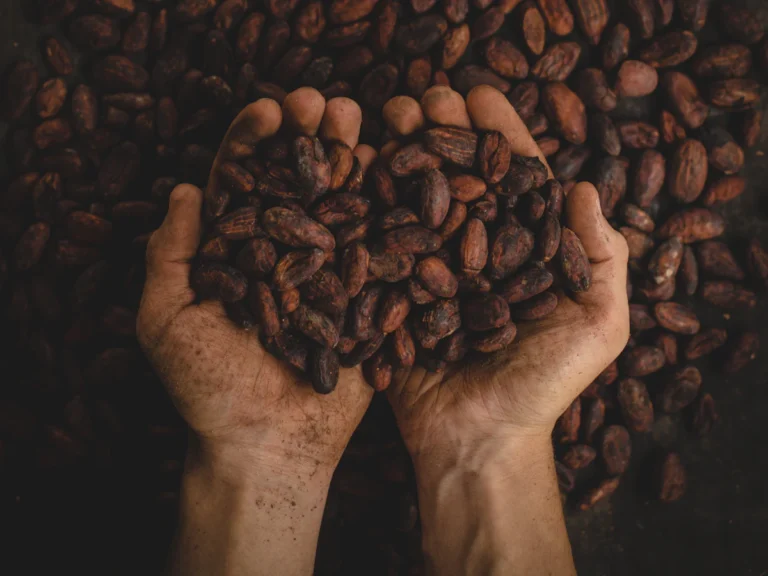
German importers who buy from Cameroon to Germany mostly look for cocoa, green coffee, natural rubber and spices. BV Holdings Agro, the agricultural export arm of BV Holdings PLC, supplies these lines by the container. We buy from producer groups and aggregators in Cameroon’s growing regions, test each lot against your contract and load at Douala or Kribi.
Germany is one of Europe’s largest food and ingredient markets. According to CBI, it is Europe’s second-largest importer and grinder of cocoa beans, and the largest European importer of cocoa butter. It is also Europe’s biggest importer of green coffee. For a supplier in Cameroon, that means demanding buyers, clear specifications and a strong focus on documents.
This page explains the Cameroon to Germany trade in practical terms. It covers the products German buyers source, EU market access, the sea route to Hamburg and Bremerhaven, German import checks, Incoterms, seasons and ordering. For other destinations, see our export markets overview.
Products in demand from Cameroon to Germany
Trade data compiled from UN Comtrade shows cocoa as Cameroon’s largest farm export to Germany in 2023, followed by rubber, wood products and coffee. Within our own range, the lines below fit German demand best. Each name links to its product page, with a typical specification.
| Product | Typical buyer or use in Germany | HS code |
|---|---|---|
| Cameroon cocoa beans | Grinders around Hamburg; cocoa traders | 1801.00 |
| Cocoa butter | Chocolate, confectionery and cosmetics makers | 1804.00 |
| Cocoa liquor (paste) | Chocolate and coatings plants | 1803.10 |
| Cocoa powder | Bakery, drinks and dairy firms | 1805.00 |
| Green Robusta coffee | Roasters, soluble coffee makers and traders | 0901.11 |
| Green Arabica coffee | Roasters and specialty importers | 0901.11 |
| Natural rubber | Tyre, hose and technical rubber makers | 4001.22 |
| Dried ginger | Spice millers, tea and drinks firms | 0910.11 / 0910.12 |
| Dried turmeric | Spice millers and natural colour users | 0910.30 |
| Black pepper | Spice grinders and food makers | 0904.11 |
| Sesame seeds | Bakeries and seed traders | 1207.40 |
| Hardwood charcoal | Barbecue retail suppliers (legally sourced lots only) | 4402.90 |
You can browse each group in our cocoa products, green coffee, spices and industrial raw materials categories. Processed cocoa is also covered by our cocoa division, BV Cocoa Products.
Quick picks for German buyers
- Chocolate maker: cocoa butter and liquor, where Germany already sources from Cameroon.
- Roaster: Robusta for espresso and blends, Arabica for origin coffees.
- Spice miller: ginger, turmeric and black pepper, each tested for moisture and foreign matter.
- Rubber buyer: natural rubber graded by contract.
The German market for Cameroon to Germany cocoa and coffee
Germany has a deep cocoa industry. CBI reports bean imports of nearly 400,000 tonnes in 2024, with Hamburg as the main point of entry. Germany also takes about a quarter of Europe’s cocoa butter imports. Moreover, CBI names Germany as the world’s top exporter of chocolate products.
Cameroon already has a foothold here. CBI lists Cameroon as the third-largest direct source of cocoa paste for Germany in 2024, after Ghana and Côte d’Ivoire. So semi-finished cocoa is a natural entry point on the Cameroon to Germany route. Beans, meanwhile, often reach German grinders through Amsterdam or Antwerp as well as Hamburg.
Coffee is the other big story. Germany imports more green coffee than any other European country, and it roasts on a large scale. Robusta from Cameroon suits blends, espresso and soluble coffee. In contrast, Arabica from the western highlands suits roasters who want a distinct African origin. Either way, German buyers expect consistent screen size, low defects and clean cup notes.
Rubber and spices round out the picture. Germany has a large automotive and technical rubber sector, which uses natural rubber alongside synthetics. Its spice millers and tea blenders, meanwhile, buy dried ginger, turmeric and pepper in bulk. For these buyers, the Cameroon to Germany route offers an origin with real depth in the Littoral, West and South-West regions.
Trade agreements and market access: Cameroon to Germany
Germany applies the EU’s common customs tariff. Therefore, the Cameroon to Germany trade runs under EU agreements. The key one is the interim Economic Partnership Agreement (EPA) between the EU and Cameroon. It was signed in Yaoundé in January 2009 and has been provisionally applied since 2014.
Under the EPA, goods from Cameroon enter the EU duty-free and quota-free. This matters most for processed cocoa. Cocoa beans and green coffee are duty-free into the EU from most origins anyway. However, cocoa butter, paste and powder normally carry EU duty. With valid proof of Cameroonian origin, they can enter without it.
The EU’s Access2Markets guide to the Central Africa EPA lists the proof of origin. It is an EUR.1 movement certificate from Cameroon customs, or an invoice declaration from an approved exporter or for small consignments. German customs (Zoll) checks the claim at import.
EUDR on the Cameroon to Germany route
The EU Deforestation Regulation (EUDR) covers cocoa, coffee, palm oil, rubber, soy, cattle and wood, including charcoal. Large and medium operators must comply from 30 December 2026. Micro and small operators follow from 30 June 2027. The Commission’s 2026 review confirmed those dates.
So most of the Cameroon to Germany list above is in scope. The German operator must file a due diligence statement with plot geolocation for each product. We discuss the data we can attach to each lot before you sign. We never claim data or certificates we cannot document. German buyers also tend to send detailed supplier questionnaires. On request, we provide company registration and export documents during supplier onboarding.
Shipping from Cameroon to Germany: ports and containers
Each Cameroon to Germany shipment loads at Douala or Kribi. Douala, on the Wouri estuary, is Cameroon’s main commercial port. Kribi, in the South, is a deep-water port with a modern container terminal. We choose the port that suits the cargo, the origin and the sailing schedule.
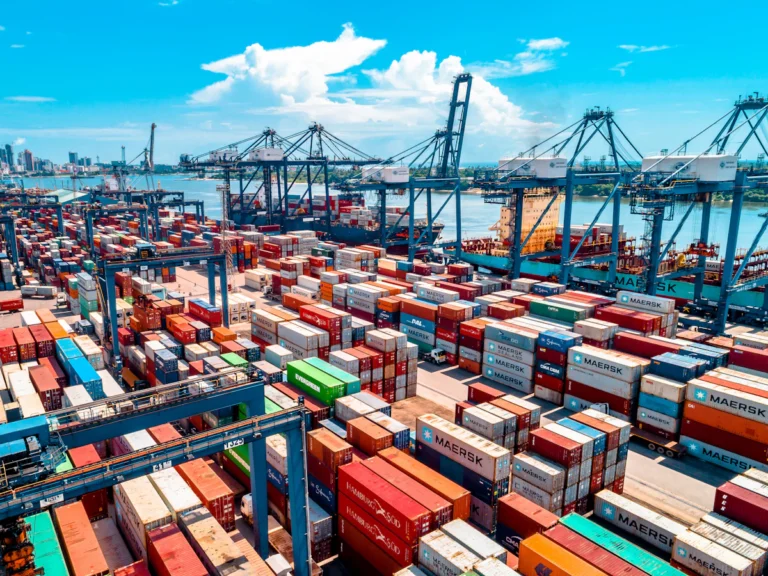
In Germany, Hamburg is the main gateway for cocoa and coffee. Bremerhaven, the container port for Bremen, is the other key option on the North Sea. Many German buyers also take cargo through Rotterdam or Antwerp and truck or barge it inland. Therefore, we can quote CFR or CIF to Hamburg, Bremerhaven, Rotterdam or Antwerp, depending on where your plant sits.
Packing by product
- Cocoa beans: jute bags of about 62.5–65 kg in 20ft containers.
- Cocoa butter, liquor and powder: cartons or lined bags in 20ft containers.
- Green coffee: new 60 kg jute bags; liners on request.
- Natural rubber: bales, packed as agreed, in 20ft containers.
- Spices and sesame: 25 kg or 50 kg jute or PP bags, with liners where required.
- Charcoal: bags in 40ft containers, because it is light for its volume.
Transit on the Cameroon to Germany route is typically a few weeks. Hamburg and Bremerhaven are further north than Rotterdam, and many services call at a transhipment hub on the way. So we confirm the vessel, the route and the estimated arrival at booking, not before. For cocoa, coffee and spices, we also plan moisture control, because condensation can damage a lot in transit.
Inland legs matter too. A lot discharged in Hamburg can reach southern Germany by rail, while Rhine barges serve plants from Rotterdam. Tell us the final delivery site with your inquiry. As a result, we can pack, mark and document each Cameroon to Germany container for the full journey, not just the sea leg.
Import requirements and documents in Germany
German import rules follow EU law, with German agencies applying them. Customs (Zoll) clears the goods, checks origin claims and collects import VAT. Plant health checks at entry fall to the plant protection service of the federal state where the goods arrive. Food safety controls are also run at state level.
Food safety limits
Food must meet EU maximum residue levels (MRLs) for pesticides. EU contaminant rules also apply. For example, they set limits for ochratoxin A in coffee and spices and for aflatoxins in spices and oilseeds. German buyers often test on arrival as well. Therefore, we agree the lab parameters in the contract, so both sides test against the same limits.
Coffee tax in Germany
Germany levies a national coffee tax (Kaffeesteuer) on roasted and soluble coffee. Green coffee is not taxed when it is imported. Instead, the tax applies when the coffee is roasted or sold as a finished product in Germany. Your customs adviser confirms how this applies to your business.
Documents for a Cameroon to Germany shipment
- commercial invoice and packing list
- bill of lading
- phytosanitary certificate (MINADER)
- certificate of origin, plus EUR.1 or an origin declaration for EPA preference
- weight and quality certificate from the agreed inspection company
- ONCC export quality certificate for cocoa and coffee
- fumigation certificate where required
- lab reports (pesticide residues, mycotoxins, microbiology) where agreed
Our export documents page explains each item. These are requirements, not guarantees, so we fix the exact list in each contract.
Every lot is packed in new export-marked bags with a lot number. That simple step links each bag to its test results and documents. It also helps the German importer trace the goods back through the supply chain if a question comes up later.
Quality checks before Cameroon to Germany loading
German buyers like numbers. So we test against your contract and share the results before loading. We check moisture on every lot. For cocoa, we run a cut test for mouldy, slaty and insect-damaged beans and count beans per 100 g. For coffee, we check screen size, defects and odour. For spices and sesame, we check moisture, foreign matter and, where agreed, aflatoxin.
Cameroon’s National Cocoa and Coffee Board (ONCC) also controls cocoa and coffee export lots. In addition, you may nominate an inspection company such as SGS, Bureau Veritas, Intertek or Cotecna. Final specifications are confirmed in each contract and verified before loading. Our quality control page sets out the full process.
Incoterms for Cameroon to Germany buyers
We quote FOB Douala or Kribi, CFR to your port and CIF to your port. Each splits freight, insurance and risk in a different way.
- FOB Douala/Kribi: suits large Hamburg traders and roasters with their own freight contracts.
- CFR Hamburg or Bremerhaven: we book the freight, while you insure the cargo under your own policy.
- CIF Hamburg or Bremerhaven: we add minimum cargo insurance. That makes it the simplest choice for a first trial container.
Many German firms already hold a marine cargo policy, so CFR is common. Smaller importers, by contrast, often prefer CIF for a first lot. Our guide to FOB vs CIF compares the options. Payment terms, such as a letter of credit or documentary collection, are agreed per contract.
Contract basis on the Cameroon to Germany route
Many European coffee buyers trade on the European Contract for Coffee. Likewise, many cocoa buyers use Federation of Cocoa Commerce (FCC) contract rules. If your firm works on one of these, tell us in the inquiry. We can then discuss how our offer fits that basis, including weights, quality claims and arbitration. Where you prefer a bespoke contract, we work from that instead.
Either way, the contract should set out the specification, the sampling method and the lab that settles disputes. Clear terms protect both sides. They also make the second and third Cameroon to Germany containers much faster to agree.
When to buy: crop seasons
Cameroon’s cocoa main crop runs from about September to February, with a mid-crop from about May to August. Robusta is harvested from about November to February. Arabica from the West and North-West highlands comes in from about October to January. Ginger peaks from about December to March, and pepper from November to March.
So a German roaster can plan Robusta for the first months of the year. A grinder, meanwhile, should book main-crop cocoa early, leaving time for samples and EUDR data checks. Our Cameroon harvest calendar shows each crop month by month.
Rubber and charcoal are less tied to one harvest window. However, heavy rains can slow road transport out of the forest regions. Therefore, we build in longer lead times for those Cameroon to Germany orders during the wettest months. Early planning also helps with sesame, which comes in from the North from about October to December and sells quickly.
How to order Cameroon to Germany supply
- 1. Inquiry: send the product, grade, volume, destination port and Incoterm.
- 2. Offer and sample: we reply with a written offer and, where possible, a representative sample.
- 3. Agreement: we sign a contract with specification, price, Incoterm, payment terms, inspection method and shipment window.
- 4. Shipment: we prepare, inspect and load, then release documents under the agreed terms.
Our export process page covers each step in detail. A precise first inquiry speeds things up. So include your target specification, your lab limits and any marking rules for your warehouse.
Why buy from BV Holdings Agro
- One trading house for cocoa, coffee, rubber, spices and charcoal from Cameroon.
- Loading at Douala or Kribi, with FOB, CFR or CIF offers to German and Benelux ports.
- Pre-loading tests against your contract, plus ONCC control on cocoa and coffee.
- Full export documents and independent inspection on request.
- Container loads from one 20ft unit, with no retail quantities.
FAQ: Cameroon to Germany
Do Cameroon to Germany imports pay customs duty?
Under the EU–Cameroon interim EPA, goods of Cameroonian origin enter the EU duty-free and quota-free. The importer needs valid proof of origin, usually an EUR.1 certificate. German import VAT still applies, and roasted coffee later attracts coffee tax. Your customs adviser confirms the final treatment for each HS code.
Which German ports do you quote?
We usually quote CFR or CIF Hamburg or Bremerhaven. If your plant is closer to the Rhine, Rotterdam or Antwerp can be cheaper overall. We can quote any of these on request. Alternatively, we offer FOB Douala or Kribi if you prefer to book freight yourself.
How long does shipping from Cameroon to Germany take?
Transit is typically a few weeks. It depends on the carrier, the loading port and any transhipment call. We confirm the vessel and estimated arrival at booking. In addition, we time loading to the crop, so the lot is tested and ready when the vessel arrives.
Can you supply EUDR data for Cameroon to Germany cocoa and coffee?
We discuss traceability and geolocation data for each cocoa, coffee, rubber and charcoal lot before the contract. The German operator files the due diligence statement. We tell you clearly what we can provide for a given lot, and we never claim data we cannot document.
Do you sell roasted or ground coffee?
No. We supply green Arabica and green Robusta only. Roasting, grinding and packing happen at your plant or with your roaster. That also keeps the German coffee tax question with the business that roasts the beans. In addition, green coffee travels and stores better than roasted coffee, so it suits the long sea voyage.
Can German buyers order cocoa butter and liquor?
Yes. Both are in our range and are also handled by our cocoa division, BV Cocoa Products. We share a typical specification, a sample where possible and agreed lab results. As a result, your quality team can approve the product before shipment.
What is the minimum order?
The minimum order is one 20ft container. We do not sell retail or pallet quantities. For light cargo such as charcoal, a 40ft container gives better freight value. Larger orders can be split over several sailings, with each container inspected before loading.
Are your products certified organic or Fairtrade?
No. We do not claim organic, Fairtrade or Rainforest Alliance status. Instead, we describe each lot through a typical specification, pre-loading tests and independent inspection. If your German customers need certified supply, tell us early, and we will be clear about what we can offer.
Other Europe markets

One arm of BV Holdings PLC
BV Holdings Agro is the agricultural export company of BV Holdings PLC, alongside BV Cocoa Products and BV Metal & Minerals.
Plan your German container
Tell us the product, grade, volume and port, and we will reply with a clear written offer.