Cameroon EUDR compliance for EU buyers what the deforestation rules mean for your lots
Cameroon EUDR compliance now shapes how EU buyers source cocoa, coffee, palm products, rubber, soy and charcoal. This guide explains scope, dates, geolocation, legality and Cameroon's risk tier, plus the origin data we can share on request.

Cameroon EUDR compliance is now a planning task for every EU buyer of Cameroon cocoa, coffee, palm products, rubber, soy and charcoal. The EU Deforestation Regulation sets new rules for these goods. In short, they must be deforestation-free, legally produced and covered by a due diligence statement.
The rules sit with the EU company that first places the goods on the EU market. Even so, that company needs data from the origin. So exporters, aggregators and farmer groups in Cameroon all play a part in the chain.
This guide to Cameroon EUDR compliance covers scope, dates, geolocation, legality and risk tier. It also gives a product table, a buyer checklist and a FAQ. It is general information, not legal advice.
Cameroon EUDR compliance: the short answer
If you only read one section, read this one. These points sum up Cameroon EUDR compliance as it stands in October 2026.
- The law is Regulation (EU) 2023/1115, known as the EUDR.
- It covers seven commodities: cattle, cocoa, coffee, oil palm, rubber, soya and wood, plus listed products made from them.
- Goods must not come from land deforested after 31 December 2020.
- Goods must also be produced in line with the laws of Cameroon.
- The EU operator files a due diligence statement, with geolocation for every plot of land.
- Large and medium operators must comply from 30 December 2026. Micro and small operators follow from 30 June 2027.
- Cameroon is classed as a standard-risk country, so full due diligence applies.
In other words, Cameroon EUDR compliance is the operator’s legal duty. However, it depends on good data from the supplier. That is where an exporter can help.
What the EUDR is and who must comply
The EUDR replaces the old EU Timber Regulation and widens its reach. It aims to stop EU demand from driving deforestation around the world. The European Commission’s EUDR page holds the official text, guidance and FAQs.
Operators, traders and downstream firms
An operator is the firm that first places a product on the EU market, or exports it from the EU. For Cameroon goods, that is usually the EU importer. So the importer carries the main duty for Cameroon EUDR compliance.
The December 2025 amendment, Regulation (EU) 2025/2650, eased duties further down the chain. Downstream operators and traders no longer file their own statements for goods already covered. Instead, they keep supplier and customer details for five years.
Where a Cameroon exporter fits
A supplier outside the EU has no filing duty. Still, Cameroon EUDR compliance cannot happen without origin data. Therefore, the contract should list exactly which data comes with each lot.
Which Cameroon exports fall under the EUDR
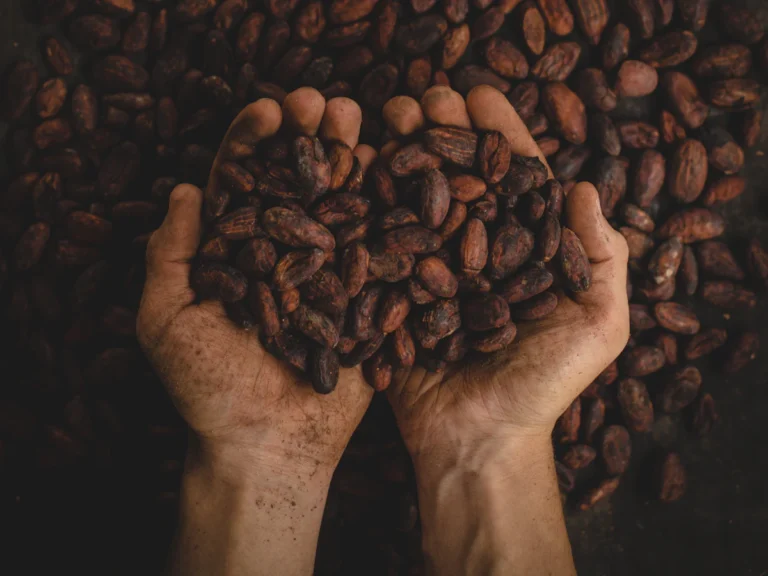
Scope is set by HS code in Annex I of the regulation. The table below maps our product list to the EUDR commodities. It is a starting point for Cameroon EUDR compliance, but the final code always comes from your customs broker.
| Product | Typical HS code | EUDR commodity | Note for Cameroon EUDR compliance |
|---|---|---|---|
| Cocoa beans | 1801.00 | Cocoa | Plot data from many smallholders |
| Cocoa shells (husk) | 1802.00 | Cocoa | Covered as cocoa waste |
| Cocoa liquor | 1803.10 | Cocoa | Needs links back to bean lots |
| Cocoa cake | 1803.20 | Cocoa | Needs links back to bean lots |
| Cocoa butter | 1804.00 | Cocoa | Needs links back to bean lots |
| Cocoa powder | 1805.00 | Cocoa | Needs links back to bean lots |
| Green Arabica coffee | 0901.11 | Coffee | Highland smallholder plots |
| Green Robusta coffee | 0901.11 | Coffee | Lowland and forest-zone plots |
| Palm kernels | 1207.10 | Oil palm | Plantation or village palm groves |
| Crude palm oil | 1511.10 | Oil palm | Mill and fresh fruit bunch origin |
| Palm kernel oil | 1513.21 | Oil palm | Mill and kernel origin |
| Palm kernel cake | 2306.60 | Oil palm | Feed buyers need it too |
| Soybeans | 1201.90 | Soya | Seed for sowing is now out of scope |
| Soybean meal | 2304.00 | Soya | Covered as oil-cake |
| Natural rubber | 4001.22 | Rubber | Plantation and smallholder tapping |
| Hardwood charcoal | 4402.90 | Wood | Forest origin and permits matter most |
Quick picks: products outside EUDR scope
Many Cameroon crops are not among the seven commodities, so no Cameroon EUDR compliance step applies to them.
- Sesame seeds and groundnuts.
- Our cereals range: maize, sorghum, millet, rice and beans.
- Our spices range, from ginger to pepper.
- Cashew, kola, bitter kola, cotton and rice bran.
Other EU food rules, such as limits on pesticide residues and aflatoxin, still apply. Our quality control page explains the tests we run before loading.
EUDR application dates and the 2025–2026 changes
The dates have moved twice, so many buyers are unsure which deadline applies. The timeline below shows the position in October 2026. Confirm the latest dates before you sign.
| Date | Event | What it means for buyers |
|---|---|---|
| 29 June 2023 | EUDR enters into force | Cut-off date of 31 December 2020 is set |
| 23 December 2024 | Regulation (EU) 2024/3234 published | First one-year delay |
| 22 May 2025 | Country benchmarking adopted | Cameroon classed as standard risk |
| 23 December 2025 | Regulation (EU) 2025/2650 published | Second delay and lighter duties downstream |
| 4 May 2026 | Commission simplification review | No further delay proposed; new guidance and FAQs |
| 17 September 2026 | Delegated Regulation (EU) 2026/2102 published | Annex I product list amended |
| 30 December 2026 | Rules apply to large and medium operators and traders | Also applies to micro and small firms already under the old Timber Regulation |
| 30 June 2027 | Rules apply to other micro and small operators | Last main deadline |
| 30 December 2027 | Newly added products apply | For example, soluble coffee and more palm oil derivatives |
The 2026 Annex I update removed items such as cattle leather and retreaded tyres. However, none of the Cameroon products in our table left scope. Meanwhile, the cut-off date has not changed. So contracts for shipment in 2027 should plan Cameroon EUDR compliance from day one.
The three tests behind Cameroon EUDR compliance
Every in-scope product must pass three tests. They apply to every origin, yet each has a local angle in Cameroon.
1. Deforestation-free
The land must not have been deforested after 31 December 2020. For wood, the forest must also not have been degraded since then. Satellite images of each plot help prove this, so plot data is the core of the system.
2. Legal under Cameroon law
The goods must follow the relevant laws of the country of production. These cover land use rights, environmental protection, forest rules, third-party rights and labour rights. They also cover human rights, free prior and informed consent, tax, anti-corruption, trade and customs rules.
For example, a cocoa buyer may ask for producer group registrations. A charcoal buyer, by contrast, will focus on forestry permits.
3. Covered by a due diligence statement
The operator files a due diligence statement in the EU Information System. It lists the product, HS code, quantity, country and geolocation. The system then issues a reference number for the customs declaration.
Before filing, the operator must assess the risk and reduce it to a negligible level. Otherwise, the goods cannot be placed on the market.
Plot geolocation: the data Cameroon EUDR compliance needs
Geolocation is the hardest part for many origins. It is also the part buyers ask about first. Here is what the rules require, in simple terms.
- Each plot needs latitude and longitude with at least six decimal places.
- Plots of four hectares or less can use a single point.
- Plots larger than four hectares need a polygon that traces the boundary.
- Every plot that contributed to a lot must be listed, not just a sample.
In Cameroon, much cocoa, coffee and rubber comes from small family farms. Farmers often sell to cooperatives or local buyers, who then sell to exporters. So data has to follow the crop through several hands. That is the real test of Cameroon EUDR compliance.
Farm mapping has grown since 2023, yet coverage varies by region, cooperative and season. For that reason, we never assume plot data exists. Instead, we confirm what was collected, and in what format, before we make an offer.
Mixing and segregation
If one bag in a lot lacks plot data, the whole lot may fail. Therefore, buyers who need full traceability often ask for segregated lots, kept apart under their own lot number.
Cameroon’s standard-risk tier and what it means
The EUDR sorts countries into low, standard and high risk, and the tier shapes Cameroon EUDR compliance. Brussels adopted the first list on 22 May 2025, in Implementing Regulation (EU) 2025/1093. You can see each tier on the Commission’s country classification list.
Cameroon is classed as standard risk. Only four countries are high risk: Belarus, Myanmar, North Korea and Russia. Many other countries are low risk.
For Cameroon EUDR compliance, the standard tier has two effects:
- Full due diligence applies. Operators must collect the data, assess the risk and reduce it, with no simplified route.
- Checks are more frequent. Authorities aim to check about 3% of operators sourcing from standard-risk countries each year, against 1% for low risk and 9% for high risk.
The Commission plans to review the list in 2026, using new FAO forest data. Tiers can therefore change. Check the latest list before each new season.
Cameroon EUDR compliance by product
Each commodity brings its own questions. Here is a short note on each group we export.
Cocoa
Cocoa is the biggest EUDR topic in Cameroon. Beans come mostly from smallholders in the Centre, South, South-West, East and Littoral regions. Butter, powder and liquor must also trace back to bean lots. For cocoa detail, read the cocoa EUDR guide from BV Cocoa Products, our sister company. You can also browse our cocoa products.
Coffee
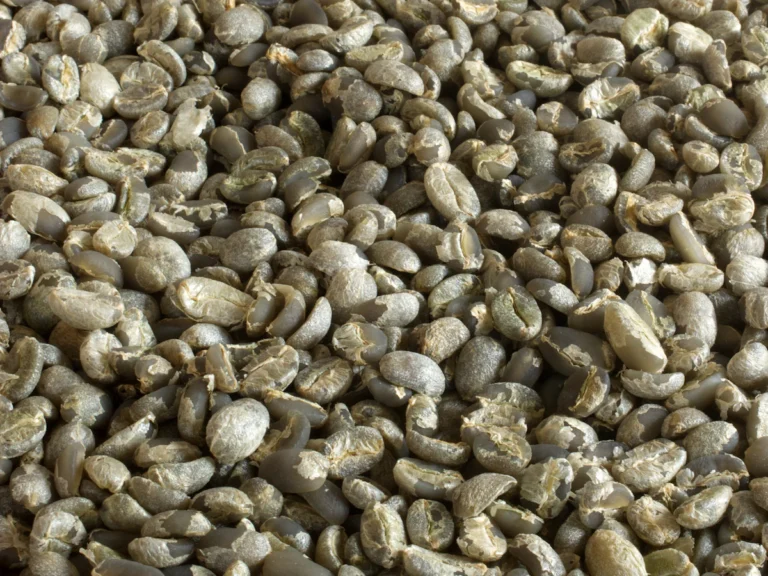
Robusta grows in the Littoral, South-West and East regions, while Arabica comes from the West and North-West highlands. Both are mostly smallholder crops. So Cameroon EUDR compliance for our green coffee range follows the same path as cocoa.
Palm oil and palm kernel products
All four palm products fall under oil palm. The key data is the source of the fruit bunches and the mill. Feed buyers often forget this. Yet palm kernel cake needs the same Cameroon EUDR compliance planning as palm oil.
Natural rubber and soy
For rubber, ask how the factory records its latex or cup lump sources. Soy is a small crop in Cameroon, but soybeans and soybean meal are still in scope.
Charcoal
Hardwood lump charcoal falls under wood, HS 4402, so legality is central. We offer only legally sourced lots with the required forestry and export documents. Cameroon also signed a FLEGT timber partnership with the EU in 2010. However, it issues no FLEGT licences, so EUDR due diligence still applies in full.
What BV Holdings Agro can discuss and supply on request
We do not claim EUDR compliance or certification for any product. Compliance is a legal outcome for the EU operator, not a label a supplier can give. What we can do is share the origin data we hold for a given lot, so you can build your own due diligence.
On request, and where it exists for the lot, we can discuss or supply:
- Plot geolocation, where it was collected, in the format agreed in the contract.
- Supplier lists, such as producer groups and aggregators in the lot.
- Producing region and, where known, district or village.
- Legality documents, such as registrations, export authorisations and, for charcoal, forestry documents.
- Our company registration and export documents during supplier onboarding.
- Lot numbers on new, export-marked bags, linked to the papers.
- Standard export documents, listed on our export documents page.
Where data is missing or partial, we will say so before you sign. We prefer an honest gap to a promise we cannot keep. As a result, you can decide early whether a lot fits your plan for Cameroon EUDR compliance.
Cameroon EUDR compliance checklist for buyers
Use this Cameroon EUDR compliance checklist when you plan an in-scope purchase. Send the right-hand questions with your inquiry.
| Step | What to check | What to ask your supplier |
|---|---|---|
| 1. Scope | Is the HS code in Annex I? | Confirm the HS code on the proforma |
| 2. Deadline | 30 December 2026 or 30 June 2027? | Match the shipment window to your date |
| 3. Geolocation | Points or polygons for every plot | What plot data exists, in which format? |
| 4. Cut-off | No deforestation after 2020 | Can plots be checked on satellite maps? |
| 5. Legality | Land, labour, tax and forest law | Which legality documents come with the lot? |
| 6. Supply chain | Who handled the goods to port? | A supplier list for the lot |
| 7. Segregation | Kept apart from unmapped stock? | Lot numbers and bag marking |
| 8. Contract | Data package in writing | What is delivered, when and how |
| 9. Filing and records | Statement before customs; keep five years | Data in time for your filing |
In short, start early. Data requests made after loading are much harder to meet.
How Cameroon EUDR compliance fits into an order
EUDR data is easiest to plan inside the normal buying process. Here is how Cameroon EUDR compliance fits our four steps.
- Inquiry: send the product, grade, volume, port, Incoterm and your EUDR data needs.
- Offer and sample: we reply with an offer, a sample and a note on what data we can provide.
- Agreement: the contract fixes the spec, price, Incoterm, payment terms, inspection and data package.
- Shipment: we load at Douala or Kribi and release documents and agreed data per the payment terms.
Our export process page explains each step in more detail. If you are new to the origin, our guide on how to import from Cameroon covers the whole route.
Country pages for EU buyers
The EUDR is the same across the EU, but ports and buyers differ. See shipping from Cameroon to the Netherlands, from Cameroon to Belgium and from Cameroon to Germany.
Why buy from BV Holdings Agro
- Part of BV Holdings PLC, with an office in Yaoundé.
- Sourcing from producer groups and aggregators in Cameroon’s main producing regions.
- Clear answers on which origin data exists for each lot, before you sign.
- Pre-loading quality checks, with independent inspection at your request.
- Full export documents and loading at Douala or Kribi on FOB, CFR or CIF terms.
FAQ: Cameroon EUDR compliance
When does Cameroon EUDR compliance become mandatory?
For large and medium EU operators and traders, the rules apply from 30 December 2026. Micro and small operators follow from 30 June 2027, unless the old Timber Regulation already covered them. Newly added products, such as soluble coffee, follow from 30 December 2027. Check the Commission’s site for updates.
Is Cameroon high risk under the EUDR?
No. Cameroon is classed as standard risk under the 2025 benchmarking. Only Belarus, Myanmar, North Korea and Russia are high risk. Standard risk means full due diligence, with no simplified route. The list will be reviewed, so check the tier each season.
Which of your products are covered by the EUDR?
Cocoa beans and cocoa products, green coffee, palm kernels, crude palm oil, palm kernel oil, palm kernel cake, soybeans, soybean meal, natural rubber and charcoal are in scope. Sesame, groundnuts, cereals, spices, cashew, kola and cotton are not.
Do you guarantee Cameroon EUDR compliance for a lot?
No. We do not claim EUDR compliance or certification. Cameroon EUDR compliance is the legal duty of the EU operator who files the statement. We can, however, discuss and supply the origin data we hold, such as plot geolocation where collected, supplier lists and legality documents.
Can you provide plot geolocation data?
Where it was collected for the lot, yes, on request and in the format agreed in the contract. Coverage varies by product, region and season. So we confirm what exists before we make an offer, and we flag any gaps early.
Does the EUDR apply to palm kernel cake and charcoal?
Yes. Palm kernel cake falls under oil palm as HS 2306.60, so feed buyers need the same data as palm oil buyers. Wood charcoal falls under wood as HS 4402. We offer only legally sourced charcoal with the required forestry and export documents.
Who files the due diligence statement?
The EU operator who first places the goods on the EU market files it, usually the importer. The EU Information System then issues a reference number for customs. Since the 2025 amendment, downstream firms and traders do not file again for covered goods.
Where can I read more about cocoa and the EUDR?
Our sister company BV Cocoa Products has a cocoa-only EUDR guide, with more depth on beans and derivatives. This page stays broader, covering Cameroon EUDR compliance for all the commodities we export. For the official text, use the Commission’s EUDR page.

One arm of BV Holdings PLC
BV Holdings Agro is the agricultural export company of BV Holdings PLC, alongside BV Cocoa Products and BV Metal & Minerals.
Plan the data for your next lot
Tell us the product, volume, port and EUDR data you need, and we will confirm what we can share with our offer.